


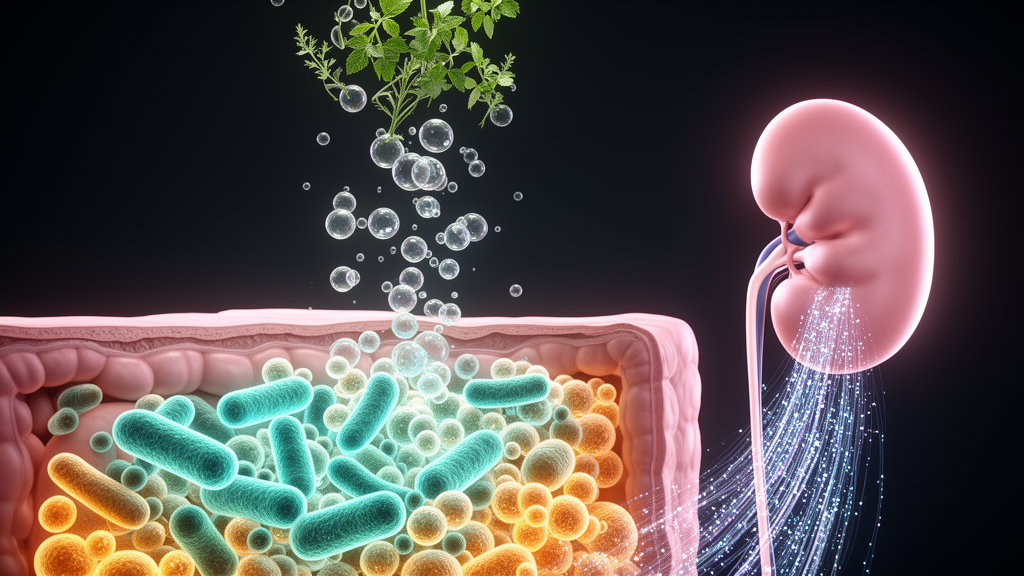
A new review published in Chinese Medicine argues that natural products, including traditional Chinese medicines, may offer a multi-target route to slowing this disease, and that emerging multiomics technologies are now revealing how these compounds might work at the molecular level.
The review, which systematically retrieved previous publications from databases including Web of Science, PubMed, ScienceDirect, Wiley and Nature Springer using keywords combining diabetic kidney disease terms with natural product and herbal medicine terms, organises the evidence around four omics layers: genomics, transcriptomics, proteomics and metabolomics. Its central claim is that dysbiosis of the gut microbiota, aberrant expression of non-coding RNAs, an altered proteome and disordered endogenous metabolites are all linked to diabetic kidney disease, and that natural products can modulate each of these layers.
The disease context is stark. Diabetes drives diabetic kidney disease through chronic exposure to hyperglycemia, producing progressive changes in renal structure and function. The condition is marked by accumulation and deposition of extracellular matrix components such as type I and III collagen, fibronectin, alpha-smooth muscle actin and vimentin in glomerular and tubulointerstitial compartments. Clinically, it is recognised by ongoing albuminuria, specifically an albumin-to-creatinine ratio exceeding 30 mg/g of creatinine, paired with gradual deterioration of kidney function. Hyperfiltration, mesangial matrix expansion, glomerular basement membrane thickening, podocyte injury and tubular damage ultimately culminate in glomerulosclerosis and tubulointerstitial fibrosis.
At the molecular level, the review describes how prolonged hyperglycemia diverts excess intracellular glucose into four major stress pathways: the polyol pathway, advanced glycation end product formation, protein kinase C activation and the hexosamine biosynthesis pathway. Each exacerbates oxidative stress and alters gene transcription. Chronic protein kinase C activation in glomerular endothelial cells raises vascular endothelial growth factor A and endothelin 1, damaging the filtration barrier and promoting albumin leakage. Mesangial cells accelerate matrix deposition by upregulating transforming growth factor beta and connective tissue growth factor, while podocytes suffer actin cytoskeleton disruption under persistent reactive oxygen species exposure. Renal tubular epithelial cells face mitochondrial overload, impaired autophagic flux and pro-fibrotic gene reprogramming, and high glucose pushes macrophages toward a pro-inflammatory M1-like phenotype.
Standard care, the review notes, still centres on blood sugar control and blood pressure reduction, typically with angiotensin-converting enzyme inhibitors and angiotensin type 1 receptor blockers. Glucagon-like peptide 1 receptor agonists, sodium-glucose cotransporter 2 inhibitors and non-steroidal mineralocorticoid receptor antagonists can enhance renal function and reduce renal fibrosis in patients. Yet most patients still progress to end-stage renal disease and require costly renal replacement therapies such as hemodialysis, peritoneal dialysis or transplantation, none of which are curative.
Against that backdrop, the gut microbiota emerges as a striking target. The review catalogues numerous traditional Chinese medicine formulas that reshaped gut microbial composition in diabetic kidney disease models. QiDiTangShen granules modulated microbial composition and serum bile acid profiles, implicating a gut-microbiota-bile acid axis in nephroprotection. Huangkui capsules modulated the gut microbiome in non-obese diabetic mice, while Jowiseungki decoction altered bacterial composition in streptozotocin-induced diabetic mice. Among single compounds, magnesium lithospermate B from Salvia miltiorrhizae radix reduced urinary albumin to taurocholic acid ratios in diabetic rats despite remarkably low bioavailability, suggesting its benefits may run through gut microbiome and bile acid metabolism. Thonningianin A from Penthorum chinense reduced blood glucose, urinary protein and renal fibrosis in diabetic mice while repairing intestinal barrier proteins and reducing gram-negative bacterial taxa by 16S rRNA sequencing.
Natural polysaccharides feature prominently too. Compounds from Moutan Cortex reduced hyperglycemia and kidney damage in diabetic rats while restoring intestinal barrier integrity and short-chain fatty acid concentrations. Cordyceps cicadae polysaccharides increased insulin sensitivity and balanced gut microbes in diabetic rats, and Bupleurum polysaccharides lowered blood glucose, serum creatinine and urine albumin in streptozotocin-induced mice, shifting the microbiota toward greater diversity and protective bacteria.
On the transcriptomic and proteomic front, the review highlights a newly identified long non-coding RNA, Gm41268, acting as a cis-regulatory target of the prolactin receptor gene. Astragalus polysaccharides downregulated fibronectin, transforming growth factor beta and collagen IV by regulating autophagy through p62 and phosphorylated mTOR protein levels and the LC3 II/I ratio, restoring high-glucose-induced Gm41268 and prolactin receptor overexpression. Triptolide reduced albuminuria and glomerulosclerosis in diabetic rats by boosting the microRNA miR-137. In proteomics, Huangkui capsules, already used clinically, were analysed with network pharmacology and urinary proteomics of diabetic kidney disease patients, showing that quercetin and palmitic acid mitigated kidney damage through vascular endothelial growth factor A via Ras-proximate-1 signalling and tight junction pathways.
The largest section maps natural products onto canonical signalling pathways. Compounds including ellagic acid, dieckol, vanillin, geniposide, catalpol, loganin and hesperetin inhibited the advanced glycation end product/receptor for advanced glycation end products axis. Geniposide and icariin acted on IκB/NF-κB inflammation and Keap1/Nrf2 antioxidant signalling, with astragaloside IV promoting Nrf2 dissociation from Keap1 by competitive binding. Trigonelline, lupenone, silymarin, epiberberine and wogonin suppressed transforming growth factor beta/Smad fibrotic signalling, while celastrol and Salvia miltiorrhiza extracts blocked Wnt/beta-catenin. Others regulated AMPK, PI3K/AKT/mTOR, endoplasmic reticulum stress, JAK/STAT and MAPK pathways, largely in rodent models and cultured kidney cells.
The authors are candid about limitations. Omics data evaluated in isolation do not always prove causality between omics findings and downstream molecular signals, and large dataset integration risks erroneous findings. Most evidence rests on animal models and mechanistic exploration, with significant hurdles to clinical translation: compositional complexity, quality control, herb-drug interactions, dose-response relationships, pharmacokinetics, low bioavailability and long-term safety. Only a handful of human studies appear, including one in which 30 diabetic kidney disease patients treated with Qitu Qushi formula for six months showed improved renal function and gut microbiota regulation linked to tryptophan metabolism and the renal Sirt1/FoxO1 pathway in mice. The review concludes that well-designed clinical trials, optimised drug delivery systems and integrated multiomics maps will be needed before these compounds can move from bench to bedside.
Subject of Research: Natural product therapy for diabetic kidney disease via multiomics-mediated signalling pathways
Article Title: Natural product therapy in diabetic kidney disease: emerging multiomics-mediated signalling pathway and molecular target
Article References: Wang, K.-E., Yu, Q.-Q., Wang, W.-F., Wang, Y.-N., Yang, J., Miao, H., Liu, L.-M., & Zhao, Y.-Y. (2026). Natural product therapy in diabetic kidney disease: emerging multiomics-mediated signalling pathway and molecular target. Chinese Medicine, 21(1), Article 222. https://doi.org/10.1186/s13020-026-01511-z
Image Credits: AI Generated
DOI: 10.1186/s13020-026-01511-z
Keywords: diabetic kidney disease, natural products, traditional Chinese medicine, multiomics, gut microbiota, signalling pathways, renal fibrosis, metabolomics, autophagy, AGE/RAGE, TGF-beta/Smad, NF-kB
News Source: Jerry Hayes. (October 29, 2026). How Natural Products Target Gut Microbes and Multiomics Signals in Diabetic Kidney Disease. Scienmag.



