Researchers have identified a previously unknown mutation in the CFAP65 gene that appears to cause a severe form of male infertility in two brothers from a consanguineous Pakistani family. The mutation, a homozygous frameshift variant designated c.582_587delinsCG, disrupts the gene’s transmembrane helix domain and is associated with multiple morphological abnormalities of the sperm flagella, a condition known as MMAF. The finding, published in Basic and Clinical Andrology, expands the known mutational landscape of a disorder that leaves sperm unable to swim and, in many cases, genetically unexplained.
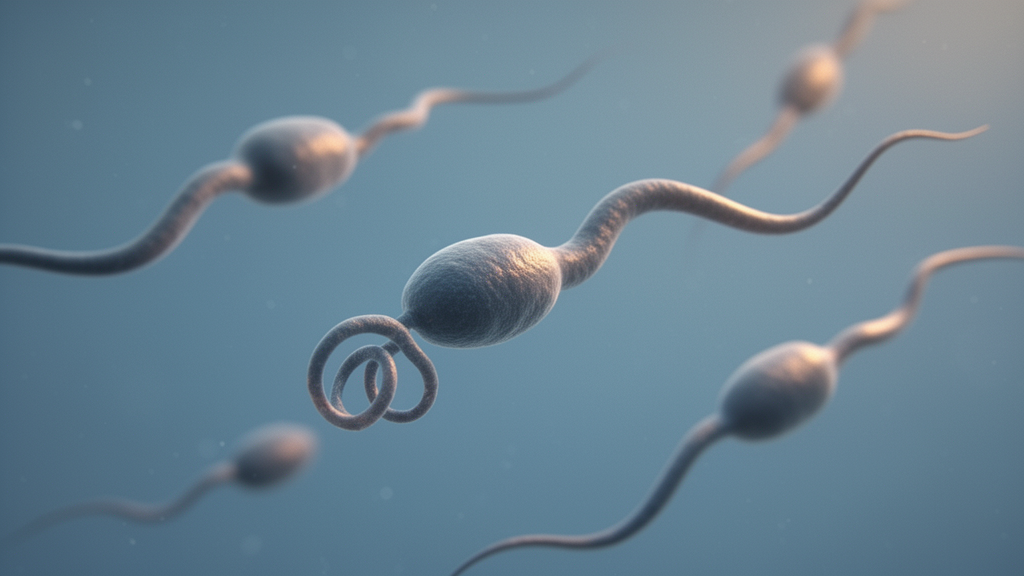
MMAF is characterized by sperm flagella that are bent, coiled, short, irregular, or entirely absent. Because the flagellum is the engine of the sperm cell, these structural defects produce asthenozoospermia, a drastic reduction in motility that renders natural fertilization essentially impossible. Ultrastructural studies of MMAF sperm typically reveal axonemal disorganization, including loss of the central pair complex and disruption of the mitochondrial sheath. Although next-generation sequencing has uncovered a growing list of causative genes, including CFAP43, CFAP44, CFAP69, CFAP70, and CFAP251, the genetic etiology remains unknown in roughly 40 to 50 percent of MMAF cases, which is why each new gene-mutation pairing carries diagnostic weight.
The family at the center of the study came to clinical attention through two infertile brothers, identified as P1 (II:3) and P2 (II:5), born to first-cousin parents. Both men had married at ages 25 and 29, with marriage durations of 12 and 10 years at the time of evaluation. Routine workup showed normal pubertal development, normal secondary sexual characteristics, and physiological levels of follicle-stimulating hormone and testosterone. Chromosomal analysis revealed normal 46,XY karyotypes with no Y chromosome microdeletions. Semen analyses showed normal ejaculate volume and sperm concentration but markedly reduced motility, measured at 10 plus or minus 1.16 and 18.67 plus or minus 2.6 respectively, consistent with asthenozoospermia. Their spouses had unremarkable gynecological histories, with regular menstrual cycles and no evidence of miscarriage or ovarian dysfunction.
To find the genetic culprit, the team performed whole-exome sequencing on both affected brothers and an unaffected fertile sibling, II:1. After filtering variants consistent with a recessive inheritance pattern and confirming family relatedness with the Peddy tool, the researchers identified a homozygous frameshift variant in CFAP65 that co-segregated with the infertility phenotype. Sanger sequencing validated the mutation and demonstrated complete segregation within the available family members: the variant was absent in unaffected relatives and not reported in population databases such as gnomAD and the 1000 Genomes Project. Autozygosity mapping confirmed that the variant sits within a shared homozygous region in both affected individuals, the expected signature of autosomal recessive inheritance in a consanguineous pedigree.
The mutation itself is a six-base substitution in exon 4 that produces a frameshift beginning at codon 194, replacing a glutamine residue with histidine and introducing a premature stop codon at position 197, an outcome annotated p.Q194Hfs*4. The predicted result is a severely truncated protein. Critically, the frameshift begins within the predicted transmembrane helix domain, which spans amino acids 187 to 209. Computational tools including MutationTaster2 and Franklin’s ACMG classifier scored the variant as deleterious and likely pathogenic, and the authors conclude that it meets likely-pathogenic criteria under American College of Medical Genetics and Genomics guidelines, making it the probable genetic cause of asthenozoospermia in this family.
CFAP65, also known as CCDC108 and AKAP240, spans 35 exons on chromosome 2q35 and encodes a 1925-amino-acid transmembrane protein with two predicted functional domains: the ASH (ASPM-SPD-2-Hydin) domain and the MSP (major sperm protein) domain. The ASH domain is commonly found in proteins localized to cilia, flagella, centrosomes, and the Golgi apparatus, where it acts as a protein-protein interaction module involved in microtubule-based organelle organization. CFAP65 is predominantly expressed in the testis and has previously been implicated in sperm flagellar biogenesis and motility across species, with mutations linked to asthenozoospermia and MMAF in chickens, humans, and mice.
Phenotypic characterization of the brothers’ sperm revealed the classic MMAF signature in striking detail. Hematoxylin-eosin staining showed that only 3.07 plus or minus 0.07 percent of sperm in P1 and 2.67 plus or minus 0.33 percent in P2 were morphologically normal, with the overwhelming majority displaying coiled, short, bent, irregular, or absent flagella; the abstract reports abnormal flagellar phenotypes in over 97 percent of sperm. Scanning electron microscopy, performed on samples from P2 due to limited sample availability, confirmed shortened, coiled, bent, or absent flagella at the ultrastructural level. At least 200 spermatozoa per patient were evaluated for the quantitative morphology assessment.
Transmission electron microscopy of P2’s sperm provided the mechanistic clue. Control sperm from the fertile brother showed the canonical 9-plus-2 axonemal arrangement: nine peripheral doublet microtubules surrounding a central pair complex, along with outer dense fibers and a fibrous sheath. In contrast, the patient’s sperm showed severe axonemal disorganization, with disrupted or missing doublet microtubules observed in 85 percent of cross-sections. Notably, the acrosome appeared preserved. This isolated axonemal defect, without acrosomal abnormalities, distinguishes the present mutation from previously described CFAP65 variants that disrupt acrosome-manchette interactions during spermiogenesis, and it leads the authors to propose a domain-specific organization of the protein: the transmembrane helix domain appears essential for axonemal integrity, while other regions may regulate acrosomal development.
An equally important clinical observation concerns what the patients did not have. Although CFAP65 is expressed in several ciliated tissues, neither brother reported chronic respiratory symptoms, and chest radiographs showed no abnormalities suggestive of primary ciliary dyskinesia, such as bronchiectasis, atelectasis, or chronic infiltrates. Neither had situs inversus. This points to an isolated, sperm-specific phenotype. The authors note that Cfap65 knockout mice display profound sperm flagellar defects and a high incidence of hydrocephalus yet no significant impairment of respiratory cilia, and they caution that subclinical ciliary dysfunction cannot be entirely excluded in the patients, calling for functional assays and multi-organ phenotyping to define the full spectrum of CFAP65-related ciliopathies.
The study also sits within a broader population-genetic context. Consanguineous marriages account for approximately 65 percent of unions in Pakistani populations, making them a recognized hotspot for discovering rare autosomal recessive mutations; biallelic loss-of-function variants in CFAP43, CFAP61, CFAP58, and DNHD1 have already been reported in consanguineous Pakistani families with MMAF. Against that backdrop, the authors describe this as the first report linking a CFAP65 frameshift mutation to MMAF in a Pakistani cohort, with relatively isolated axonemal defects. They argue that mutation localization within the protein may help predict phenotypic outcome, a principle with practical value for genetic diagnosis and counseling in affected populations. The work was approved by the Ethics Committee of the First Affiliated Hospital of the University of Science and Technology of China, with written informed consent from all participants. As with any two-patient family study, the findings describe a single pedigree and require broader cohorts and functional experiments to confirm the proposed domain-specific mechanism, but they add a concrete new entry to the diagnostic catalogue of severe male infertility.
Subject of Research: Genetic basis of multiple morphological abnormalities of sperm flagella in male infertility
Article Title: A novel homozygous frameshift mutation in CFAP65 is associated with multiple morphological abnormalities of sperm flagella in a consanguineous Pakistani family
Article References: Abbas, M., Hussain, A., Hui, M., Ali, H., Lateef, M., Hussain, M., Mustafa, G., Shi, B., Zhang, H., Lin, T., Yin, H., & Shi, Q. (2026). A novel homozygous frameshift mutation in CFAP65 is associated with multiple morphological abnormalities of sperm flagella in a consanguineous Pakistani family. Basic and Clinical Andrology, 36(1), Article 22. https://doi.org/10.1186/s12610-026-00319-z
Image Credits: AI Generated
DOI: 10.1186/s12610-026-00319-z
Keywords: CFAP65, male infertility, MMAF, asthenozoospermia, frameshift mutation, consanguinity, whole-exome sequencing, sperm flagellum, axoneme, transmission electron microscopy, autosomal recessive, Pakistani family
News Source: Juliet Wilcox. (October 29, 2026). Novel CFAP65 Gene Mutation Linked to Sperm Flagella Defects in Pakistani Family. Scienmag.