A new open-access review in Discover Chemical Engineering examines the current state of post-combustion CO2 capture technology, comparing four main approaches—absorption, adsorption, membrane separation, and supergravity separation—for removing carbon dioxide from flue gas. The paper, published on 12 September 2026, is framed against global energy conservation and emission reduction efforts and China’s dual-carbon strategy of carbon peaking and carbon neutrality.
The authors, led by Hongtao Mu, position targeted research on capture technologies suited to different working conditions as an increasingly important research direction. Rather than reporting new experimental results, the review synthesizes recent developments in the field to clarify the technical characteristics, advantages, disadvantages, and application trends of the major post-combustion capture routes.
For absorption methods, the review identifies the selection of absorbents as the core issue, with the optimization of reactors and operating conditions as the main focus of current work. Absorption remains one of the most widely researched and applied families of CO2 capture technologies, but the authors note that many problems persist in specific applications.
For adsorption-based capture, the key to large-scale industrial application lies in developing adsorbents that combine high selectivity, high adsorption capacity, strong desorption ability, and low cost.
Membrane separation is characterized as offering simple and flexible operation, but the authors emphasize that improving membrane performance still requires continuous research.
The fourth technology assessed, supergravity separation, is included in the comparative analysis of post-combustion flue gas capture alongside the three more established routes. The review uses this comparison to summarize where each approach fits and how its application may trend as the field develops.
Looking across the technologies, the authors conclude that although many CO2 absorption and separation technologies have been widely researched and applied, significant problems remain in specific applications. Research on new materials and solvents for CO2 absorption and separation, they write, remains a frontier and hot topic in the field of carbon capture.
On future direction, the review predicts that the development of carbon capture technology is likely to move toward combining two or more technologies, in order to meet decarbonization needs under a wider range of working conditions. This hybrid outlook is presented as the paper’s overall assessment of where the field is heading, rather than as a result demonstrated by new experiments.
The article is published as open access and is being shared early to provide faster access to peer-reviewed, accepted research; the version is citable and carries a permanent DOI but remains subject to further edits before the final Version of Record. As a review, it offers a consolidated snapshot of the technical characteristics, application potential, and research directions of the main post-combustion CO2 capture technologies rather than new experimental data.
Subject of Research: Post-combustion CO2 capture technologies including absorption, adsorption, membrane separation, and supergravity methods
Article Title: Research status and development trends of post-combustion CO2 capture technology
Article References: Mu, H., Li, S., Hou, Y., Luo, Z., Fang, L., & Luo, J. (2026). Research status and development trends of post-combustion CO2 capture technology. Discover Chemical Engineering. https://doi.org/10.1007/s43938-026-00146-8
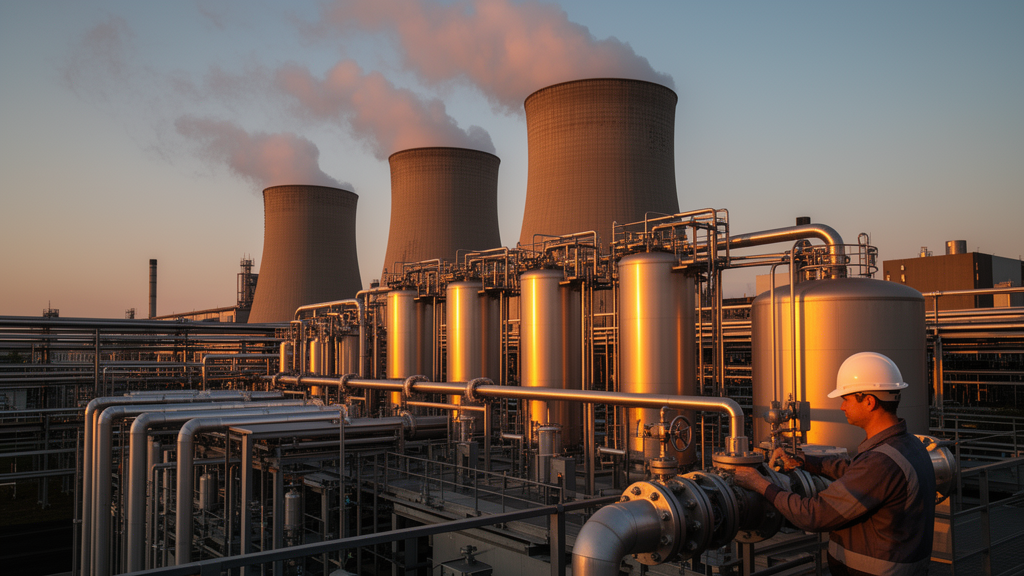
Image Credits: AI Generated
DOI: 10.1007/s43938-026-00146-8
Keywords: CO2 capture, post-combustion capture, absorption, adsorption, membrane separation, supergravity, carbon capture, flue gas, carbon neutrality, review, absorbents, decarbonization
News Source: Denise Maddox. (October 29, 2026). Review Maps the State of Post-Combustion CO2 Capture Technologies. Scienmag.