

• HOME
  • NEWS
  • EXPLORE
    • CAREER
      • Companies
      • Jobs
    • EVENTS
    • iGEM
      • News
      • Team
    • PHOTOS
    • VIDEO
    • WIKI
  • BLOG
  • COMMUNITY
    • FACEBOOK
    • INSTAGRAM
    • TWITTER
Friday, October 30, 2026
BIOENGINEER.ORG
No Result
View All Result
  • Login
  • HOME
  • NEWS
  • EXPLORE
    • CAREER
      • Companies
      • Jobs
        • Lecturer
        • PhD Studentship
        • Postdoc
        • Research Assistant
    • EVENTS
    • iGEM
      • News
      • Team
    • PHOTOS
    • VIDEO
    • WIKI
  • BLOG
  • COMMUNITY
    • FACEBOOK
    • INSTAGRAM
    • TWITTER
No Result
View All Result
Bioengineer.org
No Result
View All Result
Home NEWS Science News Biology

Perifosine disrupts iron and copper balance, slowing growth in fruit flies

by
October 29, 2026
in Biology
Reading Time: 2 mins read
0
Perifosine disrupts iron and copper balance, slowing growth in fruit flies

Perifosine disrupts iron and copper balance, slowing growth in fruit flies

Share on FacebookShare on TwitterShare on LinkedinShare on RedditShare on Telegram

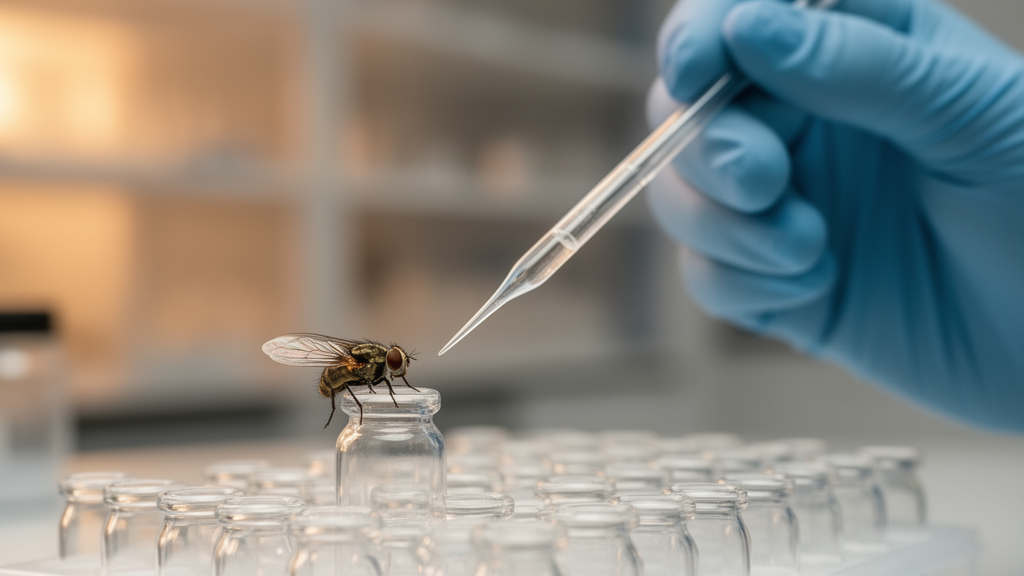
Perifosine, an anticancer compound whose safety during pregnancy has never been characterized, appears to interfere with early development by disrupting how the body handles two essential metals, iron and copper. In a study published in Cell Biology and Toxicology, researchers used the fruit fly Drosophila melanogaster to examine what happens when developing organisms are exposed to the drug, and they report that developmental exposure induces growth retardation in offspring alongside a breakdown of iron and copper homeostasis.

The team evaluated the compound’s developmental toxicity through both in vivo and in vitro approaches. According to the abstract, perifosine induced cytotoxicity and offspring growth retardation by impairing iron and copper homeostasis. The researchers describe this process as being mediated through altered expression of key regulatory targets, which was followed by mitochondrial dysfunction. In other words, the metal imbalance did not occur in isolation; it was linked to changes in the expression of molecules that regulate metal levels, and those changes were in turn associated with impaired mitochondrial function.

The study also tested whether the damage could be reversed. The authors attribute this protective effect to two mechanisms: alleviating oxidative stress and restoring metal equilibrium. This suggests that the oxidative stress and the disruption of iron and copper levels are connected parts of the same toxic process, and that addressing both may reduce the harm.

It is important to note the scope of these findings. The work was carried out in a Drosophila model, not in humans, and the abstract states that perifosine’s safety profile during pregnancy remains uncharacterized. The results are therefore mechanistic observations in an insect model rather than clinical evidence about human pregnancy outcomes. The authors frame the study as providing mechanistic insights into the developmental toxicity of perinatal compound exposure and as suggesting potential therapeutic strategies for its prevention, with quercetin and resveratrol identified as candidate mitigating agents in this model.

The article, published on 21 October 2026 as an open-access research paper, is a shared early version of peer-reviewed, accepted research that is citable and carries a permanent DOI, subject to further edits before the final version of record. The author list includes Xuxin He, Weijie Xu, Qingqing Hu, Qiushi Xia, Dan Zhao and Xia Chen, among others.

Subject of Research: Developmental toxicity of perifosine and its disruption of iron and copper homeostasis in Drosophila melanogaster

Article Title: Developmental exposure to perifosine induces growth retardation associated with disruption of iron and copper homeostasis in Drosophila melanogaster

Article References: He, X., Xu, W., Hu, Q., Xia, Q., Zhao, D., Li, J., Huang, Q., Chen, N., Lin, Z., Liu, Y., Zhang, Y., Qian, W., Chen, S., Wang, H., Qi, Y., Yu, J., Qin, W., & Chen, X. (2026). Developmental exposure to perifosine induces growth retardation associated with disruption of iron and copper homeostasis in Drosophila melanogaster. Cell Biology and Toxicology. https://doi.org/10.1007/s10565-026-10304-x

Image Credits: AI Generated

DOI: 10.1007/s10565-026-10304-x

Keywords: perifosine, Drosophila melanogaster, developmental toxicity, iron homeostasis, copper homeostasis, mitochondrial dysfunction, oxidative stress, quercetin, resveratrol, growth retardation, cytotoxicity, pregnancy safety

News Source: Drew Townsend. (October 29, 2026). Perifosine disrupts iron and copper balance, slowing growth in fruit flies. Scienmag.


Tags: copper homeostasiscytotoxicitydevelopmental toxicityDrosophila melanogastergrowth retardationiron homeostasisMitochondrial dysfunctionoxidative stressperifosinepregnancy safetyquercetinResveratrol
Share12Tweet7Share2ShareShareShare1

Related Posts

Microbial Sources and Stress Shape the Hidden Endophytes of an Invasive Plant

Microbial Sources and Stress Shape the Hidden Endophytes of an Invasive Plant

October 30, 2026
Firebreaks Leave Lasting Scars in Grasslands While Wildfire Heals Fast

Firebreaks Leave Lasting Scars in Grasslands While Wildfire Heals Fast

October 30, 2026

Hidden Peptides in Non-Coding RNAs Reshape Cardiovascular Biology

October 30, 2026

Phage K Holin’s C-Terminal Region Shapes Antibacterial Activity, Study Finds

October 30, 2026

POPULAR NEWS

  • Microbial Sources and Stress Shape the Hidden Endophytes of an Invasive Plant

    Microbial Sources and Stress Shape the Hidden Endophytes of an Invasive Plant

    29 shares
    Share 12 Tweet 7
  • Firebreaks Leave Lasting Scars in Grasslands While Wildfire Heals Fast

    29 shares
    Share 12 Tweet 7
  • ZNF207 shields glutamine transporter ASCT2 from degradation to fuel liver cancer growth

    29 shares
    Share 12 Tweet 7
  • Systematic review maps sustainability tensions in offshore wind development

    29 shares
    Share 12 Tweet 7

About

We bring you the latest biotechnology news from best research centers and universities around the world. Check our website.

Follow us

Recent News

Microbial Sources and Stress Shape the Hidden Endophytes of an Invasive Plant

Firebreaks Leave Lasting Scars in Grasslands While Wildfire Heals Fast

ZNF207 shields glutamine transporter ASCT2 from degradation to fuel liver cancer growth

Subscribe to Blog via Email

Enter your email address to subscribe to this blog and receive notifications of new posts by email.

Join 86 other subscribers
  • Contact Us

Bioengineer.org © Copyright 2023 All Rights Reserved.

Welcome Back!

Login to your account below

Forgotten Password?

Retrieve your password

Please enter your username or email address to reset your password.

Log In
No Result
View All Result
  • Homepages
    • Home Page 1
    • Home Page 2
  • News
  • National
  • Business
  • Health
  • Lifestyle
  • Science

Bioengineer.org © Copyright 2023 All Rights Reserved.
