


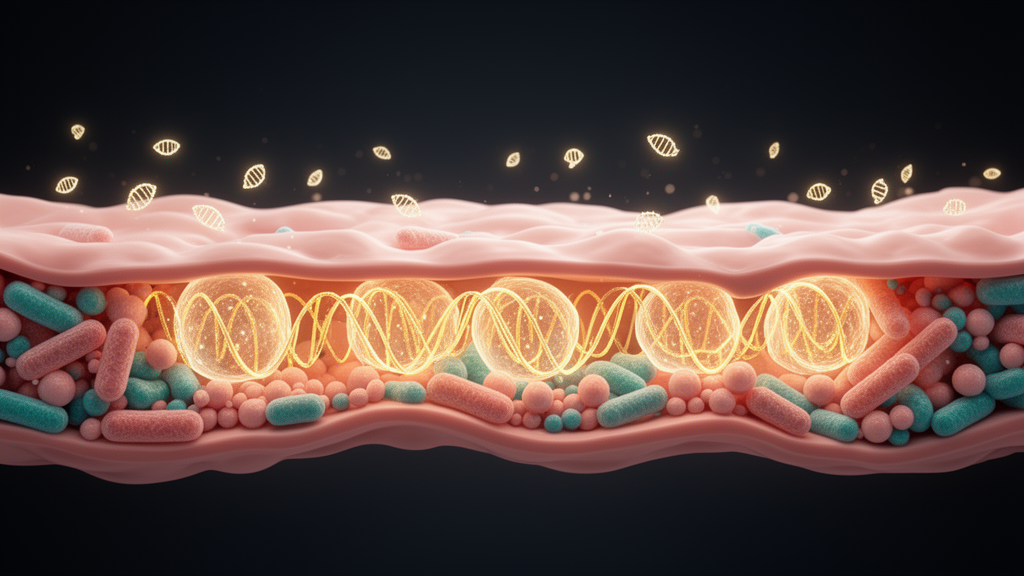
Not every antibiotic resistance gene lurking in the human gut is actually doing anything. A new review published in Discover Bacteria argues that the field has been conflating two very different things: the genes that are merely present in the gut microbiome, and the far smaller subset that are actively transcribed into RNA at any given moment. The authors, led by Muhammad Shahid Mehmood and Mohammad Jalal Nazari, propose a framework that separates these stages, and they contend that only RNA-based metatranscriptomics can reveal which resistance mechanisms are genuinely in play inside the intestine.
The review, published on 15 August 2026, addresses a persistent blind spot in antimicrobial resistance research. DNA-based metagenomics, the workhorse of microbiome studies, can catalogue the full collection of resistance genes in a sample, known as the resistome. But a gene’s presence in DNA says nothing about whether it is being expressed. The authors define the active resistome as the subset of antibiotic resistance genes that are transcriptionally expressed under specific microbial, host, or environmental conditions, and they are careful to note that RNA-level activity alone does not confirm protein production, phenotypic resistance, or clinical relevance.
To organize this distinction, the review proposes a four-stage potential–activity–phenotype–translation framework. The first stage is the potential resistome, defined by genes detected at the DNA level. The second is the active resistome, the transcriptionally expressed fraction. The third requires functional or phenotypic resistance, meaning evidence that gene expression produces protein, enzymatic activity, increased minimum inhibitory concentrations, or reduced antimicrobial susceptibility. The fourth stage is translational relevance, demonstrated when resistance activity is linked to clinical or ecological outcomes such as treatment failure, recurrent infection, persistent colonization, or gene transmission. Crucially, the authors stress that movement between these stages is not automatic: the presence of a gene does not establish its transcription, and transcription does not necessarily produce a resistance phenotype.
The quantitative evidence for this gap between potential and activity comes largely from integrated metagenomic and metatranscriptomic studies. In one such study of the intestinal microbiome of beef cattle, approximately 30 percent of the resistance genes detected at the DNA level were transcriptionally active, with genes such as mefA and tetW showing dominant expression. The review is explicit that this animal-model figure should not be interpreted as a universal estimate for the human gut. Similar findings from hospital wastewater, where plasmid-associated resistance genes showed higher mRNA-to-DNA ratios than chromosomal genes, and from composting studies, where tetracycline-resistance transcripts fell during high-temperature stages while some sulfonamide and fluoroquinolone transcripts temporarily rose, demonstrate environmentally responsive gene regulation but provide only indirect evidence for the human intestine.
Metatranscriptomics itself is technically demanding. The review describes typical workflows using stranded, ribosomal RNA-depleted shotgun sequencing libraries with paired-end 150 base pair reads. Because ribosomal RNA makes up more than 90 percent of total RNA, broad-spectrum depletion across bacteria, archaea, and eukaryotes is essential to enrich for messenger RNA. RNA is also highly unstable, so samples must be stabilized immediately with agents such as RNAlater or flash-freezing, processed on ice, and subjected to minimal freeze-thaw cycles. Low RNA input, inhibitors in stool matrices, and the complexity of fecal samples are addressed with cleanup resins and external RNA controls such as ERCC standards. Dual RNA sequencing, which captures both host and microbial transcripts, can connect epithelial responses with resistance gene expression, and matched metagenomes help anchor expression to gene copy number and improve strain-level transcript linkage.
The active resistome, as characterized in the review, spans all major antibiotic classes. Prominent transcripts include beta-lactamases, including extended-spectrum beta-lactamases and carbapenemases, tetracycline-resistance genes such as tetA and tetM, macrolide-resistance methyltransferases of the erm family, multidrug efflux pumps, and colistin-resistance genes of the mcr family. Aminoglycoside resistance derives from acetyltransferases, adenyltransferases, and phosphotransferases that chemically modify the drug. Tetracycline determinants remain prevalent despite reduced clinical use of tetracyclines, a sign of their enduring role in resistance maintenance. The gut itself is a formidable reservoir: it harbors roughly 10 to the power of 11 to 10 to the power of 12 bacterial cells per gram of feces, predominantly Bacteroidota and Bacillota, plus an abundant virome of more than 10 to the power of 9 particles per gram that can act as both reservoir and vector for resistance genes through transduction.
Antibiotic exposure is a central driver of what gets switched on. The review reports that in vivo, antibiotic exposure can rapidly induce beta-lactamases, multidrug efflux systems, and erm-mediated macrolide resistance transcripts, and that some transcriptional changes may persist after treatment as a form of resistance memory. In a murine gut model, amoxicillin exposure increased expression of the beta-lactamase gene cepA, while doxycycline promoted transcription of tetracycline-resistance genes including tet32 and tet44, findings the authors note require confirmation in human cohorts. A randomized clinical trial showed that 48 hours of broad-spectrum antibiotics during the first week of life altered the neonatal gut microbiome and resistome, with the magnitude of disruption differing among regimens. Under antibiotic-free conditions, resistance gene transcription generally declines toward baseline but remains dependent on host characteristics, age, and previous antimicrobial exposure.
Host and environmental factors add further layers of complexity. Diet is described as a key modifiable determinant: high-sugar, high-fat, and high-protein diets are associated with enrichment of beta-lactamase and efflux signatures, while aminoglycoside O-phosphotransferase determinants appear reduced in individuals with higher fermentable fiber intake. Probiotic effects, such as those of Lactobacillus plantarum P-8, are strain- and context-specific, with some reducing resistance genes and others showing minimal or variable impact. Human observational evidence associates hospitalization, intensive care admission, and transplantation with enrichment of clinically important resistance genes, and longitudinal studies indicate that international travel to regions with high antimicrobial resistance prevalence may increase the abundance and diversity of acquired gut resistance genes, including quinolone- and tetracycline-resistance determinants, even when overall community structure remains comparatively stable. The authors caution that these travel findings remain observational and do not establish the source or direction of gene acquisition.
The review is candid about the limitations of the field. A substantial proportion of published evidence originates from animal microbiomes, environmental samples, wastewater, or small experimental studies rather than large longitudinal human cohorts. RNA detection alone cannot reliably distinguish transcripts from intact, metabolically active cells versus damaged organisms or extracellular RNA, and transcript abundance does not necessarily correspond to protein abundance, enzymatic activity, or phenotypic resistance because of post-transcriptional regulation and differences in translation efficiency. Comparability across studies is further hampered by inconsistent sample preservation, extraction, rRNA-depletion methods, sequencing depth, normalization strategies, and database choices; the authors note that analyzing ruminal microbiota with the Resfams database revealed beta-lactam and vancomycin resistance genes that were not found using ARG-ANNOT or ResFinder, illustrating how tool choice can shape results.
On the clinical front, the review draws a firm line between what is established and what remains exploratory. Culture-based susceptibility testing and antimicrobial stewardship programs are clinically implemented, with stewardship interventions shown to reduce inappropriate antibiotic use, which exceeds 50 percent, and to lower Clostridium difficile infections and resistant colonization in hospitalized patients. By contrast, active-resistome profiling for patient risk stratification, prediction of treatment failure, or individualized antibiotic selection remains investigational and requires prospective multicenter validation. The authors rank future priorities: prospective longitudinal multicenter human cohorts and methodological standardization come first, followed by validated artificial intelligence and multi-omics integration, probiotic and short-chain fatty acid-promoting interventions, fecal microbiota transplantation, and, as a longer-term strategy, phage therapy. Until those studies are done, the active resistome remains a dynamic and context-dependent intermediate between the genetic reservoir of resistance and observable resistance phenotypes, not a direct equivalent of antimicrobial resistance itself.
Subject of Research: Transcriptionally active antibiotic resistance genes in the human gut microbiome identified by metatranscriptomics
Article Title: Active gut microbiota resistome identified by metatranscriptomics and its contribution to antimicrobial resistance
Article References: Mehmood, M. S., Faheem, H. M., Javaid, F., Afroz, E., Ramadan, M. E., Ali, S., & Nazari, M. J. (2026). Active gut microbiota resistome identified by metatranscriptomics and its contribution to antimicrobial resistance. Discover Bacteria, 3(1), Article 18. https://doi.org/10.1007/s44351-026-00057-7
Image Credits: AI Generated
DOI: 10.1007/s44351-026-00057-7
Keywords: gut microbiome, antimicrobial resistance, metatranscriptomics, resistome, antibiotic resistance genes, horizontal gene transfer, RNA sequencing, antibiotic stewardship, beta-lactamases, efflux pumps, microbiome reservoirs, multi-omics
News Source: Juliet Wilcox. (October 28, 2026). RNA Sequencing Reveals Which Gut Antibiotic Resistance Genes Are Actually Switched On. Scienmag.



