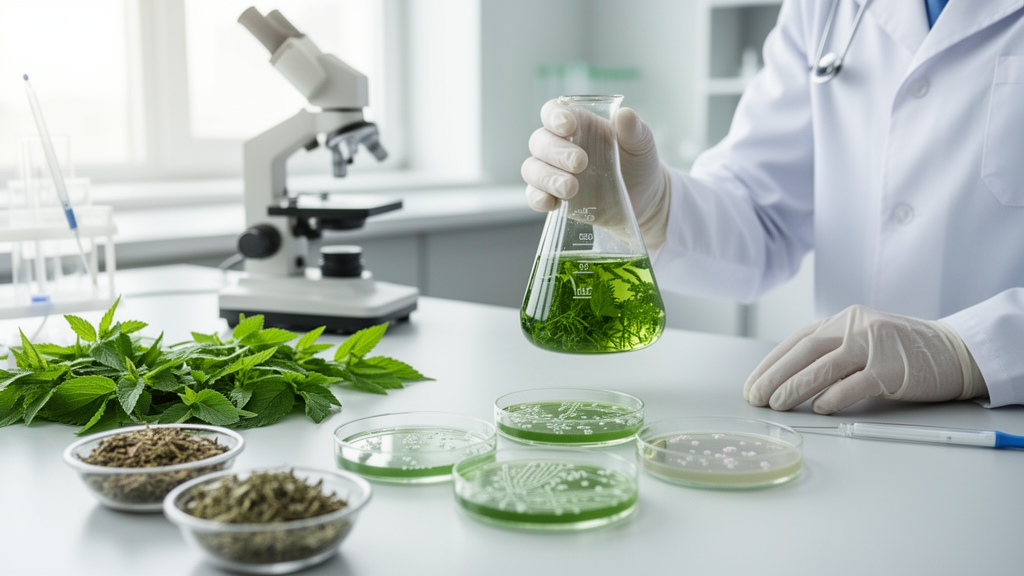
Bovine mastitis, an inflammation of the udder tissue caused by microbial infections or physical trauma, remains one of the costliest diseases in dairy farming, and a newly published review argues that medicinal plants deserve a central place in the search for sustainable treatments. The paper, published in the journal Dairy Science and Management, compiles evidence on plant species and purified plant compounds that show antibacterial and anti-inflammatory activity against the major mastitis pathogens, including Staphylococcus aureus, Escherichia coli, Streptococcus agalactiae and Streptococcus uberis.
The scale of the problem is considerable. The review states that mastitis costs the global dairy industry more than USD 35 billion every year, with roughly 70 percent of losses attributable to damage to mammary tissue that reduces milk production. About 150 different types of bacteria are recognized as mastitis pathogens, spanning both Gram-positive and Gram-negative species that can be classified as either contagious, spreading from infected quarters between cows, or environmental, residing in bedding and shelter. Severe clinical cases can even be fatal, and subclinical infections, which show no visible abnormalities in the milk or udder, often go undetected while somatic cell counts rise and milk supply declines.
Antibiotics such as penicillin, tetracycline, ampicillin and gentamicin, delivered by intra-mammary infusion or by intramuscular or intravenous injection, remain the primary treatment. Yet the review highlights mounting concerns: the transmission of resistant microorganisms through food chains and ecosystems, antibiotic residues in dairy products, and economic losses from discarded milk during treatment periods. The development of antibiotic resistance is outpacing the discovery of new antibiotics, and the review notes that antibiotic therapy is often ineffective, with a success rate below 60 percent. Vaccines against mastitis pathogens have also shown mixed results, with commercial products such as Startvac reporting improved immune response in some studies and no discernible change in others, leading experts to recommend vaccination only as part of an integrated control plan.
Against this backdrop, the authors survey a range of plant-based interventions. Cinnamon essential oils, whose secondary metabolites include eugenol, cinnamyl acetate and trans-cinnamaldehyde, have shown bactericidal properties against mastitis-causing bacteria in several in vitro investigations. Essential oils from various Cinnamomum species proved effective against Staphylococcus species isolated from mastitis milk, working better against Gram-positive than Gram-negative bacteria because of the protective outer barrier of the latter. Cinnamon oil has shown bactericidal effects against S. agalactiae, inhibits biofilm formation and affects gene regulation in that species, while C. cassia oil disrupts membrane impermeability in both S. aureus and E. coli, affecting ATP synthesis and suppressing quorum sensing. At minimum inhibitory concentration and twice that level, the oil can completely eliminate bacterial cells within eight hours.
Thyme and oregano feature prominently as well. Thymol, a phenolic monoterpenoid, alters the structure and function of the bacterial cytoplasmic membrane, interferes with intracellular targets and membrane proteins, changes membrane permeability and triggers the release of ATP and potassium ions. Studies report notable minimum inhibitory and bactericidal concentration values for thymol against mastitis isolates, and the carvacrol-rich essential oil of Thymus fontanesii shows significant activity against S. aureus and E. coli. In the Origanum genus, carvacrol is typically the primary antibacterial ingredient, damaging bacterial cell membranes and disrupting ion movement, and common oregano has been effective against drug-resistant strains including MRSA. The combination of thymol and carvacrol shows additive effects against various bacteria, and when combined with the antibiotic tilmicosin it demonstrates enhanced effectiveness against several mastitis-causing pathogens.
Tea tree oil from Melaleuca alternifolia, composed largely of monoterpenes with terpinen-4-ol at roughly 30 percent, fights E. coli and S. aureus by disrupting cell membranes and ion balance, and bacteria have not shown significant resistance to it. In bovine mammary epithelial cells, the oil inhibits S. aureus growth and biofilm formation, and low concentrations of 0.025 and 0.05 percent help those cells survive S. aureus infection, although higher concentrations of 0.1 percent can be harmful. The oil also has anti-inflammatory qualities, lowering inflammatory cytokines and raising anti-inflammatory ones, but the review notes safety concerns: in rats the lethal dose is 1.9 to 2.6 milliliters per kilogram of body weight, skin concentrations above 10 percent can cause irritation and allergic reactions, and the oil is particularly toxic to cats.
The review extends beyond essential oils to purified phytochemicals studied largely in mouse models of mastitis. Baicalein, isolated from the dry roots of the traditional Chinese medicine herb Scutellaria baicalensis, significantly reduced damage to the mammary gland in mice with lipopolysaccharide-induced mastitis, inhibiting myeloperoxidase activity and decreasing levels of the inflammatory molecules interleukin-1 beta and tumor necrosis factor alpha. Curcumin protected mice from mastitis, apparently by inhibiting TLR4-mediated NF-kappa-B signalling pathways, and resveratrol reduced the expression of pro-inflammatory cytokines by acting on the NF-kappa-B and MAPK signal pathways. Luteolin prevented tissue damage and inflammatory cell infiltration in mammary glands infected with S. aureus, and puerarin reduced inflammatory damage caused by S. aureus in mice while suppressing pro-inflammatory cytokines and increasing secretion of the anti-inflammatory interleukin-10. Forsythoside A, from Forsythiae fructus, reduced the expression of TNF-alpha, IL-1 beta and IL-6 in bovine mammary epithelial cells stimulated by S. aureus, inhibiting the activation of MAPKs and NF-kappa-B in a dose-dependent manner.
Other plants add to the catalogue. Minthostachys verticillata, an Argentine medicinal herb, yielded an essential oil and the constituent limonene that inhibited the growth of Streptococcus uberis, and follow-up work found effectiveness against E. coli, Bacillus pumilus and Enterococcus faecium, with Gram-positive bacteria affected at lower doses than Gram-negative ones. Extracts of Tanacetum vulgare showed antibacterial action against clinical mastitis isolates including S. uberis, S. agalactiae and E. coli, with moderate activity against S. aureus, although leaf extracts did not significantly inhibit Streptococcus strains. Lavandula angustifolia proved effective against several pathogenic bacteria found in milk, and Lavandula stoechas showed minimum inhibitory concentrations of 4.37 percent for S. aureus, 3.75 percent for S. agalactiae and 3.12 percent for E. coli. Holy basil, lemongrass, rosemary, sage, clove and citrus oils also appear among the plants with promising antimicrobial properties.
The review also situates plant therapy within a broader control framework. The Council for National Mastitis’s five-point plan calls for prompt identification and treatment of clinical cases, post-milking teat disinfection, dry cow therapy, culling of chronically infected cows and proper maintenance of milking equipment. Risk factors span host genetics, with high-yielding breeds such as Holstein-Friesian more vulnerable than Jersey or native breeds, the transition period of three weeks before and after calving, when immunosuppression raises infection risk, and environmental conditions such as overcrowding, damp bedding, poor ventilation and hot, humid weather.
The authors conclude that plant-derived compounds such as thymol, carvacrol, limonene, p-cymene, cinnamaldehyde and eugenol have proven effective against mastitis-causing bacteria, crossing bacterial cell membranes by virtue of their fat-soluble nature and disrupting cell structure, while also boosting immune functions and improving the blood-milk barrier. However, they are explicit that this is a review of existing literature rather than a demonstration of clinical efficacy, and that significant gaps remain. Fluctuations in the concentration and bioavailability of plant-derived chemicals, and their interactions with conventional treatments, were not fully examined, and the review calls for carefully planned in vivo trials, dose optimization, standardization of extraction techniques, long-term safety evaluations and research into synergistic combinations before plant-based approaches can become safer and more environmentally friendly mastitis management procedures in the field.
Subject of Research: Plant-based alternatives to antibiotics for managing bovine mastitis
Article Title: Sustainable management of bovine mastitis caused by major pathogens (Staphylococcus aureus, Escherichia coli, Streptococcus agalactiae, and Streptococcus uberis) using medicinal plants: a review
Article References: Teotia, A., Bashir, S., Malik, T., Mohan, A., Tariq, M., kumar, A., & Singh, R. (2025). Sustainable management of bovine mastitis caused by major pathogens (Staphylococcus aureus, Escherichia coli, Streptococcus agalactiae, and Streptococcus uberis) using medicinal plants: a review. Dairy Science and Management, 2(1), Article 19. https://doi.org/10.1186/s44363-025-00010-0
Image Credits: AI Generated
DOI: 10.1186/s44363-025-00010-0
Keywords: bovine mastitis, medicinal plants, antibiotic resistance, essential oils, Staphylococcus aureus, Escherichia coli, dairy cattle, phytotherapy, antibacterial compounds, dairy industry, animal health, review
News Source: William Thompson. (October 28, 2026). Medicinal Plants Show Promise Against the Bacteria Behind Bovine Mastitis. Scienmag.