• HOME
  • NEWS
  • EXPLORE
    • CAREER
      • Companies
      • Jobs
    • EVENTS
    • iGEM
      • News
      • Team
    • PHOTOS
    • VIDEO
    • WIKI
  • BLOG
  • COMMUNITY
    • FACEBOOK
    • INSTAGRAM
    • TWITTER
Wednesday, October 28, 2026
BIOENGINEER.ORG
No Result
View All Result
  • Login
  • HOME
  • NEWS
  • EXPLORE
    • CAREER
      • Companies
      • Jobs
        • Lecturer
        • PhD Studentship
        • Postdoc
        • Research Assistant
    • EVENTS
    • iGEM
      • News
      • Team
    • PHOTOS
    • VIDEO
    • WIKI
  • BLOG
  • COMMUNITY
    • FACEBOOK
    • INSTAGRAM
    • TWITTER
No Result
View All Result
Bioengineer.org
No Result
View All Result
Home NEWS Science News Health

UVB triggers disulfidptosis in skin cells, driving photodamage and photoaging

by
October 28, 2026
in Biology, Health
Reading Time: 2 mins read
0
UVB triggers disulfidptosis in skin cells, driving photodamage and photoaging

UVB triggers disulfidptosis in skin cells, driving photodamage and photoaging

Share on FacebookShare on TwitterShare on LinkedinShare on RedditShare on Telegram

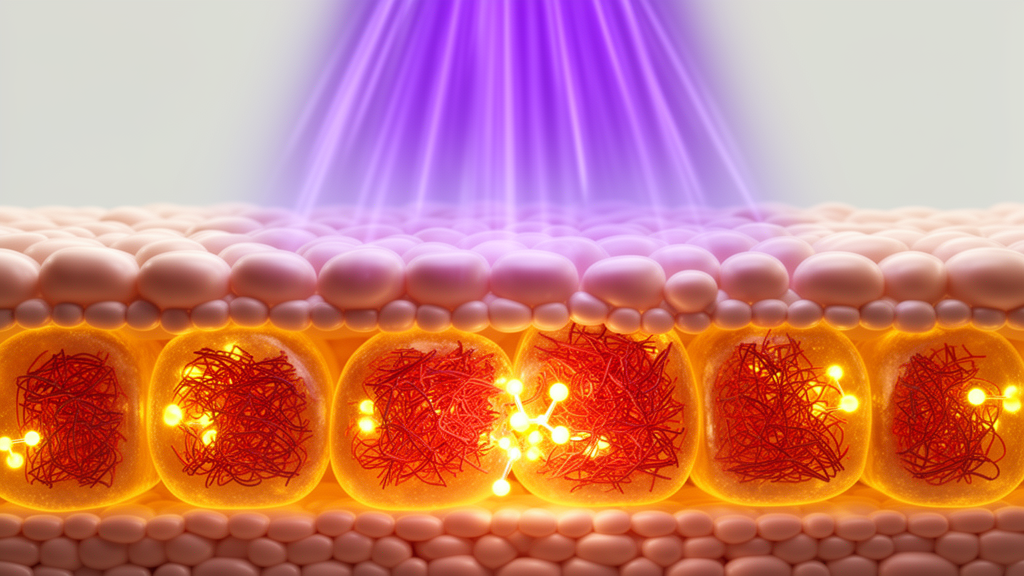
Ultraviolet B radiation appears to kill skin cells through a recently discovered form of regulated cell death called disulfidptosis, according to a study published in Cell Death Discovery. The researchers report that aberrant accumulation of disulfide-crosslinked proteins—a hallmark of disulfide stress—acts as a molecular lesion in UVB-induced skin photodamage and photoaging, and they identify the NCKAP1 protein as an essential mediator of this process.

Disulfidptosis is a form of regulated cell death characterized by a specific biochemical sequence: depletion of NADPH, excessive formation of disulfide bonds between proteins, and collapse of the F-actin cytoskeleton. In the new work, the team reports that these core features were consistently observed in human keratinocytes across several physiologically relevant systems, including sun-exposed skin, ex vivo UVB-irradiated skin, and keratinocytes cultured in vitro.

Beyond describing a single cell-death event, the authors frame disulfide stress as a quantifiable pathogenic continuum that links acute UVB insult to chronic tissue degeneration in skin. In other words, the same proteotoxic mechanism observed immediately after irradiation may contribute to longer-term degenerative changes associated with photoaging.

To probe the mechanism, the researchers used genetic and pharmacological interrogation in murine models of both chronic and acute injury. These experiments established NCKAP1 as an essential mediator of the pathway. Notably, when the pathway was inhibited with the reducing agent TCEP, the team reports a robust mitigation of keratinocyte death and tissue damage in the models.

The study’s authors suggest that disulfide-bond dyshomeostasis may represent a targetable vulnerability not only in environmental skin disease but also in a broader range of age-related and environmental pathologies characterized by proteostasis collapse. They position the finding as a potential new paradigm for therapeutic intervention beyond dermatology, though this broader application remains a proposal rather than a demonstrated result.

Several caveats are worth noting. The findings on TCEP-mediated protection come from murine models and in vitro systems, and the article is a peer-reviewed, accepted manuscript shared ahead of final editorial edits, so it may be revised in the Version of Record. The authors’ suggestion that the mechanism extends to other age-related diseases is presented as a hypothesis, not as an experimentally demonstrated outcome.

Even so, the work adds a specific molecular axis—UVB-induced disulfide stress and NCKAP1-mediated disulfidptosis—to the known mechanisms of environmental skin injury, and it identifies a concrete, experimentally testable target for future studies aimed at reducing UVB-driven keratinocyte death and tissue damage.

Subject of Research: UVB-induced disulfide stress and NCKAP1-mediated disulfidptosis in skin photodamage and photoaging

Article Title: UVB-induced keratinocyte disulfidptosis drives skin photodamage and photoaging

Article References: Zhou, Z., Zhang, F., Liang, C., Chen, S., Li, M., Yuwen, T., Chen, Y., Li, M., Lian, N., & Chen, X. (2026). UVB-induced keratinocyte disulfidptosis drives skin photodamage and photoaging. Cell Death Discovery. https://doi.org/10.1038/s41420-026-03405-3

Image Credits: AI Generated

DOI: 10.1038/s41420-026-03405-3

Keywords: disulfidptosis, UVB, keratinocytes, disulfide stress, NCKAP1, photoaging, photodamage, NADPH depletion, F-actin collapse, TCEP, skin biology, proteostasis

News Source: Drew Townsend. (October 28, 2026). UVB triggers disulfidptosis in skin cells, driving photodamage and photoaging. Scienmag.

Tags: disulfide stressdisulfidptosisF-actin collapsekeratinocytesNADPH depletionNCKAP1photoagingphotodamageproteostasisskin biologyTCEPUVB
Share12Tweet7Share2ShareShareShare1

Related Posts

ACE gene variant linked to early kidney damage in children with type 1 diabetes

ACE gene variant linked to early kidney damage in children with type 1 diabetes

October 28, 2026
One in three Ugandan men seeking fertility care shows abnormal semen parameters

One in three Ugandan men seeking fertility care shows abnormal semen parameters

October 28, 2026

Radioligand Binding to IDH1 Enzymes Revealed as Method-Dependent in New Study

October 28, 2026

Serine and Glycine Scarcity Drives Pancreatic Cancer Cells Toward Stem-like, Invasive Behavior

October 28, 2026

POPULAR NEWS

  • How an industrial apparel brand stitches narrative into fabric, thread and label

    How an industrial apparel brand stitches narrative into fabric, thread and label

    29 shares
    Share 12 Tweet 7
  • New Open-Access Journal Biomedical Materials Science Launches to Link Materials Innovation with Patient Care

    29 shares
    Share 12 Tweet 7
  • Berberine Eases Diabetic Kidney Damage by Tuning a Renal Sugar-Transport Switch

    29 shares
    Share 12 Tweet 7
  • Palmitoylation Enzyme ZDHHC5 Emerges as Driver of Neutrophil Inflammation in COPD

    29 shares
    Share 12 Tweet 7

About

We bring you the latest biotechnology news from best research centers and universities around the world. Check our website.

Follow us

Recent News

ACE gene variant linked to early kidney damage in children with type 1 diabetes

One in three Ugandan men seeking fertility care shows abnormal semen parameters

Unified Building Data Platform Tested Against AI Assistants in Real University Deployment

Subscribe to Blog via Email

Enter your email address to subscribe to this blog and receive notifications of new posts by email.

Join 85 other subscribers
  • Contact Us

Bioengineer.org © Copyright 2023 All Rights Reserved.

Welcome Back!

Login to your account below

Forgotten Password?

Retrieve your password

Please enter your username or email address to reset your password.

Log In
No Result
View All Result
  • Homepages
    • Home Page 1
    • Home Page 2
  • News
  • National
  • Business
  • Health
  • Lifestyle
  • Science

Bioengineer.org © Copyright 2023 All Rights Reserved.