Exogenous selenium can strengthen the tolerance of tomato seedlings to saline-alkali stress, according to a new study published in BMC Plant Biology that combined physiological measurements with transcriptome sequencing to trace how the element acts at both the biochemical and molecular levels.
Saline-alkali stress is a serious constraint on tomato growth, and while selenium has been reported to mitigate various abiotic stresses in plants, its physiological and molecular regulatory mechanisms in tomato seedlings under these conditions had remained insufficiently understood. The research team set out to close that gap using an integrated experimental design.
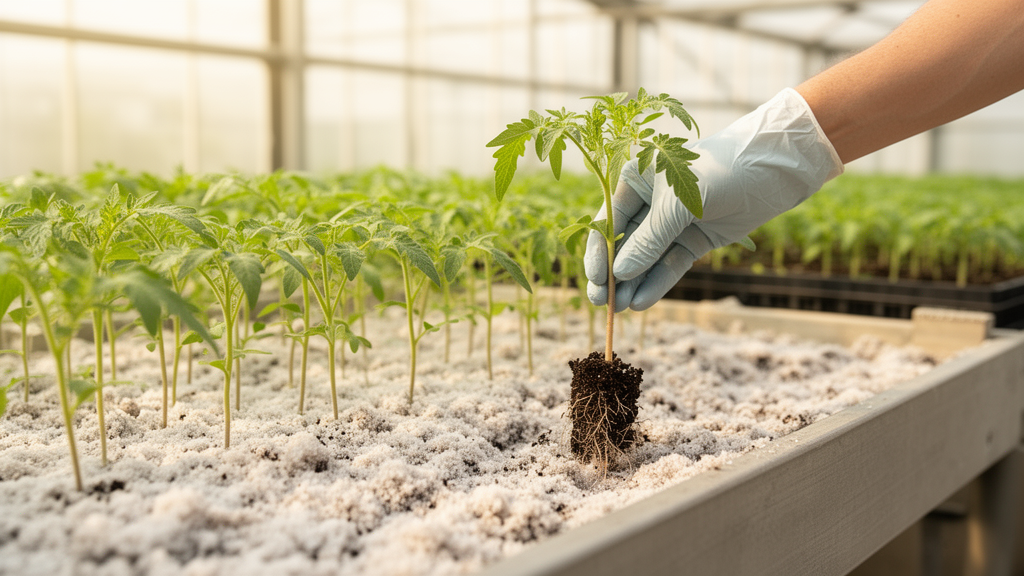
The researchers worked with the tomato inbred line Solanum lycopersicum cv. Ailsa Craig. Saline-alkali conditions were created by supplementing a quarter-strength Hoagland nutrient solution with a complex saline-alkali mixture, and sodium selenite was applied as the source of exogenous selenium. The team then evaluated growth phenotypes and physiological parameters and carried out transcriptome sequencing to examine the molecular mechanisms involved.
The selenium treatment reduced chlorophyll degradation, suggesting a protective effect on the seedlings’ photosynthetic function. At the same time, it sharply increased the activities of key antioxidant and defense-related enzymes: superoxide dismutase rose by 377.37 percent, catalase by 145.67 percent, peroxidase by 3.39 percent, and phenylalanine ammonia-lyase by 340.30 percent.
The treatment also promoted the accumulation of salicylic acid and jasmonic acid, two signaling molecules involved in plant stress responses. Concurrently, malondialdehyde content and reactive oxygen species accumulation were reduced, indicating less oxidative damage to the seedlings under stress.
Transcriptomic profiling revealed that the selenium treatment activated phenylalanine metabolism, carotenoid biosynthesis, galactose metabolism, and related pathways. According to the authors, these activated pathways supported the improved saline-alkali tolerance observed in the tomato seedlings.
Taken together, the results point to a multi-layered mechanism. The authors conclude that exogenous selenium synergistically enhances saline-alkali tolerance in tomato seedlings through the enhancement of antioxidant system activity, protection of photosynthetic function, maintenance of cell membrane homeostasis, and modulation of metabolic pathways such as phenylalanine and galactose metabolism.
The study’s authors state that these findings provide a theoretical basis and genetic resource support for stress-tolerant tomato cultivation and for the genetic improvement of elite saline-alkali-tolerant germplasm. As the work was conducted on seedlings of a single inbred line under controlled conditions, further field-level validation across diverse tomato genotypes would be needed to confirm how broadly the approach can be applied in practice.
Subject of Research: Mechanisms by which exogenous selenium alleviates saline-alkali stress in tomato seedlings
Article Title: Integrated physiological and transcriptomic analyses reveal the mechanisms of exogenous selenium-mediated alleviation of saline-alkali stress in tomato seedlings
Article References: Zhang, J., Hu, X., He, S., Liu, G., Jiang, Z., & Zhang, D. (2026). Integrated physiological and transcriptomic analyses reveal the mechanisms of exogenous selenium-mediated alleviation of saline-alkali stress in tomato seedlings. BMC Plant Biology. https://doi.org/10.1186/s12870-026-09927-3
Image Credits: AI Generated
DOI: 10.1186/s12870-026-09927-3
Keywords: selenium, saline-alkali stress, tomato seedlings, antioxidant enzymes, transcriptomics, chlorophyll, salicylic acid, jasmonic acid, phenylalanine metabolism, carotenoid biosynthesis, plant stress tolerance, BMC Plant Biology
News Source: Drew Townsend. (October 28, 2026). Selenium Helps Tomato Seedlings Cope with Saline-Alkali Stress, Study Finds. Scienmag.