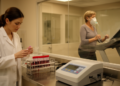
Adults with inflammatory bowel disease who show confirmed sarcopenia — a combination of reduced muscle strength and reduced muscle mass — faced a markedly higher risk of being hospitalized for their disease over the following year, according to a prospective cohort study conducted at Federico II University Hospital in Naples, Italy. The research, published in Frontiers in Gastroenterology, enrolled consecutive adults with IBD between December 2023 and August 2024 and followed them for 12 months, tracking clinical worsening, IBD-related hospitalization, surgery, and infectious complications.
The study assessed sarcopenia using handgrip strength testing together with bioelectrical impedance analysis, classifying participants as non-sarcopenic, as having probable sarcopenia, or as having confirmed sarcopenia. Of the 113 patients enrolled, 32 (28.3%) were non-sarcopenic, 73 (64.6%) had probable sarcopenia, and 8 (7.1%) had confirmed sarcopenia. The high proportion falling into the probable category indicates that many patients showed low muscle strength even when full diagnostic criteria were not met.
Patients with confirmed sarcopenia differed from the other groups in several baseline characteristics: they had lower body mass index, higher C-reactive protein (CRP) levels, and a higher prevalence of high nutritional risk. This pattern suggests that the most severe muscle depletion in this cohort coincided with markers of active inflammation and nutritional vulnerability, although the cross-sectional associations reported in the study do not by themselves establish causal direction.
During the 12-month follow-up, IBD-related hospitalization occurred in 6.2% of non-sarcopenic patients, 11.0% of those with probable sarcopenia, and 62.5% of those with confirmed sarcopenia, a difference the authors report as statistically significant (p<0.001). After adjustment for baseline clinical activity, confirmed sarcopenia remained independently associated with IBD-related hospitalization, with an adjusted odds ratio of 18.30 (95% CI 3.21–141.14; p<0.001). The wide confidence interval reflects the small number of patients with confirmed sarcopenia in the cohort, so the size of the effect should be interpreted with caution even though the association itself was strong.
Confirmed sarcopenia was also independently associated with infectious complications over the follow-up period after adjustment for exposure to advanced therapies, with an adjusted odds ratio of 7.40 (95% CI 1.17–54.63; p=0.034). By contrast, the relationship between sarcopenia and clinical worsening did not hold up statistically: clinical worsening occurred in 46.9% of non-sarcopenic patients, 45.2% of those with probable sarcopenia, and 87.5% of those with confirmed sarcopenia, but this difference was not significant (p=0.074), and after adjustment for age, baseline clinical activity, BMI, and CRP, no independent association between sarcopenia and clinical worsening was observed.
The authors conclude that in this prospective cohort of patients with IBD, confirmed sarcopenia was independently associated with an increased risk of IBD-related hospitalization and infectious complications over 12 months, and they suggest that assessing muscle strength and mass may provide prognostic information beyond conventional measures of disease activity and nutritional status. Because the cohort was modest in size and the confirmed sarcopenia group contained only eight patients, the findings will need confirmation in larger studies before any change to clinical practice could be considered.
Subject of Research: The association between sarcopenia and clinical outcomes in patients with inflammatory bowel disease.
Article Title: The hidden burden of sarcopenia in inflammatory bowel disease: a strong predictor of complications
Article References: Guarino, A. D., Calabrese, G., Marra, M., Nigro, E., Daniele, A., Rispo, A., Testa, A., Nardone, O. M., De Vito, L., Leo, C., Pasanisi, F., & Castiglione, F. (2026). The hidden burden of sarcopenia in inflammatory bowel disease: a strong predictor of complications. Frontiers in Gastroenterology, 5, Article 1960689. https://doi.org/10.3389/fgstr.2026.1960689
Image Credits: AI Generated
DOI: 10.3389/fgstr.2026.1960689
Keywords: sarcopenia, inflammatory bowel disease, Crohn's disease, ulcerative colitis, hospitalization risk, infectious complications, handgrip strength, bioelectrical impedance analysis, prospective cohort study, nutritional risk, C-reactive protein, gastroenterology
News Source: Ophelia Keating. (October 28, 2026). Muscle Loss Signals Higher Hospitalization Risk in People With Inflammatory Bowel Disease. Scienmag.