• HOME
  • NEWS
  • EXPLORE
    • CAREER
      • Companies
      • Jobs
    • EVENTS
    • iGEM
      • News
      • Team
    • PHOTOS
    • VIDEO
    • WIKI
  • BLOG
  • COMMUNITY
    • FACEBOOK
    • INSTAGRAM
    • TWITTER
Thursday, October 29, 2026
BIOENGINEER.ORG
No Result
View All Result
  • Login
  • HOME
  • NEWS
  • EXPLORE
    • CAREER
      • Companies
      • Jobs
        • Lecturer
        • PhD Studentship
        • Postdoc
        • Research Assistant
    • EVENTS
    • iGEM
      • News
      • Team
    • PHOTOS
    • VIDEO
    • WIKI
  • BLOG
  • COMMUNITY
    • FACEBOOK
    • INSTAGRAM
    • TWITTER
No Result
View All Result
Bioengineer.org
No Result
View All Result
Home NEWS Science News Biology

New IgG blood test for H. pylori shows high specificity but limited sensitivity

by
October 28, 2026
in Biology
Reading Time: 2 mins read
0
New IgG blood test for H. pylori shows high specificity but limited sensitivity

New IgG blood test for H. pylori shows high specificity but limited sensitivity

Share on FacebookShare on TwitterShare on LinkedinShare on RedditShare on Telegram

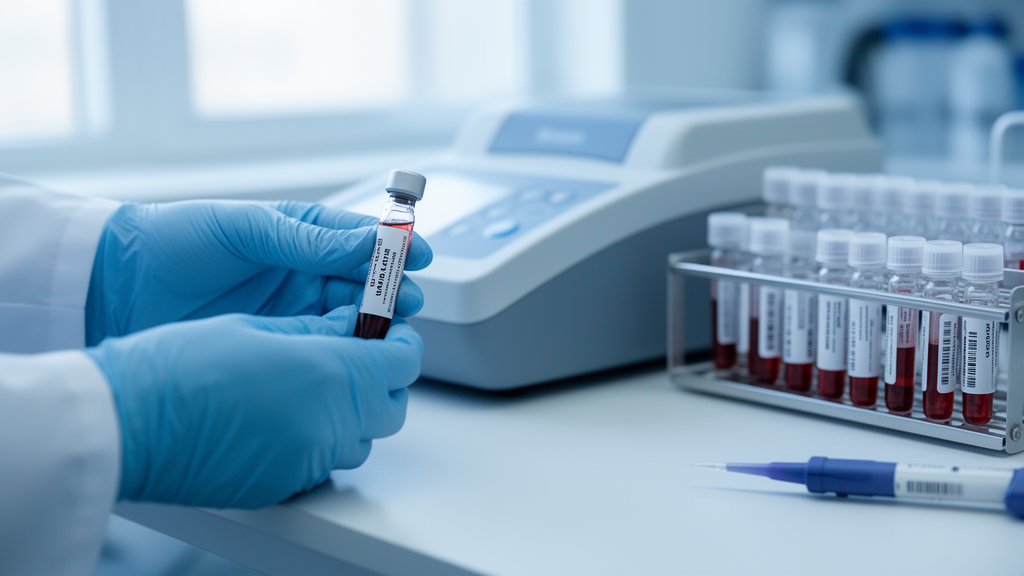
Researchers have evaluated a domestically produced ELISA kit that detects IgG antibodies against Helicobacter pylori, and the results reveal a familiar trade-off in serological diagnostics: the new kit was the most accurate of four commercial and prototype assays at ruling out infection, yet it missed more true infections than its competitors.

The cross-sectional study enrolled 90 adults with dyspepsia who underwent upper gastrointestinal endoscopy. Using concordant results from two reference standards, the rapid urease test and histopathology, the investigators classified 48 patients as infected with H. pylori and 42 as uninfected. Serum anti-H. pylori IgG levels were then measured with four ELISA kits: the Sina Biotech kit under evaluation, along with Pishtazteb, Immunolab and Demeditec assays, and sensitivity and specificity were calculated for each.

The performance figures varied widely. The Pishtazteb kit showed 74 percent sensitivity and 70 percent specificity. The Immunolab kit achieved the highest sensitivity at 90 percent but the lowest specificity at 52 percent. Demeditec fell in between, with 84 percent sensitivity and 60 percent specificity. The Sina Biotech kit recorded the highest specificity of the group at 86 percent, but its sensitivity of 68 percent was the lowest reported in the comparison.

These numbers translate into distinct clinical roles. Because the Immunolab assay detected nine of every ten truly infected patients, it was the most effective at identifying infection, though its low specificity meant more than half of uninfected individuals would be flagged as positive. Conversely, the Sina Biotech kit, with its 86 percent specificity, was superior at correctly identifying people who were not infected, reducing false positives at the cost of missing roughly one in three true infections.

The authors conclude that the high specificity of the Sina Biotech kit makes it a cost-effective, locally produced serological tool for detecting H. pylori infection, particularly valuable in resource-limited settings where access to invasive diagnostics such as endoscopy is restricted, while its low sensitivity remains a clear limitation. The study’s scope should be kept in mind: it involved a single cohort of 90 dyspeptic adults, classification relied on concordant rapid urease and histopathology results, and the findings describe diagnostic performance in that setting rather than outcomes of patient care. The article was published as an open-access paper in BMC Microbiology on 27 October 2026, in a version shared early for faster access and subject to further editorial edits before the final Version of Record.

Subject of Research: Diagnostic performance of a new IgG ELISA kit for Helicobacter pylori compared with commercial kits and reference standards

Article Title: Diagnostic evaluation of a new IgG kit for Helicobacter pylori: comparison with commercial kits and gold standards

Article References: Shamsdin, S. A., Pouladfar, G., Samani, H., Fattahi, M. R., Nikmanesh, Y., & Kamyab, A. (2026). Diagnostic evaluation of a new IgG kit for Helicobacter pylori: comparison with commercial kits and gold standards. BMC Microbiology. https://doi.org/10.1186/s12866-026-05791-1

Image Credits: AI Generated

DOI: 10.1186/s12866-026-05791-1

Keywords: Helicobacter pylori, IgG antibodies, ELISA, diagnostic accuracy, sensitivity, specificity, serology, rapid urease test, histopathology, dyspepsia, BMC Microbiology, Diagnostic

News Source: Ophelia Keating. (October 28, 2026). New IgG blood test for H. pylori shows high specificity but limited sensitivity. Scienmag.


Tags: BMC MicrobiologyDiagnosticdiagnostic accuracydyspepsiaELISAHelicobacter pylorihistopathologyIgG antibodiesrapid urease testsensitivityserologyspecificity
Share12Tweet7Share2ShareShareShare1

Related Posts

Survey of 574 French bulldogs in Germany reveals widespread breed health problems

Survey of 574 French bulldogs in Germany reveals widespread breed health problems

October 29, 2026
Genomic Selection Extends Shrimp Survival Under Ammonia Stress

Genomic Selection Extends Shrimp Survival Under Ammonia Stress

October 29, 2026

Fungal Enzyme Study Reveals Stereochemistry Limits Cytochalasan Biocatalyst Versatility

October 29, 2026

Mycorrhizal type and life form independently shape resource strategies in Qinling woody plants

October 29, 2026

POPULAR NEWS

  • AI Takes On the Flawed Math of Measuring Leaky Heart Valves

    AI Takes On the Flawed Math of Measuring Leaky Heart Valves

    29 shares
    Share 12 Tweet 7
  • How metabolism may reshape DNA methylation across the cardiovascular–kidney–metabolic continuum

    29 shares
    Share 12 Tweet 7
  • Cellulose Membrane With Two Faces Splits Oil and Water Under Gravity Alone

    29 shares
    Share 12 Tweet 7
  • Silencing PTTG1 curbs retinoblastoma cell growth by lowering c-myc

    29 shares
    Share 12 Tweet 7

About

We bring you the latest biotechnology news from best research centers and universities around the world. Check our website.

Follow us

Recent News

AI Model Boosts Stroke Volume Measurement Accuracy in ICU

Machine learning maps how national conditions track global mental health burden

Survey of 574 French bulldogs in Germany reveals widespread breed health problems

Subscribe to Blog via Email

Enter your email address to subscribe to this blog and receive notifications of new posts by email.

Join 84 other subscribers
  • Contact Us

Bioengineer.org © Copyright 2023 All Rights Reserved.

Welcome Back!

Login to your account below

Forgotten Password?

Retrieve your password

Please enter your username or email address to reset your password.

Log In
No Result
View All Result
  • Homepages
    • Home Page 1
    • Home Page 2
  • News
  • National
  • Business
  • Health
  • Lifestyle
  • Science

Bioengineer.org © Copyright 2023 All Rights Reserved.