

• HOME
  • NEWS
  • EXPLORE
    • CAREER
      • Companies
      • Jobs
    • EVENTS
    • iGEM
      • News
      • Team
    • PHOTOS
    • VIDEO
    • WIKI
  • BLOG
  • COMMUNITY
    • FACEBOOK
    • INSTAGRAM
    • TWITTER
Wednesday, October 28, 2026
BIOENGINEER.ORG
No Result
View All Result
  • Login
  • HOME
  • NEWS
  • EXPLORE
    • CAREER
      • Companies
      • Jobs
        • Lecturer
        • PhD Studentship
        • Postdoc
        • Research Assistant
    • EVENTS
    • iGEM
      • News
      • Team
    • PHOTOS
    • VIDEO
    • WIKI
  • BLOG
  • COMMUNITY
    • FACEBOOK
    • INSTAGRAM
    • TWITTER
No Result
View All Result
Bioengineer.org
No Result
View All Result
Home NEWS Science News Biology

Immunoglobulins and Efgartigimod dampen neuronal activity in rat cortical cultures

by
October 28, 2026
in Biology
Reading Time: 2 mins read
0
Immunoglobulins and Efgartigimod dampen neuronal activity in rat cortical cultures

Immunoglobulins and Efgartigimod dampen neuronal activity in rat cortical cultures

Share on FacebookShare on TwitterShare on LinkedinShare on RedditShare on Telegram

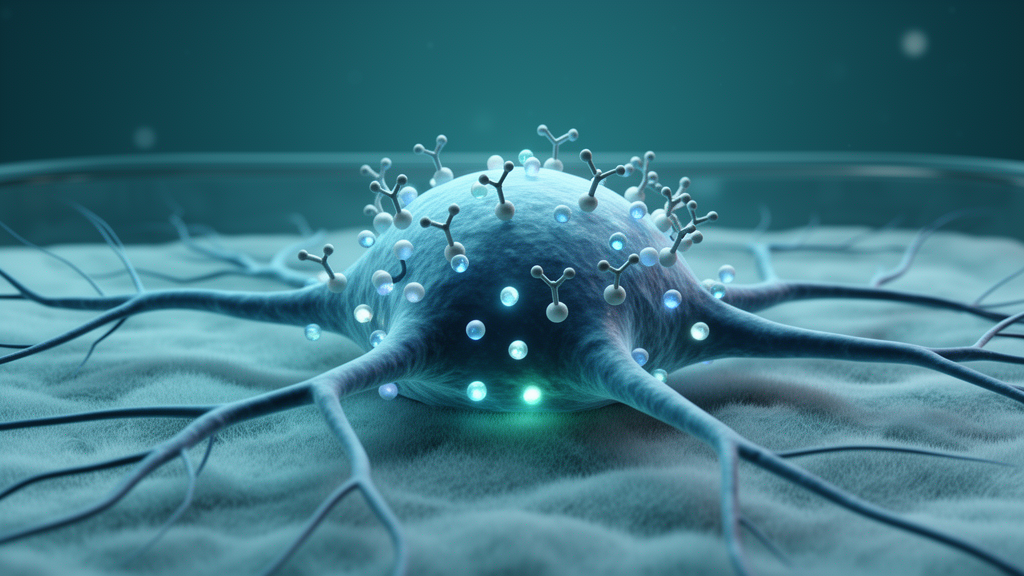
Immunoglobulin-based therapies are widely used to treat neuroinflammatory diseases, but whether they act directly on nerve cells has remained an open question. A new proof-of-concept study from the University of Cologne, published as a Brief Research Report in Frontiers in Cellular Neuroscience, suggests that they can. Working with primary rat cortical neuron cultures, the researchers found that these neurons express two Fc receptors—the inhibitory Fc gamma receptor IIb (FcγRIIb) and the neonatal Fc receptor (FcRn)—and that both immunoglobulin treatment and the FcRn blocker Efgartigimod were associated with reduced neuronal activity in the dish.

The team first established receptor expression using immunocytochemistry and mRNA analysis.

To test whether these receptors matter functionally, the researchers used microelectrode array recordings to measure neuronal activity in the cultures. When the cultures were treated with immunoglobulins, neuronal activity dropped both under physiological conditions and under inflammatory conditions. The study found that immunoglobulin treatment reduced neuronal activity under both physiological and proinflammatory conditions, and that FcγRIIb expression was upregulated under proinflammatory conditions.

Under control conditions the observed effects suggested a trend toward dose dependence, although the authors characterize this as a trend rather than a firmly established dose-response relationship. The parallel effects of immunoglobulins and Efgartigimod are consistent with the idea that Fc receptor signaling in neurons could mediate the response, but the study is explicitly framed as proof of concept in vitro.

The authors are careful about scope. The work was carried out in primary rat cortical neuron cultures, not in living animals or patients, and the abstract presents the receptor findings as evidence obtained by immunocytochemistry and mRNA analysis rather than as demonstrations of mechanism. The reduction in activity is reported as an observed association with treatment; the study does not establish how the receptors transduce the signal or what the changes mean for network function beyond the recorded activity. The authors position neuronal Fc receptor signaling as a promising avenue for future studies rather than as a validated therapeutic target.

Even with those limits, the result is striking because it shifts attention from immune cells to neurons as possible direct responders to immunoglobulin-based drugs. Confirming that will require follow-up work in more complex systems, but this culture-based study provides the initial evidence that the machinery—and a measurable functional response—is present in cortical neurons.

Subject of Research: Fc receptor expression in rat cortical neurons and reduced neuronal activity after immunoglobulin and Efgartigimod treatment

Article Title: Immunoglobulins and Efgartigimod reduce neuronal activity in primary rat cortical neuron cultures

Article References: Marti Bautista, F., Nazarzadeh, N., Genseke, N., Groß, E., Olschewski, D. N., Fink, G. R., Schroeter, M., Rueger, M. A., & Vay, S. U. (2026). Immunoglobulins and Efgartigimod reduce neuronal activity in primary rat cortical neuron cultures. Frontiers in Cellular Neuroscience, 20, Article 1939772. https://doi.org/10.3389/fncel.2026.1939772

Image Credits: AI Generated

DOI: 10.3389/fncel.2026.1939772

Keywords: FcγRIIb, FcRn, Efgartigimod, immunoglobulin therapy, cortical neurons, microelectrode array, neuroinflammation, in vitro, rat neurons, Fc receptors, neuronal activity, Immunoglobulins

News Source: Cassandra Pierce. (October 28, 2026). Immunoglobulins and Efgartigimod dampen neuronal activity in rat cortical cultures. Scienmag.


Tags: cortical neuronsefgartigimodFc receptorsFcRnFcγRIIbimmunoglobulin therapyimmunoglobulinsin vitromicroelectrode arrayNeuroinflammationneuronal activityrat neurons
Share12Tweet7Share2ShareShareShare1

Related Posts

Melatonin eases drought injury in maize seedlings, with effects differing by dose

Melatonin eases drought injury in maize seedlings, with effects differing by dose

October 28, 2026
Two New Waxcap Mushrooms Discovered in Southeast China

Two New Waxcap Mushrooms Discovered in Southeast China

October 28, 2026

Laboratory Generations of Sugarcane Parasitoid Wasp Lose Fitness Within Ten Generations

October 28, 2026

Prophages Shape Virulence, Not Resistance, in Staphylococcus aureus Genomes

October 28, 2026

POPULAR NEWS

  • Systematic review maps end-of-life psychosocial and spiritual needs in physical disability

    Systematic review maps end-of-life psychosocial and spiritual needs in physical disability

    29 shares
    Share 12 Tweet 7
  • Text Message Campaign Reached Only a Third of Patients Overdue for Colorectal Cancer Screening

    29 shares
    Share 12 Tweet 7
  • FOXO1 Emerges as Candidate Regulator and Biomarker in Hip Dysplasia

    29 shares
    Share 12 Tweet 7
  • Regulators, developers and clinicians in Shenzhen voice concerns over medical AI governance

    29 shares
    Share 12 Tweet 7

About

We bring you the latest biotechnology news from best research centers and universities around the world. Check our website.

Follow us

Recent News

Neutrophils Shift Metabolism in a Triple-Negative Breast Cancer Coculture Model

Melatonin eases drought injury in maize seedlings, with effects differing by dose

One-Week Smartphone Intervention for Autistic Adults Falls Short in First Trial

Subscribe to Blog via Email

Enter your email address to subscribe to this blog and receive notifications of new posts by email.

Join 85 other subscribers
  • Contact Us

Bioengineer.org © Copyright 2023 All Rights Reserved.

Welcome Back!

Login to your account below

Forgotten Password?

Retrieve your password

Please enter your username or email address to reset your password.

Log In
No Result
View All Result
  • Homepages
    • Home Page 1
    • Home Page 2
  • News
  • National
  • Business
  • Health
  • Lifestyle
  • Science

Bioengineer.org © Copyright 2023 All Rights Reserved.
