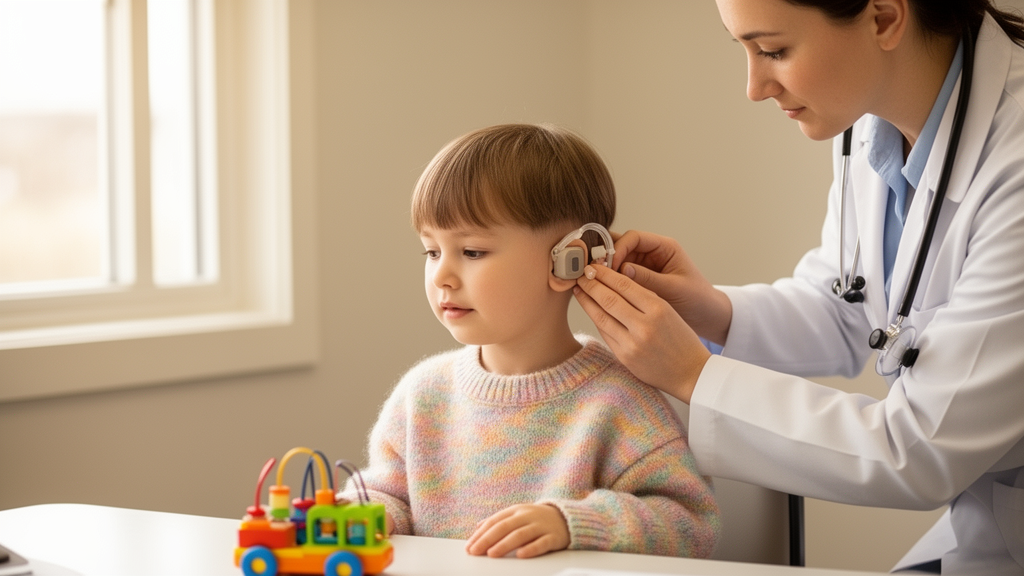
Children who retain some low-frequency hearing after cochlear implant surgery may not actually benefit from it in everyday listening, according to a new study published in Frontiers in Audiology and Otology. The research, led by Yuhan Wong of the Manchester Centre for Audiology and Deafness at the University of Manchester, found that a group of paediatric patients with successfully preserved hearing showed limited use of that hearing and little measurable advantage when it was accessible.
The study was a cross-sectional, within-subject investigation involving 14 children, covering 19 implanted ears, all of whom had undergone cochlear implantation with successful hearing preservation. Hearing preservation surgery is designed to keep the delicate structures of the inner ear functioning so that a patient can, in principle, combine electrical stimulation from the implant with natural acoustic hearing in the same ear. The researchers wanted to know whether this preserved hearing actually translated into better real-life auditory outcomes, a question that had remained unclear.
Each child was tested under two conditions. In the test condition, they used their everyday listening configuration, which was either electroacoustic stimulation, where an acoustic amplifier is combined with the implant, or electro-natural stimulation, where the implant alone is used without any acoustic amplification. In the control condition, the child’s ear canal was plugged, removing access to any preserved hearing. The battery of assessments covered speech perception in noise, pitch discrimination, melody identification, and prosody perception.
The results revealed a striking pattern in how the preserved hearing was actually being used. Only two of the 19 ears used an electroacoustic stimulation system. The remaining ears relied on their cochlear implant without any acoustic amplification, meaning that even though low-frequency hearing had been surgically preserved, most children were not making use of it through dedicated amplification in daily life.
When the researchers compared performance between the test and control conditions, they found no statistically significant improvements when residual hearing was accessible. There was, however, a trend towards better music perception in the test condition, suggesting a possible but unconfirmed advantage for musical listening. Notably, children with better low-frequency residual hearing tended to perform better on pitch discrimination and melody identification, indicating that the degree of preserved hearing itself was linked to certain auditory abilities.
This analysis showed that the level of residual hearing in the study cohort provided only limited access to the low-frequency acoustic cues contained in the test stimuli. In other words, the children’s preserved hearing, while measurable, was simply not sensitive enough to pick up the relevant acoustic information in the materials used during testing.
The authors concluded that the cohort showed limited use of, and little benefit from, preserved acoustic hearing. They emphasised that further research is needed to determine whether providing appropriate amplification would lead to better outcomes, and to explore why electroacoustic stimulation systems are not commonly used in children with preserved acoustic hearing.
Preserving residual hearing during implantation remains technically achievable, but this study suggests that preservation alone does not guarantee that children will use or benefit from that hearing in practice.
The study was conducted by researchers from the University of Manchester, Manchester Royal Infirmary, Royal Manchester Children’s Hospital, University College London, and the University of Melbourne. It was received by the journal in August 2026 and accepted in October 2026, and it appears in the section on clinical research in auditory implants and hearing aids.
Subject of Research: Use and benefit of preserved low-frequency acoustic hearing in children with cochlear implants
Article Title: Limited use and benefit of residual low-frequency hearing in children with cochlear implants
Article References: Wong, Y., Sladen, M., Schlittenlacher, J., Galvin, K. L., Schaefer, S., O'Driscoll, M., Nichani, J., Bruce, I. A., & Kluk, K. (2026). Limited use and benefit of residual low-frequency hearing in children with cochlear implants. Frontiers in Audiology and Otology, 4, Article 1980623. https://doi.org/10.3389/fauot.2026.1980623
Image Credits: AI Generated
DOI: 10.3389/fauot.2026.1980623
Keywords: cochlear implants, hearing preservation, children, low-frequency hearing, electroacoustic stimulation, electro-natural stimulation, speech perception, music perception, pitch discrimination, audiology, residual hearing, pediatric hearing loss
News Source: Ophelia Keating. (October 28, 2026). Children with cochlear implants gain little from preserved low-frequency hearing, study finds. Scienmag.