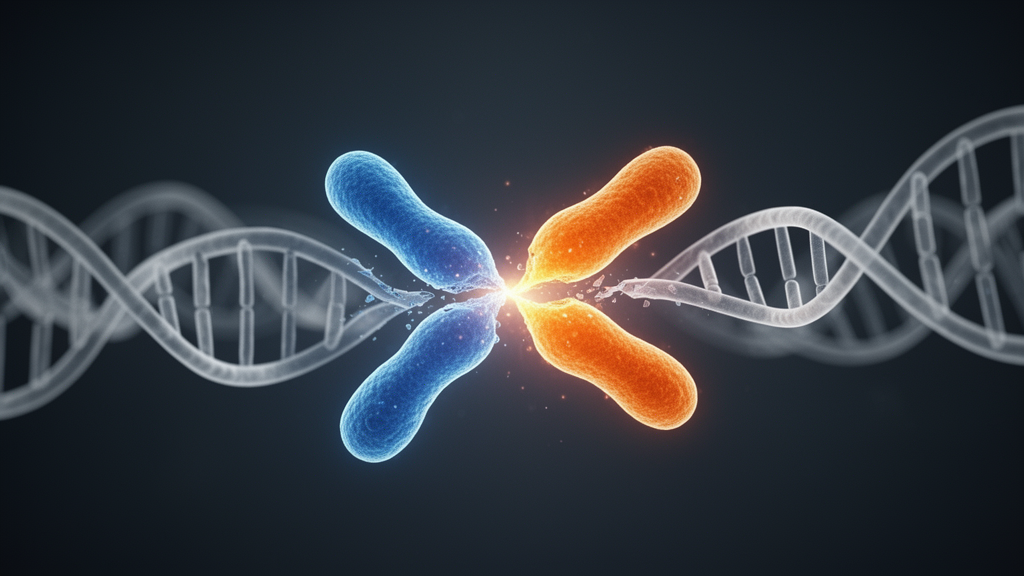
Transcript fusions—abnormal genetic events in which pieces of two different genes become joined—are often correlated with the development of cancer, making their detection from RNA sequencing data an important task in cancer research. A new benchmarking study has evaluated eight widely used computational tools for this purpose and found that their performance depends strongly on the type of sequencing data being analyzed, with STAR-Fusion emerging as the most broadly robust method across two very different testing scenarios.
The study, published in Frontiers in Bioinformatics, assessed Arriba, ChimeRScope, CICERO, FuSeq, FusionCatcher, Pizzly, JAFFA, and STAR-Fusion. These eight tools were selected because they had performed best in previous benchmark evaluations, and the researchers divided them into two categories: alignment-based methods and alignment-free methods, reflecting the different computational strategies they use to identify fusion transcripts in sequencing reads.
Previous benchmarks of fusion detection tools have been inconclusive about their accuracy on real data, and, importantly, earlier assessments had used only bulk RNA-seq samples. Targeted RNA-seq, in which sequencing is focused on a selected set of genes rather than the whole transcriptome, had not previously been evaluated as a setting for these tools, leaving a significant gap for laboratories that rely on targeted panels in clinical and research contexts.
To address this gap, the researchers built two distinct evaluation datasets. The first consisted of 92 samples of real pediatric B-cell precursor acute lymphoblastic leukemia cases, in which the fusions had been manually validated, providing a rigorous ground truth for measuring how accurately each tool detected genuine fusion events in targeted RNA-seq data.
The second dataset comprised 10 simulated bulk RNA-seq samples containing synthetic fusions.
The results revealed a clear split between the two settings. On the targeted RNA-seq samples from leukemia patients, STAR-Fusion and FusionCatcher showed superior performance compared with the other tools evaluated. On the simulated bulk RNA-seq samples, the top performers were Arriba and STAR-Fusion, indicating that no single tool dominated every scenario tested.
Taking both settings together, the authors concluded that STAR-Fusion is the most broadly robust tool across both targeted and bulk RNA-seq data. This finding is notable because it suggests that laboratories choosing a single fusion detection method for diverse sequencing workflows may benefit from STAR-Fusion’s consistent showing, even though other tools excelled in individual settings.
The work also underscores a broader methodological point: benchmark results obtained on bulk RNA-seq data cannot simply be assumed to hold for targeted RNA-seq, and vice versa.
By testing leading tools against manually validated real patient data and controlled simulations, this study offers researchers concrete guidance on tool selection and highlights the importance of matching the detection method to the sequencing strategy in use.
Subject of Research: Benchmarking computational tools for detecting transcript fusions in targeted and bulk RNA-seq data
Article Title: Assessment of computational methods for fusion transcript detection in targeted RNA-seq samples
Article References: Oliveira, L. P., Rigatto, V., Alves, G. M. C., Migita, N. A., Yunes, J. A., & Meidanis, J. (2026). Assessment of computational methods for fusion transcript detection in targeted RNA-seq samples. Frontiers in Bioinformatics, 6, Article 1695973. https://doi.org/10.3389/fbinf.2026.1695973
Image Credits: AI Generated
DOI: 10.3389/fbinf.2026.1695973
Keywords: gene fusion, transcript fusion, RNA-seq, bioinformatics, benchmarking, STAR-Fusion, FusionCatcher, Arriba, cancer research, acute lymphoblastic leukemia, targeted RNA-seq, computational methods
News Source: Juliet Wilcox. (October 28, 2026). Benchmark Finds STAR-Fusion Most Reliable for Detecting Gene Fusions in RNA-seq Data. Scienmag.