Older adults living with both sarcopenia and obesity—often called sarcopenic obesity—appear to face a compounded risk of impaired gait and balance, and a new scoping review suggests that structured exercise may help counter it. The review, published in the European Review of Aging and Physical Activity, systematically mapped existing research on how physical activity and sedentary behavior relate to gait and balance performance in this population, and identified where the evidence remains thin.
The research team, led by Wilson Kin Chung Leung and colleagues, searched five electronic databases—MEDLINE via PubMed, Academic Search Premier, CINAHL, SPORTDiscus, and the Sedentary Research Database—from their inceptions until October 2025. They included both experimental and observational studies that focused on associations of physical activity and sedentary behavior with gait and balance outcomes among adults aged 60 years and older with sarcopenic obesity. The search yielded 13 studies covering a total of 502 participants, with mean ages ranging from 64.1 to 77.0 years.
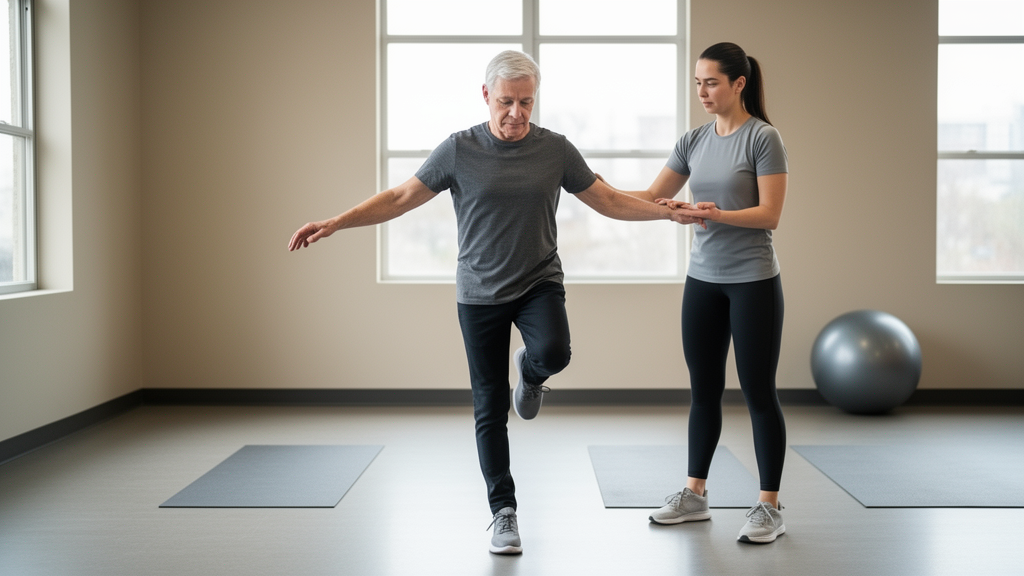
Across the included studies, exercise interventions—featured in at least 75 percent of the randomized controlled trials—showed improvements in several movement-related outcomes when compared with controls such as usual or standard care, health education, or no treatment. The interventions included power training, resistance training, and multicomponent training combining aerobic and resistance exercises. Reported gains spanned gait speed and step length, functional mobility, static balance, and postural control. Safety findings were also favorable: only mild adverse effects, such as muscle soreness and joint pains, were reported across the studies.
The review’s secondary aim was to examine associations of both physical activity and sedentary behavior with balance and gait performance. On the sedentary behavior side, the picture is one of complete absence rather than mixed findings: no studies examining interventions targeting reductions in sedentary behavior have been conducted in this population. That gap is notable given the review’s framing of movement behaviors as encompassing both physical activity and sedentary behavior.
The authors conclude that, given the potentially effective and safe profile observed, exercise training can be considered a treatment option for alleviating gait and balance impairments in older adults with sarcopenic obesity. However, they attach a major caveat to this conclusion: nearly 70 percent of the included studies were conducted solely in older women, meaning the generalizability of the findings to older men is largely questionable. The review calls for further high-quality experimental studies, such as randomized controlled trials, in sex-balanced samples to confirm the causal relationships of physical activity and sedentary behavior with gait and balance performance in this group.
As a scoping review, the study was designed to systematically map the range of available evidence and identify research gaps rather than to pool effect estimates. The authors note that visualizing the breadth of relevant evidence in this area had been difficult and complex, which motivated the mapping approach. The synthesis was conducted narratively, with charted results categorized by gait and balance outcomes. Readers should therefore interpret the findings as a map of what has been studied and how, not as a definitive measure of treatment effect. The published version is an open-access article released on 6 October 2026, shared early as a peer-reviewed, accepted version subject to further edits before the final Version of Record.
Subject of Research: Exercise interventions for gait and balance in older adults with sarcopenic obesity
Article Title: Exercise interventions for gait and balance performances among older adults with sarcopenic obesity: a scoping review
Article References: Leung, W. K. C., Yau, Y. C., Chan, B. C. L., Lam, S. C., & Suen, L. K. P. (2026). Exercise interventions for gait and balance performances among older adults with sarcopenic obesity: a scoping review. European Review of Aging and Physical Activity. https://doi.org/10.1186/s11556-026-00441-x
Image Credits: AI Generated
DOI: 10.1186/s11556-026-00441-x
Keywords: sarcopenic obesity, older adults, gait, balance, exercise interventions, resistance training, power training, multicomponent training, physical activity, sedentary behavior, scoping review, postural control
News Source: Daisy Hatcher. (October 28, 2026). Exercise Training Shows Promise for Gait and Balance in Older Adults with Sarcopenic Obesity. Scienmag.