• HOME
  • NEWS
  • EXPLORE
    • CAREER
      • Companies
      • Jobs
    • EVENTS
    • iGEM
      • News
      • Team
    • PHOTOS
    • VIDEO
    • WIKI
  • BLOG
  • COMMUNITY
    • FACEBOOK
    • INSTAGRAM
    • TWITTER
Thursday, October 29, 2026
BIOENGINEER.ORG
No Result
View All Result
  • Login
  • HOME
  • NEWS
  • EXPLORE
    • CAREER
      • Companies
      • Jobs
        • Lecturer
        • PhD Studentship
        • Postdoc
        • Research Assistant
    • EVENTS
    • iGEM
      • News
      • Team
    • PHOTOS
    • VIDEO
    • WIKI
  • BLOG
  • COMMUNITY
    • FACEBOOK
    • INSTAGRAM
    • TWITTER
No Result
View All Result
Bioengineer.org
No Result
View All Result
Home NEWS Science News Biology

Switchgrass microbe’s extracts show selective growth-stopping activity against tumor cells

by
October 28, 2026
in Biology
Reading Time: 2 mins read
0
Switchgrass microbe's extracts show selective growth-stopping activity against tumor cells

Switchgrass microbe's extracts show selective growth-stopping activity against tumor cells

Share on FacebookShare on TwitterShare on LinkedinShare on RedditShare on Telegram

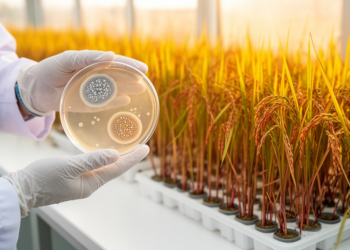
Extracts from a bacterium originally isolated from switchgrass can halt the growth of a wide range of cancer cell lines in laboratory dishes while largely sparing normal cells, according to a study published in BMC Molecular and Cell Biology. The microbe, Bacillus proteolyticus strain OSUB18, had previously been shown to promote plant growth and regulate reactive oxygen species production in plants, but its potential against cancer had not been explored until now.

The research team, led by Baorui Kang and Dalton Hironaka with colleagues including Gaofeng Xiong, tested crude extracts of the bacterium against diverse solid tumor cell lines and found broad-spectrum cytostatic activity, meaning the extracts primarily stopped cells from proliferating rather than killing them outright. Importantly, the extracts showed limited toxicity toward normal human mammary epithelial cells and mouse fibroblasts, suggesting a degree of selectivity that would be highly desirable in any future anticancer agent.

When the researchers narrowed down which fraction of the extract carried the activity, they found it was retained in a portion that is water soluble, heat labile, and resistant to protease enzymes. That combination of properties offers clues about the nature of the active compound: it dissolves readily in water, loses its effect when heated, and is not destroyed by protein-digesting enzymes, which argues against the active component being a simple protein.

Preliminary evidence from the study suggests that ferroptosis, a form of regulated cell death driven by lipid peroxidation, may be involved in the cells’ response, although the authors describe this as preliminary. The findings point to a bioactive component with potentially multifaceted mechanisms of action rather than a single, simple target.

The work is part of a broader search for new anticancer strategies, since advanced cancer remains difficult to treat despite decades of therapeutic progress, and treatments that minimize toxicity while improving survival are still urgently needed. Natural products from microorganisms are considered a rich and promising source of bioactive compounds with therapeutic potential, and this study adds a plant-associated bacterium to the list of organisms worth screening.

The article was published on 14 October 2026 as an open access paper and is being shared early as a peer-reviewed, accepted manuscript that is citable and carries a permanent DOI, subject to further edits before the final version of record appears. As with all cell line studies, the results represent early laboratory findings: the cytostatic activity was measured in cultured cells, and the selectivity observed in dishes does not establish that the extracts would be safe or effective in patients.

Subject of Research: Anticancer cytostatic activity of Bacillus proteolyticus OSUB18 bacterial extracts in cell line studies

Article Title: Extracts of Bacillus proteolyticus strain OSUB18 exhibit cytostatic activity

Article References: Kang, B., Hironaka, D., Yuan, P., Munoz, D., Ju, K.-S., Xia, Y., & Xiong, G. (2026). Extracts of Bacillus proteolyticus strain OSUB18 exhibit cytostatic activity. BMC Molecular and Cell Biology. https://doi.org/10.1186/s12860-026-00607-6

Image Credits: AI Generated

DOI: 10.1186/s12860-026-00607-6

Keywords: Bacillus proteolyticus, OSUB18, cytostatic activity, cancer cell lines, ferroptosis, lipid peroxidation, natural products, microbial extracts, selective toxicity, cell proliferation, BMC Molecular and Cell Biology, switchgrass

News Source: Nathaniel Bowman. (October 28, 2026). Switchgrass microbe’s extracts show selective growth-stopping activity against tumor cells. Scienmag.

Tags: Bacillus proteolyticusBMC Molecular and Cell Biologycancer cell linesCell proliferationcytostatic activityferroptosisLipid peroxidationmicrobial extractsnatural productsOSUB18selective toxicityswitchgrass
Share12Tweet7Share2ShareShareShare1

Related Posts

New DNA Markers Distinguish Desert Poplar Hybrids from Their Parent Species

New DNA Markers Distinguish Desert Poplar Hybrids from Their Parent Species

October 29, 2026
Africa's GM Food Revolution Stalls at Just 15 of 54 Nations

Africa’s GM Food Revolution Stalls at Just 15 of 54 Nations

October 29, 2026

Oral Microbiome, Metabolites and Immune Signals Linked in Recurrent Mouth Ulcers

October 29, 2026

Bacterial synthetic communities reshape how sugarcane responds to drought stress

October 29, 2026

POPULAR NEWS

  • Rhizobacteria Screen Points to a Two-Strain Biofertilizer Candidate for Sangyod Rice

    Rhizobacteria Screen Points to a Two-Strain Biofertilizer Candidate for Sangyod Rice

    29 shares
    Share 12 Tweet 7
  • New AI Network Monitors High-Speed Train Brake Pads Across Different Speeds

    29 shares
    Share 12 Tweet 7
  • Neuropsychiatric Symptoms in Alzheimer’s Disease Linked to Amyloid and Heat Shock Proteins

    29 shares
    Share 12 Tweet 7
  • Fetal day-night rhythms in the womb predict infant sleep patterns

    29 shares
    Share 12 Tweet 7

About

We bring you the latest biotechnology news from best research centers and universities around the world. Check our website.

Follow us

Recent News

Cursor Movements Reveal How Skilled Soccer Players Prepare Before They Respond

Beta-brain-wave dips may link amyloid buildup to memory loss in early Alzheimer’s

Women Lead New Neuroscience Research on Empathy, Pareidolia and Mental Rotation

Subscribe to Blog via Email

Enter your email address to subscribe to this blog and receive notifications of new posts by email.

Join 85 other subscribers
  • Contact Us

Bioengineer.org © Copyright 2023 All Rights Reserved.

Welcome Back!

Login to your account below

Forgotten Password?

Retrieve your password

Please enter your username or email address to reset your password.

Log In
No Result
View All Result
  • Homepages
    • Home Page 1
    • Home Page 2
  • News
  • National
  • Business
  • Health
  • Lifestyle
  • Science

Bioengineer.org © Copyright 2023 All Rights Reserved.