


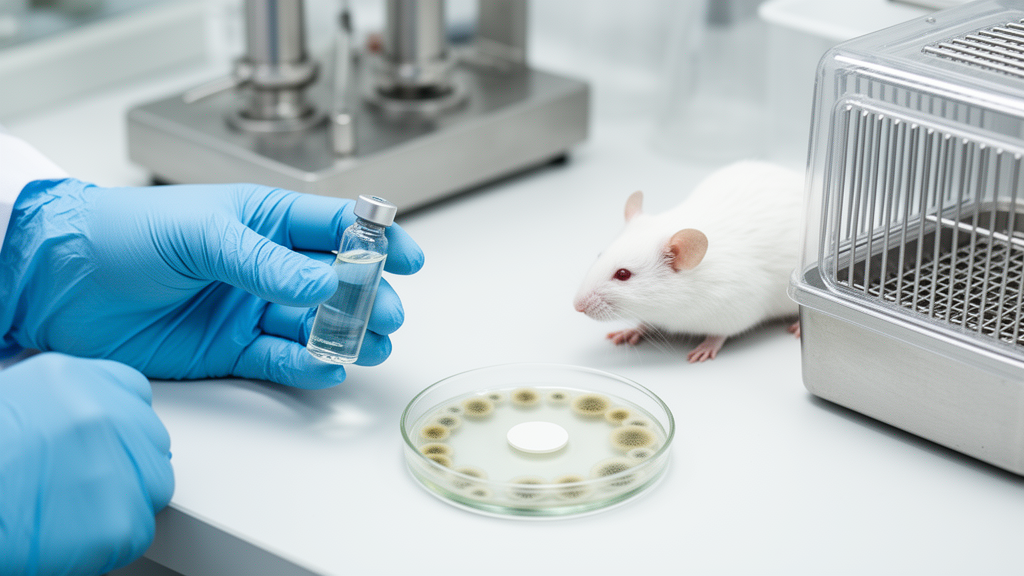
A small molecule designed to disable a fungal-specific enzyme has now been put through its first comprehensive safety and antifungal evaluation, and the results suggest it may be worth developing further. The compound, called ISFP10, blocks fungal phosphoglucomutase, an enzyme that pathogenic fungi need to build their cell walls. In a new study published in Drugs in R&D, researchers from Mayo Clinic and collaborators report that ISFP10 potently inhibited Candida albicans and Candida glabrata in laboratory tests and was well tolerated when given daily to healthy mice for a week, with no evidence of organ toxicity.
The strategy behind ISFP10 rests on a biochemical difference between fungi and mammals. Many medically important fungi possess a cell wall rich in glucans, which are synthesized from uridine diphosphate glucose. Producing that building block requires the enzyme phosphoglucomutase, or PGM, to convert glucose-6-phosphate into glucose-1-phosphate. Mammals do not have a glucan-rich cell wall, which makes the fungal version of this pathway an attractive therapeutic target. In Aspergillus fumigatus, PGM has been shown to be essential for both organism viability and cell wall integrity, so interfering with it strikes at something the fungus cannot easily do without.
ISFP10 was not found by chance. A fragment screen of 1000 compounds followed by scaffold exploration led the team to this para-aryl derivative, which inhibits the Aspergillus fumigatus PGM enzyme with a half-maximal inhibitory concentration of 2 micromolar. Crucially, the compound achieves at least 50-fold selectivity over the human PGM homolog by covalently modifying a unique active-site cysteine residue that is conserved among fungal PGMs, including those of Aspergillus, Candida and Pneumocystis species, but absent from the human enzyme. That covalent modification irreversibly inactivates the fungal enzyme. The researchers had previously shown that Pneumocystis jirovecii and Pneumocystis murina also carry PGM enzymes containing this conserved cysteine, providing a proof of concept that selective PGM inhibition could become a novel therapeutic strategy for Pneumocystis pneumonia.
To test whether that activity extended beyond Aspergillus and Pneumocystis, the team turned to Candida, a genus responsible for serious invasive infections. Antifungal susceptibility testing was performed by the Fungus Testing Laboratory at the University of Texas Health Science Center at San Antonio, using Clinical and Laboratory Standards Institute broth microdilution methodologies M27 and M38 in buffered RPMI 1640 medium. ISFP10 inhibited all tested isolates, with IC50 values of 2 micrograms per milliliter and IC100 values of 2 to 4 micrograms per milliliter. Fluconazole, by contrast, showed variable and generally higher minimum inhibitory concentrations across the same strains, with several isolates exhibiting resistance at 16 micromolar or above. The authors caution that direct comparisons with fluconazole are limited by the small number of isolates examined, but ISFP10 maintained activity even against isolates with reduced fluconazole susceptibility.
Growth assays reinforced those findings. When ISFP10 was added to C. albicans and C. glabrata cultures in YPD medium at final concentrations of 200, 100 and 50 micromolar, growth was suppressed in a concentration-dependent manner relative to a vehicle control over an 8-hour time course, with optical density measured hourly across three to four independent experimental runs on multiple days. These observations add to prior work demonstrating activity against A. fumigatus and Pneumocystis species and underscore the potential broader-spectrum antifungal value of agents that inhibit fungal PGM. One important question remains open: whether ISFP10 is fungistatic, merely suppressing growth, or fungicidal, actually killing the organism. The current studies were not designed to distinguish between the two, and the authors note that future time-kill analyses and minimum fungicidal concentration determinations will be needed to define the compound’s pharmacodynamic activity against Candida, Aspergillus and other susceptible pathogens.
The toxicology portion of the study is, according to the authors, the first comprehensive investigation of ISFP10’s safety profile in test animals. Ten male and ten female 12-week-old C57BL6 mice received once-daily intraperitoneal injections of either vehicle or ISFP10 at 10 milligrams per kilogram for 7 consecutive days, a dose based on the team’s previously published in vitro data and the compound’s volume of distribution in mice. Because ISFP10 dissolves poorly in water or saline, it was prepared in dimethyl sulfoxide and diluted with Methocel and saline before injection. The animals tolerated the daily injections without adverse clinical signs and remained vigorous with normal activity throughout the treatment period.
Across a battery of assessments, the treated mice looked remarkably similar to controls. Body weight showed no significant differences between groups, whether measured daily or at the end of the experiment. Blood collected for a complete blood count and a comprehensive metabolic panel revealed no significant differences in any parameter except two: neutrophil counts were significantly increased and potassium levels were significantly decreased in the ISFP10 group, but in both cases the deviations stayed within the normal physiological range for the strain and were not considered clinically significant. The mechanisms behind the modest neutrophil increase are unknown and may relate to leukocyte mobilization from the bone marrow or changes in the vascular distribution of these cells. Blinded histopathological evaluation of lung, liver and kidney sections by a Mayo pathologist found no tissue injury or toxic abnormalities, with all organs displaying completely normal architecture and a score of zero on every graded parameter.
Lung tissue received particular attention because the compound is intended for future studies of pulmonary infection. Extracellular matrix gene expression in the lung, measured by quantitative PCR for fibronectin and collagen Col1a1 as markers of profibrotic activity, showed no significant alterations, ruling out subtle fibrotic repair. Interleukin-6 levels in whole-lung lysates were unchanged between groups. One finding did stand out: tumor necrosis factor-alpha levels in lung tissue were significantly reduced in the ISFP10-treated animals. The authors describe this as an unexpected observation and are careful about its interpretation. Because the study was designed primarily to assess safety and tolerability rather than immunomodulatory activity, the mechanism remains unclear, and the current data are insufficient to conclude that ISFP10 directly affects inflammatory signaling. Given the central role of TNF-alpha in pulmonary inflammation, they acknowledge the possibility of previously unrecognized effects on inflammatory pathways, but additional studies will be required to determine whether the reduction reflects a direct effect on cytokine production or a secondary consequence of other biological activities of the compound.
The clinical context motivating this work is sobering. Candida species colonize the skin and mucosal surfaces of critically ill patients, and when mucosal or immunologic defenses are compromised, systemic invasion can occur, producing invasive candidiasis or candidemia. Bloodstream infections can seed metastatic deposits, including endovascular infections, hepatosplenic abscesses, endophthalmitis, and bone or joint infections. The incidence of candidemia among critically ill patients ranges from 3.5 to 16.5 episodes per 1000 ICU admissions, and invasive candidiasis carries a high mortality rate of 40 to 55 percent. The emergence of Candida resistance to azoles and echinocandins underscores the urgency of developing novel antifungal agents, which is precisely the gap a PGM inhibitor could help fill.
The authors are measured about what this study does and does not establish. The research demonstrated antifungal activity in vitro and favorable tolerability in uninfected animals; it did not test whether ISFP10 can actually treat an infection. The next step, they write, will be evaluating the compound in animal models of fungal infection to determine therapeutic efficacy, pharmacodynamic properties and effects on host-pathogen interactions. Larger dose-escalation and longer-duration studies will also be necessary to define the maximum tolerated dose and identify potential target-organ toxicities, since at present no consistent adverse event pattern has emerged that would predict a specific dose-limiting toxicity. Within those limits, the absence of substantial clinical, hematologic, biochemical, histopathologic or profibrotic abnormalities after repeated administration supports a favorable short-term safety profile and, in the authors’ view, justifies continued preclinical investigation of ISFP10 as a candidate for a genuinely new class of antifungal therapeutics.
Subject of Research: Preclinical evaluation of the fungal phosphoglucomutase inhibitor ISFP10 as a candidate broad-spectrum antifungal
Article Title: Anti-Fungal and Toxicology Assessment of ISFP10, an Inhibitor of Fungal Phosphoglucomutase (PGM)
Article References: Pellegrino, M. R., Bindzus, M., Kottom, T. J., Ayyalasomayajula, S., Achilonu, C. C., Yi, E. S., & Limper, A. H. (2026). Anti-Fungal and Toxicology Assessment of ISFP10, an Inhibitor of Fungal Phosphoglucomutase (PGM). Drugs in R&D. https://doi.org/10.1007/s40268-026-00551-y
Image Credits: AI Generated
DOI: 10.1007/s40268-026-00551-y
Keywords: ISFP10, phosphoglucomutase, antifungal, Candida albicans, Candida glabrata, Aspergillus fumigatus, Pneumocystis, toxicology, drug resistance, preclinical study, cell wall biosynthesis, mouse model
News Source: Ophelia Keating. (October 28, 2026). Experimental Antifungal ISFP10 Shows Potent Candida Activity and Safe Profile in Mice. Scienmag.



