A detailed statistical analysis of 20 ethanolic extracts prepared from 15 native medicinal plants of Sinaloa, Mexico, has found that the strength of antioxidant activity in these extracts tracks almost entirely with one quantitative measurement — total reducing capacity — while the traditional qualitative checklists that botanists use to flag the presence of phenolic compounds, flavonoids, and tannins predicted almost nothing. The study, published on 23 October 2026 in the journal Applied Biological Chemistry, also reports that preliminary toxicity, measured in a brine shrimp lethality screen, was statistically independent of antioxidant activity, meaning that neither property can be used to anticipate the other when researchers are deciding which species to prioritize.
The species were chosen because rural and highland communities in the state use them regularly against gastrointestinal, renal, inflammatory, and infectious conditions, yet scientific information on their chemistry and biological activity remains scarce. For some species, different organs — leaf, root, bark, fruit, or stem — were analysed separately, and in other cases the same species was collected from two localities roughly 250 kilometres apart, yielding the 20 extracts that formed the analytical units of the study.
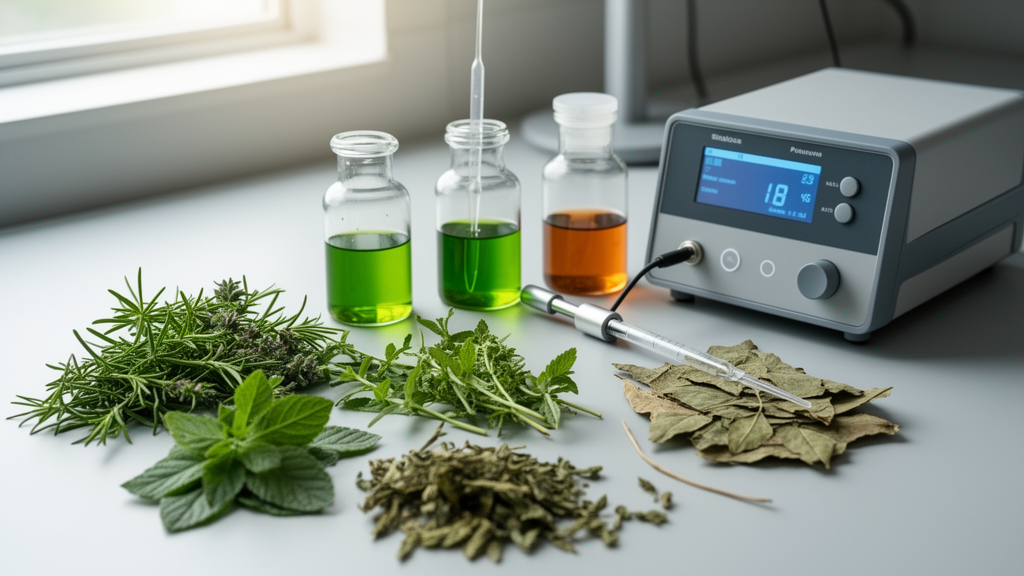
Each extract was subjected to a battery of standardized assays. Total phenolic content was quantified with the Folin–Ciocalteu spectrophotometric method and expressed as micrograms of gallic acid equivalents per millilitre. Antioxidant capacity was measured with three complementary tests based on different reaction mechanisms: scavenging of the DPPH radical, scavenging of the ABTS radical cation, and the ferric reducing antioxidant power assay, all calibrated against Trolox. Preliminary toxicity was assessed with the Artemia salina lethality bioassay, in which brine shrimp nauplii were exposed to five concentrations of each extract for 24 hours and a median lethal dose was estimated by Probit analysis. The team then integrated all of these measurements — six ordinal phytochemical descriptors and six continuous variables — through a deliberately layered statistical design combining Spearman correlation, hierarchical clustering with Gower distance, factorial analysis of mixed data, partial least squares regression, and PERMANOVA.
The central result was a very strong positive association between total phenolic content and antioxidant activity. Spearman coefficients between the gallic-acid-equivalent values and the three antioxidant assays ranged from 0.72 to 0.92, with adjusted p-values below 0.005, a magnitude the authors classify as very strong. Crucially, this pattern was not an artefact of a single test: the clustering analysis placed DPPH, ABTS, FRAP, and total phenolic content in the same covariation block; the first dimension of the mixed-data factorial analysis was defined almost entirely by these four variables; and in the supervised regression model, total phenolic content made the largest contribution to the first latent component. The three antioxidant assays also correlated strongly with one another (ρ = 0.65–0.69), which the authors interpret as internal consistency of the measurement protocol.
In sharp contrast, the qualitative phytochemical screening — the ordinal scoring of phenolic compounds, tannins, flavonoids, terpenoids, alkaloids, and saponins as absent, scarce, moderate, or abundant — showed no predictive capacity for antioxidant activity. Kruskal–Wallis tests found no significant differences in a composite antioxidant index across the levels of any phytochemical variable, with effect sizes below 0.05, and PERMANOVA detected no significant multivariate effect, with R² values at or below 0.033. The dissociation was visible in the raw data: the Hintonia latiflora bark extract scored only a scarce level of phenolic compounds yet recorded one of the highest quantitative values in the collection, at 58.76 micrograms of gallic acid equivalents per millilitre, and the Eysenhardtia polystachya extract was scored negative for flavonoids despite flavonoids being the best-characterized constituents of that species.
The authors are careful about what the headline association actually means. The Folin–Ciocalteu reagent is not specific to phenolics; it responds to any electron-donating species under alkaline conditions, including thiols, proteins, certain vitamins, and inorganic ions, and ascorbic acid alone can inflate the estimate substantially. Because the Folin–Ciocalteu, FRAP, and ABTS assays all share a single-electron-transfer chemistry, part of the observed correlation is expected on purely chemical grounds and does not by itself demonstrate that phenolic compounds are the causal agents of the antioxidant response. The paper therefore describes the finding as a quantitative relationship between reducing power and radical-scavenging activity rather than as evidence about a specific structural class, and states that unambiguous attribution to defined phenolic structures requires chromatographic quantification.
Two extracts stood out consistently across every analysis. The Arbutus bicolor extract recorded the highest values in the entire collection: 123.53 micrograms of gallic acid equivalents per millilitre for total phenolic content, 124.72 micrograms of Trolox equivalents for DPPH, 185.08 for ABTS, and 241.89 for FRAP, along with the highest extraction yield at 82.16 percent. The Eysenhardtia polystachya extract followed closely, with 76.05 micrograms of gallic acid equivalents and correspondingly high values in all three antioxidant assays. For Arbutus bicolor, a species native to the Sierra Madre Occidental that had lacked any prior phytochemical or biological study, these measurements constitute the first quantitative evidence of antioxidant capacity and preliminary toxicity. The authors frame both extracts as priority candidates for chromatographic profiling by HPLC-DAD or LC–MS/MS, while stressing that the consistency of the multivariate pattern reflects internal stability rather than confirmation of any pharmacological superiority.
Preliminary toxicity told a separate story. Median lethal doses in the brine shrimp assay spanned 78 to 2561 micrograms per millilitre. Only one extract, from Hedeoma patens, was classified as highly toxic under the CYTED criteria, and it simultaneously showed high phenolic content and moderate antioxidant activity, suggesting its biological effects may be mediated by mechanisms other than antioxidant ones, possibly the abundant monoterpenes characteristic of the genus. Across all analyses, toxicity showed no significant correlation with any antioxidant variable (ρ ≈ 0). The authors emphasize that the Artemia assay is a general cytotoxicity screen in an invertebrate model over 24 hours and supports no inference about mammalian toxicity, genotoxicity, or the safety of these preparations for human use; traditional use of these species should not be read as validated by these data.
The study also documented striking organ-level variation within a single species. In Heliotropium hartwegianum, the root extract showed abundant phenolic compounds together with moderate tannins and flavonoids, while the leaf extract lacked all three groups and contained only terpenoids and saponins — a difference the authors highlight as a caution for bioprospection, since tissue choice can determine whether a chemical–activity link is found at all. The screening itself produced instructive false results: the Eysenhardtia polystachya extract scored negative for flavonoids even though flavonoids are the best-characterized constituents of that species, a predictable false negative traced to the chemistry of the Shinoda test, which fails on C-glucosyl dihydrochalcones lacking the required chromone nucleus. The authors conclude that ordinal screening should be replaced or complemented by class-specific quantification.
The team is explicit about the limits of the work. The dataset contained only 20 extracts, each derived from a single composite collection and a single extraction, so the values describe the samples analysed and cannot be generalized to the species as a whole; seasonal, edaphic, and phenological variation was not captured, and the assay replicates quantify analytical rather than biological variability. A single solvent and polarity fraction was evaluated per sample, and the toxicological data rest entirely on the invertebrate screen. The regression models, which showed limited predictive performance under leave-one-out cross-validation and unstable loadings in bootstrap analysis, are presented as exploratory descriptions of covariation rather than predictive tools. Within those limits, the practical message is direct: when prioritizing medicinal plant extracts for further study, quantitative reducing-capacity measurements — and ultimately chromatographic profiling — should replace qualitative screening checklists, and antioxidant activity and preliminary toxicity must be evaluated independently, because in this collection neither said anything about the other.
Subject of Research: Associations among phytochemical profile, antioxidant capacity, and preliminary toxicity in ethanolic extracts of native medicinal plants from Sinaloa, Mexico
Article Title: Total phenolic content is associated with antioxidant activity independently of preliminary toxicity in medicinal plants from Sinaloa, Mexico: a multivariate approach
Article References: Armenta-Gutiérrez, E. J., Campista-León, S., Aguilar-Valle, M. F., Sánchez-Mendoza, I. R., Clark-Tapia, R., Montes-Ávila, J., & Peinado-Guevara, L. I. (2026). Total phenolic content is associated with antioxidant activity independently of preliminary toxicity in medicinal plants from Sinaloa, Mexico: a multivariate approach. Applied Biological Chemistry, 69(1), Article 78. https://doi.org/10.1186/s13765-026-01146-6
Image Credits: AI Generated
DOI: 10.1186/s13765-026-01146-6
Keywords: medicinal plants, Sinaloa, antioxidant activity, total phenolic content, Folin-Ciocalteu, DPPH, ABTS, FRAP, Artemia salina, phytochemical screening, multivariate analysis, Arbutus bicolor
News Source: Bethany Barker. (October 28, 2026). Reducing power, not plant screening charts, predicts antioxidant strength in Sinaloa’s medicinal plants. Scienmag.