• HOME
  • NEWS
  • EXPLORE
    • CAREER
      • Companies
      • Jobs
    • EVENTS
    • iGEM
      • News
      • Team
    • PHOTOS
    • VIDEO
    • WIKI
  • BLOG
  • COMMUNITY
    • FACEBOOK
    • INSTAGRAM
    • TWITTER
Wednesday, April 1, 2026
BIOENGINEER.ORG
No Result
View All Result
  • Login
  • HOME
  • NEWS
  • EXPLORE
    • CAREER
      • Companies
      • Jobs
        • Lecturer
        • PhD Studentship
        • Postdoc
        • Research Assistant
    • EVENTS
    • iGEM
      • News
      • Team
    • PHOTOS
    • VIDEO
    • WIKI
  • BLOG
  • COMMUNITY
    • FACEBOOK
    • INSTAGRAM
    • TWITTER
  • HOME
  • NEWS
  • EXPLORE
    • CAREER
      • Companies
      • Jobs
        • Lecturer
        • PhD Studentship
        • Postdoc
        • Research Assistant
    • EVENTS
    • iGEM
      • News
      • Team
    • PHOTOS
    • VIDEO
    • WIKI
  • BLOG
  • COMMUNITY
    • FACEBOOK
    • INSTAGRAM
    • TWITTER
No Result
View All Result
Bioengineer.org
No Result
View All Result
Home NEWS Science News Biology

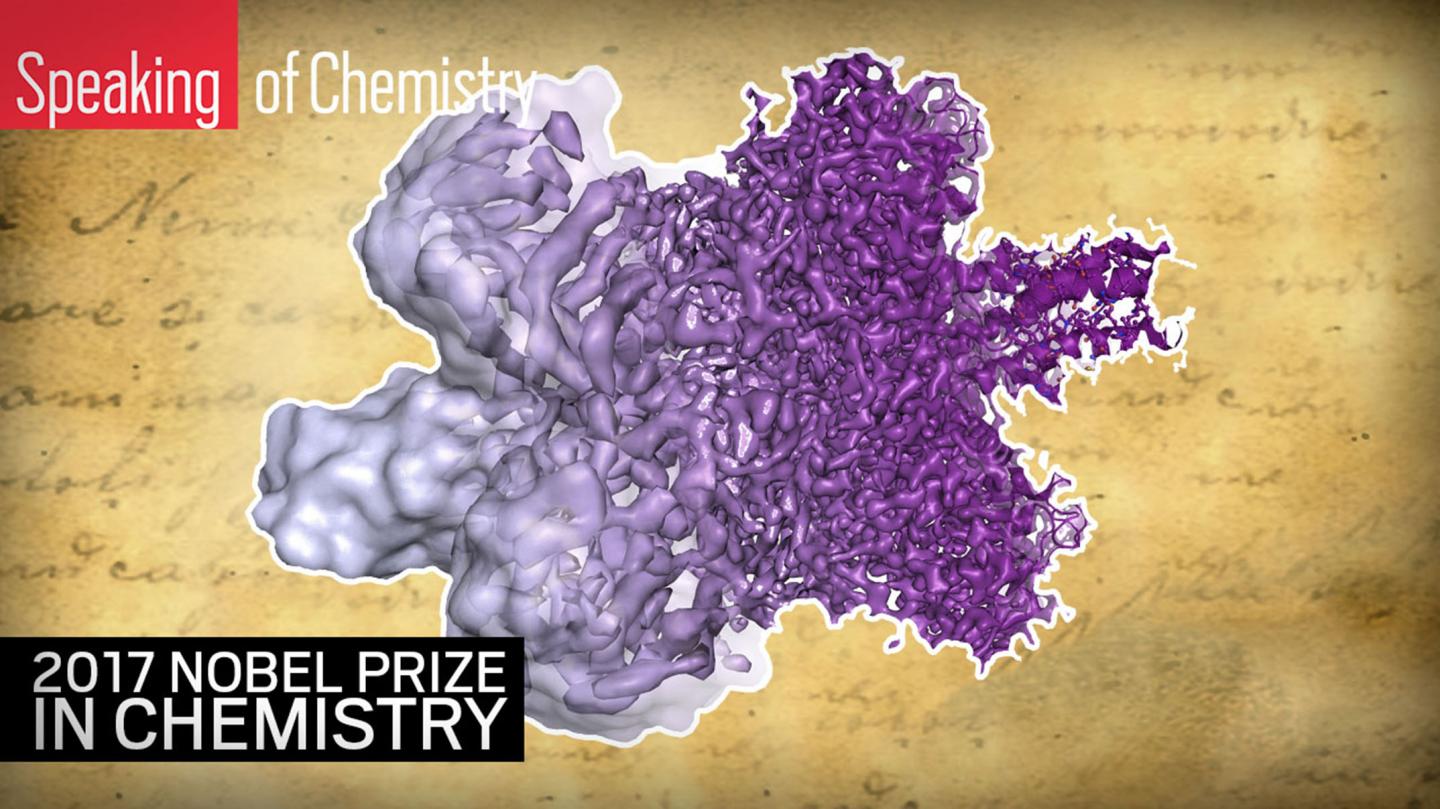
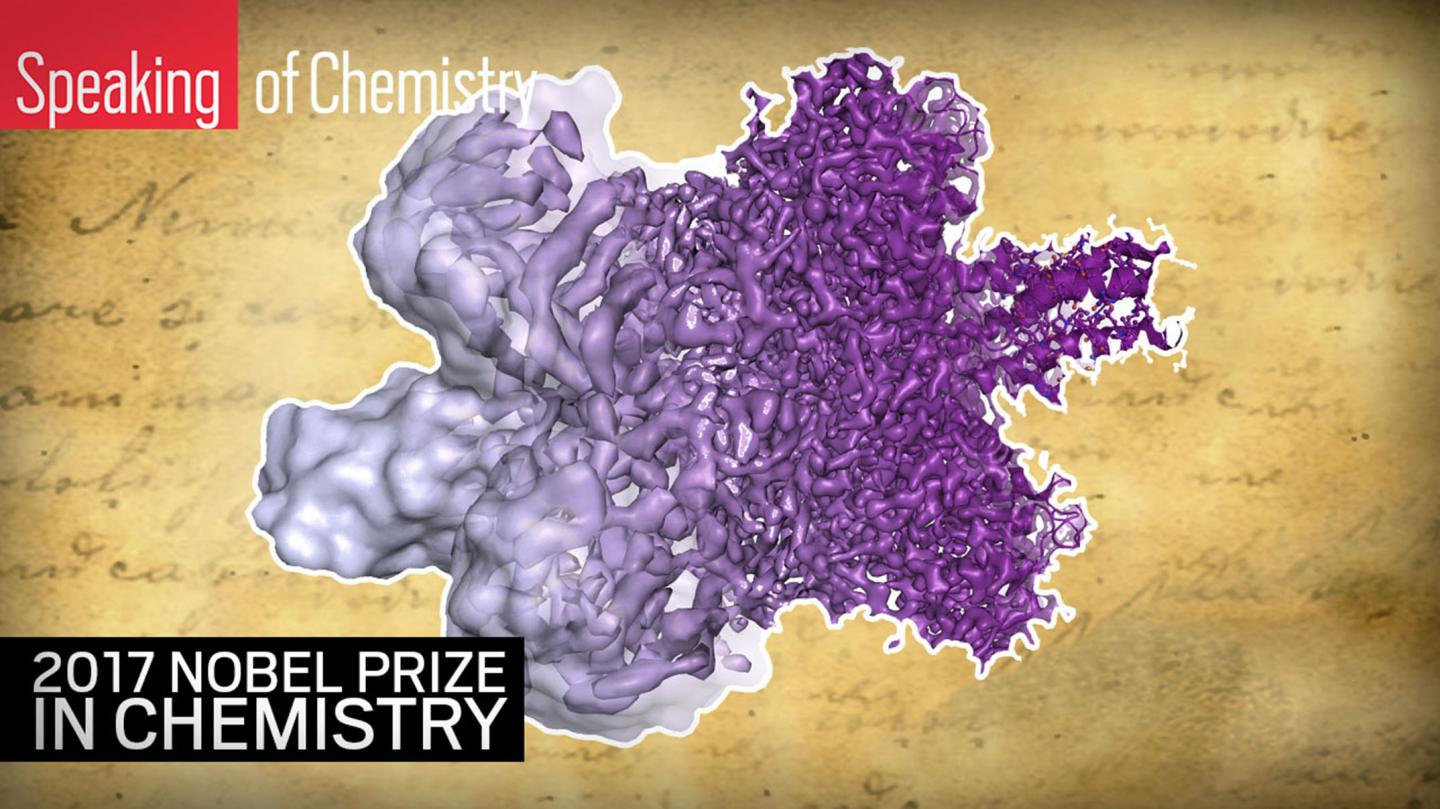
The 2017 Nobel Prize in Chemistry: Cryo-electron microscopy explained (video)

Bioengineer by Bioengineer
October 5, 2017
in Biology
Reading Time: 1 min read
0
Share on FacebookShare on TwitterShare on LinkedinShare on RedditShare on Telegram
IMAGE

Credit: The American Chemical Society

WASHINGTON, Oct. 5, 2017 — Jacques Dubochet, Joachim Frank and Richard Henderson have claimed this year's Nobel Prize in Chemistry. The trio earned the prize for their work on cryo-electron microscopy, which is an imaging technique that lets researchers see proteins and other large biomolecules with atomic precision. Learn more about this discovery and its impact in this video from Speaking of Chemistry: https://youtu.be/026rzTXb1zw.

###

Speaking of Chemistry is a production of Chemical & Engineering News, a weekly newsmagazine of the American Chemical Society. It's the series that keeps you up to date with the important and fascinating chemistry shaping the world around you. Subscribe to the series at http://www.youtube.com/cenonline, and follow us on Twitter @CENMag.

The American Chemical Society, the world's largest scientific society, is a not-for-profit organization chartered by the U.S. Congress. ACS is a global leader in providing access to chemistry-related information and research through its multiple databases, peer-reviewed journals and scientific conferences. ACS does not conduct research, but publishes and publicizes peer-reviewed scientific studies. Its main offices are in Washington, D.C., and Columbus, Ohio.

To automatically receive press releases from the American Chemical Society, contact [email protected].

Follow us: Twitter Facebook

Media Contact

Katie Cottingham
[email protected]
301-775-8455
@ACSpressroom

http://www.acs.org
Share12Tweet8Share2ShareShareShare2

Related Posts

Chikungunya Virus Lingers in Joint Macrophages, Causes Chronic Disease

Chikungunya Virus Lingers in Joint Macrophages, Causes Chronic Disease

April 1, 2026
Unveiling How Two Genes Collaborate to Shape Dental and Facial Features

Unveiling How Two Genes Collaborate to Shape Dental and Facial Features

April 1, 2026

Do Your Genes Influence How Lifestyle Choices Affect Aging?

April 1, 2026

Combining Single-Cell Multiomics Unlocks Precise Identification of Rare Cell Types and States

March 31, 2026
Please login to join discussion

POPULAR NEWS

  • blank

    Revolutionary AI Model Enhances Precision in Detecting Food Contamination

    96 shares
    Share 38 Tweet 24
  • Imagine a Social Media Feed That Challenges Your Views Instead of Reinforcing Them

    1006 shares
    Share 398 Tweet 249
  • Promising Outcomes from First Clinical Trials of Gene Regulation in Epilepsy

    51 shares
    Share 20 Tweet 13
  • Popular Anti-Aging Compound Linked to Damage in Corpus Callosum, Study Finds

    43 shares
    Share 17 Tweet 11

About

We bring you the latest biotechnology news from best research centers and universities around the world. Check our website.

Follow us

Recent News

NK Cells Drive Heart Damage, Control Blood Cell Production

NADPH Enzymes Suppress Pancreatic Precancerous Lesions

Entorhinal Cortex Maps Remote Tasks Without CA1

Subscribe to Blog via Email

Enter your email address to subscribe to this blog and receive notifications of new posts by email.

Join 78 other subscribers
  • Contact Us

Bioengineer.org © Copyright 2023 All Rights Reserved.

Welcome Back!

Login to your account below

Forgotten Password?

Retrieve your password

Please enter your username or email address to reset your password.

Log In
No Result
View All Result
  • Homepages
    • Home Page 1
    • Home Page 2
  • News
  • National
  • Business
  • Health
  • Lifestyle
  • Science

Bioengineer.org © Copyright 2023 All Rights Reserved.