Researchers have identified a molecular pathway that connects the lactate-rich environment of tumors to RNA chemistry and amino acid production in hypopharyngeal squamous cell carcinoma (HSCC), an aggressive cancer of the throat. The study, published in Cancer & Metabolism, centers on SIRT1, a protein the authors describe as a pivotal tumor suppressor in HSCC that is frequently downregulated as the disease progresses.
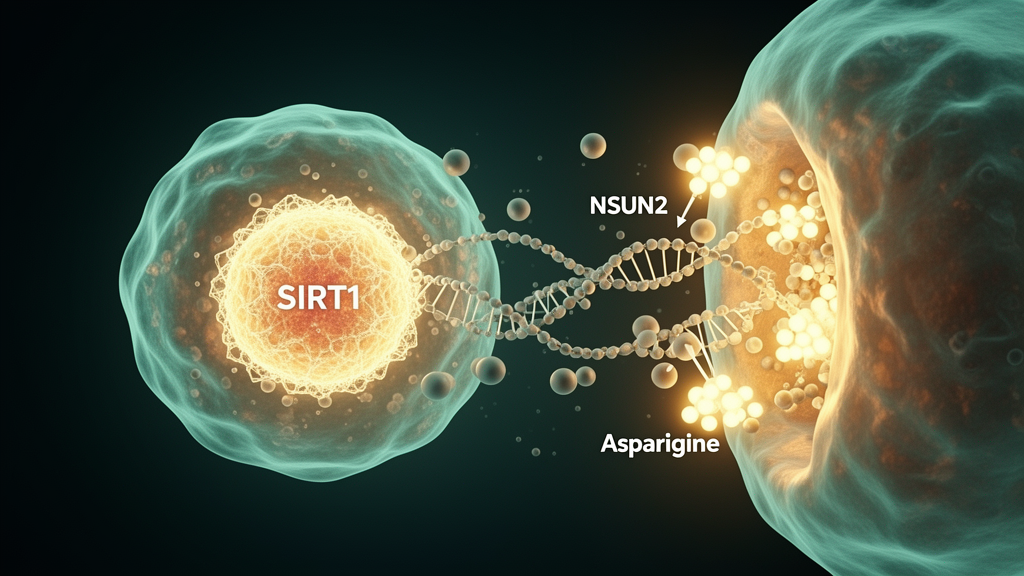
According to the research team, SIRT1 acts as a direct delactylase of NSUN2, an RNA methyltransferase, with its effect specifically directed at the K470 residue of that enzyme. Lactylation is a post-translational modification in which lactate-derived groups are attached to proteins, and the removal of such groups by a delactylase represents a regulatory mechanism linking cellular metabolism to protein function.
The mechanistic findings reported in the paper indicate that when SIRT1 is deficient, NSUN2 becomes hyperlactylated. This modified state uniquely enhances the catalytic activity of NSUN2 toward the m5C methylation of ASNS mRNA, the transcript encoding asparagine synthetase. Increased methylation of this message, the authors report, drives de novo asparagine biosynthesis, which in turn fuels the proliferation of HSCC cells.
The researchers describe this SIRT1/NSUN2/ASNS axis as a previously uncharacterized molecular bridge that links lactate-driven post-translational modifications to RNA epigenetics and amino acid metabolic remodeling. The work addresses what the authors call a fundamental yet unresolved question in cancer biology: how the glycolytic microenvironment orchestrates amino acid metabolic reprogramming through protein lactylation.
Beyond the basic mechanism, the study reports a therapeutic direction. Pharmacological activation of SIRT1, when combined with L-asparaginase (ASNase), exhibited potent synergistic anticancer effects in the study. The authors suggest this combination offers a strategy to overcome metabolic adaptation in HSCC, a cancer whose glycolytic microenvironment shapes its amino acid metabolism.
The findings should be read in the context of the study’s scope. The abstract describes laboratory-based mechanistic work identifying SIRT1 as frequently downregulated in HSCC and characterizing the delactylation of NSUN2 at a specific residue. The reported synergistic anticancer effects of combining SIRT1 activation with L-asparaginase arise from the same preclinical investigation, and the article is being shared early as a peer-reviewed, accepted manuscript that is citable under a permanent DOI but remains subject to further edits before the final Version of Record.
Conceptually, the study adds to a growing body of work on sirtuin proteins and cancer metabolism. Related research highlighted by the journal includes reports on SIRT3-dependent delactylation of cyclin E2 in hepatocellular carcinoma and on pharmacological SIRT6 activation suppressing progression of head and neck and esophageal squamous cell carcinoma through modulation of cellular metabolism and protein translation, published in 2023 and 2025 respectively.
For HSCC specifically, the reported axis offers a testable model: loss of SIRT1 permits hyperlactylation of NSUN2, enhanced m5C methylation of ASNS mRNA, elevated asparagine synthesis, and tumor cell proliferation. Reversing any step in that chain, whether by restoring SIRT1 activity or by depleting asparagine with L-asparaginase, is presented by the authors as a route to restricting malignant progression, with the combination of the two approaches showing the strongest reported effect.
Subject of Research: How SIRT1-mediated NSUN2 delactylation links lactate-driven protein modification to RNA methylation and asparagine metabolism in hypopharyngeal squamous cell carcinoma
Article Title: SIRT1-mediated NSUN2 delactylation restricts hypopharyngeal squamous cell carcinoma progression by suppressing m5C-dependent asparagine biosynthesis
Article References: Huang, S., Wang, X., Zhang, Q., Gao, Z., Zhou, X., Chen, L., & Chen, X. (2026). SIRT1-mediated NSUN2 delactylation restricts hypopharyngeal squamous cell carcinoma progression by suppressing m5C-dependent asparagine biosynthesis. Cancer & Metabolism. https://doi.org/10.1186/s40170-026-00460-3
Image Credits: AI Generated
DOI: 10.1186/s40170-026-00460-3
Keywords: SIRT1, NSUN2, lactylation, m5C methylation, asparagine, hypopharyngeal squamous cell carcinoma, ASNS, L-asparaginase, RNA epigenetics, amino acid metabolism, delactylation, cancer metabolism
News Source: Nathaniel Bowman. (October 28, 2026). SIRT1 Loss Drives Tumor Growth Through NSUN2 Lactylation and Asparagine Production. Scienmag.