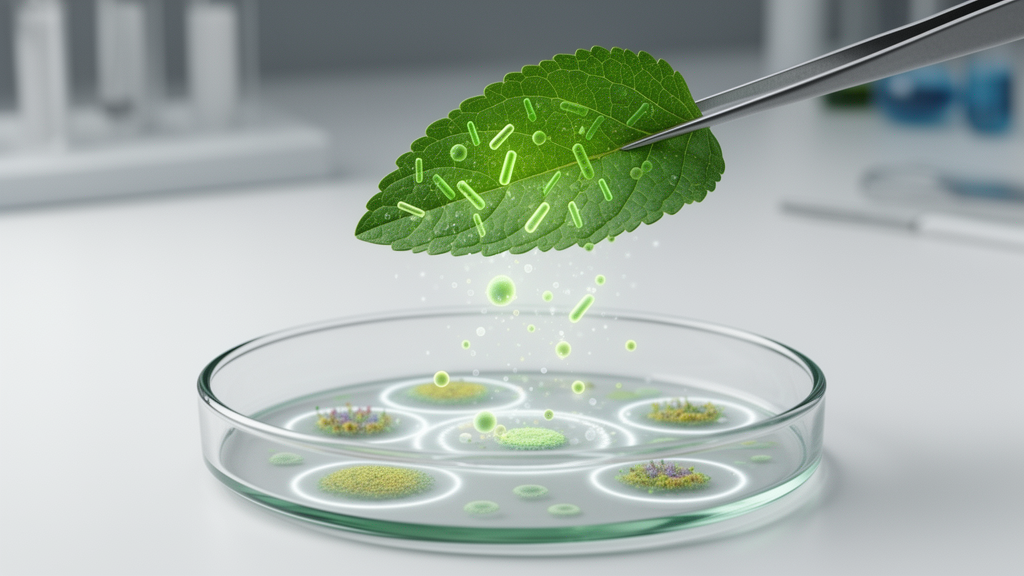
A growing share of the world’s antibiotics is losing power, and researchers are increasingly looking inside plants rather than at them for answers. A new review published in the journal Discover Bacteria examines how endophytic microorganisms, the bacteria, actinomycetes and fungi that live within the tissues of medicinal plants without harming their hosts, could serve as renewable sources of antimicrobial compounds active against multidrug-resistant pathogens. The review, led by Vipul M. Bhinsara and published open access on 5 October 2026, assembles a dispersed body of laboratory studies into a single assessment of what these hidden microbes produce, how their compounds kill resistant pathogens, and what still stands between promising petri-dish results and usable medicines.
The urgency behind the search is stark. According to figures cited in the review, antibiotic-resistant infections cause roughly 2.8 million cases and about 35,000 deaths each year in the United States, while Europe reports around 33,000 deaths annually from resistant infections. Significant proportions of resistant infections are also recorded across South East Asia, the Western Pacific and Africa. In countries such as India, over-the-counter access to antibiotics and environmental contamination accelerate the spread of resistance. The most cited projection warns that by 2050, drug-resistant infections could be responsible for as many as 10 million deaths per year if effective countermeasures are not put in place. Public health agencies such as the Centers for Disease Control and Prevention already classify several drug-resistant bacteria and fungi as urgent or serious threats, and the burden falls hardest on immunocompromised people, newborns, cancer patients and those undergoing dialysis, major surgery or organ transplantation.
Endophytes occupy a peculiar biological niche. Since the concept was first introduced by De Bary in 1866, scientists have come to understand that these microbes are not passive squatters. They form long-standing associations with their host plants, supporting growth, improving tolerance to drought, salinity and pollution, and contributing to the production of secondary metabolites. The review notes that nearly all of the roughly 300,000 known species of higher plants are thought to host one or more endophytic microorganisms, spanning ecosystems from tropical rainforests and mangroves to deserts and polar regions. Yet only a small fraction of plant species has been systematically surveyed for its endophytic communities, leaving a vast and largely unexplored chemical reservoir.
What makes endophytes especially attractive as drug sources is their ability to produce compounds similar or identical to those made by their host plants, a capacity likely shaped by long-term co-evolution and genetic exchange between plant and microbe. This matters because direct extraction of medicinal compounds from plants faces serious obstacles: low yields, chemical variation driven by environmental conditions, seasonality, ecological damage, the vulnerability of slow-growing species and high production costs. Cultivating the microbes instead offers faster growth, scalable fermentation, strain improvement and genetic manipulation under controlled laboratory conditions. It is estimated that over 30 percent of current pharmaceuticals are derived directly or indirectly from plant secondary metabolites, so the industrial logic of shifting that production to fermenters is considerable.
The review catalogues the major endophyte groups and their signature chemistry. More than 200 genera of endophytic bacteria have been reported, largely from the phyla Actinobacteria, Firmicutes and Proteobacteria, including familiar genera such as Bacillus, Pseudomonas and Streptomyces. Endophytic actinomycetes, filamentous bacteria once mistaken for fungi, are prolific producers of antimicrobial metabolites including munumbicins, naphthomycins, cedarmycins, coronamycin, kakadumycins and saadamycin, with Streptomyces the most frequently isolated genus. Endophytic fungi are described as the most prolific secondary-metabolite producers of all, yielding compounds such as javanicin from Chloridium species and, most famously, the anticancer drug taxol, first reported from the fungus Taxomyces andreanae associated with yew trees.
Against multidrug-resistant pathogens specifically, the compiled studies show activity across a striking range of targets. Nanoparticles synthesized using Streptomyces coelicolor strain E72, isolated from the holy basil plant Ocimum sanctum, showed strong antimicrobial effects against Shigella flexneri, Staphylococcus aureus, Streptococcus pneumoniae and Klebsiella pneumoniae, apparently by damaging the bacterial cell wall and triggering lysis. Nanoparticles derived from Penicillium species associated with turmeric, Curcuma longa, were active against multidrug-resistant strains of Escherichia coli and S. aureus. Streptomyces cavourensis isolated from Cinnamomum cassia showed greater efficacy against methicillin-resistant Staphylococcus aureus and methicillin-resistant Staphylococcus epidermidis, as well as Salmonella typhimurium, than some conventional antibiotics. Bacillus mojavensis from Bacopa monnieri produces the lipopeptides surfactin and fengycin, which punch pores into microbial membranes. On the fungal side, Colletotrichum gloeosporioides produces phenolics and flavonoids that can enhance the efficacy of beta-lactam antibiotics against multidrug-resistant S. aureus.
The mechanisms of action are notably multi-target, which the review argues may slow the emergence of resistance compared with conventional antibiotics that typically hit a single cellular target. Electron microscopy studies illustrate the damage directly: the endophytic fungus Penicillium purpurogenum ED76, isolated from Swietenia macrophylla, deformed S. aureus cells with distorted morphology, disrupted cell walls and leakage of intracellular contents, while extracts of Alternaria alternata from neem left treated bacteria with severe structural damage and release of DNA and proteins. Beyond direct killing, some endophyte-derived metabolites interfere with resistance itself. Diketopiperazines, phenolics, alkaloids, flavonoids and terpenoids can disrupt quorum sensing and inhibit biofilm formation in Pseudomonas aeruginosa and S. aureus, while other compounds act as efflux pump inhibitors that restore drug sensitivity in resistant strains, or as adjuvants that inhibit resistance enzymes such as beta-lactamases.
The review is candid about safety, an issue often glossed over in natural-product enthusiasm. Toxicological assessments cited from experimental animal models found that certain fungal endophytic metabolites can induce oxidative stress-related tissue damage, altered liver enzyme activity and inflammatory responses depending on dose and exposure duration, with hepatotoxicity and nephrotoxicity observed in zebrafish and murine models after prolonged exposure. Cytotoxicity screening using MTT assays, lactate dehydrogenase release, hemolytic tests and mammalian cell viability studies has shown that while many metabolites selectively target pathogens and cancer cells, some show moderate toxicity toward normal epithelial and fibroblast cell lines at higher concentrations. Information on pharmacokinetics, bioavailability, metabolic stability and immunogenicity in humans remains limited, and contaminants in crude extracts may contribute to side effects. Emerging tools such as nanoencapsulation and targeted delivery may reduce systemic toxicity and improve bioavailability, but the authors stress that comprehensive preclinical toxicology, standardized purification and well-designed clinical trials are prerequisites for regulatory approval.
Practical obstacles also complicate the pipeline. Many biosynthetic gene clusters responsible for secondary metabolite production remain silent under standard laboratory conditions, and the review describes activation strategies including the OSMAC approach of varying culture conditions, epigenetic modifiers such as histone deacetylase inhibitors, and microbial co-cultivation to coax dormant pathways into expression. A further problem is metabolic decline: endophytes that initially produce high levels of valuable compounds, including paclitaxel-like molecules, often lose that capacity over successive subcultures, apparently because of genetic, epigenetic or physiological changes and the absence of host-associated signals. Screening itself relies on a battery of methods, from agar well diffusion and broth microdilution to electron microscopy, ROS generation assays and chromatographic and spectroscopic characterization, but the review warns that differences in host plant selection, isolation techniques, culture conditions and assay formats make direct comparisons between studies difficult, so a compound that performs well in one laboratory may falter in another.
The overall picture is one of genuine promise tempered by a long translational road. Most endophyte-derived metabolites showing potent in vitro activity have not progressed to in vivo studies or advanced pharmacological evaluation, and critical questions of toxicity, bioavailability, mode of action and large-scale production remain insufficiently addressed. The authors call for integrated approaches combining metabolomics, genomics, synthetic biology, strain improvement and bioprocess optimization to raise yields and reproducibility, alongside mechanistic studies and preclinical validation. If those gaps close, the payoff could extend beyond antimicrobials: endophyte-derived compounds have also shown antioxidant, anticancer, antiviral and anti-inflammatory properties in biological models, and some extracts display anti-HIV activity in laboratory settings. For a field racing against rising resistance, the microbes inside the world’s medicinal plants may prove to be among the most sustainable allies available, provided the science can carry them out of the plant and into the clinic.
Subject of Research: Endophytic microorganisms of medicinal plants as sources of antimicrobial compounds against drug-resistant pathogens
Article Title: Unveiling medicinal plant endophytes as hidden allies in the fight against antimicrobial resistance
Article References: Bhinsara, V. M. (2026). Unveiling medicinal plant endophytes as hidden allies in the fight against antimicrobial resistance. Discover Bacteria, 3(1), Article 24. https://doi.org/10.1007/s44351-026-00061-x
Image Credits: AI Generated
DOI: 10.1007/s44351-026-00061-x
Keywords: antimicrobial resistance, endophytes, medicinal plants, Streptomyces, secondary metabolites, nanoparticles, multidrug-resistant bacteria, natural products, toxicity, drug discovery, microbiology, biotechnology
News Source: Morgan Morrow. (October 27, 2026). Microbes Hiding Inside Medicinal Plants Emerge as New Weapon Against Drug-Resistant Infections. Scienmag.