Neuroinflammation and oxidative stress are central pathological drivers in many neurological and neuropsychiatric disorders, and interleukin-6 (IL6) together with reactive oxygen species (ROS) stands out among the key factors involved. A new open-access study published in Amino Acids on 26 October 2026 examines how a peptide encoded by the long noncoding RNA ZNF503-AS, named ZNF503-AS-Pep1, influences these pathways in a cell model of neuroinflammation.
The researchers used HMC3 cells, a human microglia-derived cell line, to construct an inflammatory model induced by lipopolysaccharide (LPS), simulating a neuroinflammatory condition in vitro. Oxidative stress was evaluated by measuring ROS, malondialdehyde (MDA) and superoxide dismutase (SOD) levels. IL6 was quantified at both the protein and mRNA levels using enzyme-linked immunosorbent assay (ELISA) and RT-qPCR, while dual-luciferase reporter assays assessed the impact on the transcriptional activity of the IL6 promoter.
The results showed that ZNF503-AS-Pep1 markedly reduced IL6 transcription and secretion, effectively mitigating the pro-inflammatory state and oxidative damage in LPS-stimulated HMC3 cells. Conversely, when the researchers knocked down endogenous ZNF503-AS-Pep1, the pathological phenotypes were exacerbated, indicating that the peptide’s basal presence restrains inflammatory signaling in these cells.
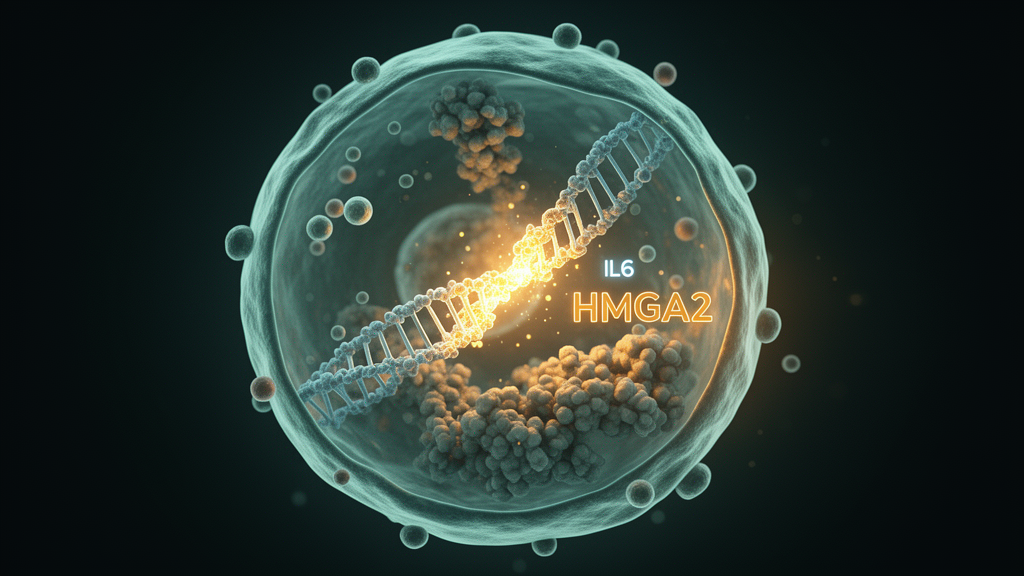
To identify the molecular mechanism, the team used DNA pull-down combined with mass spectrometry to find proteins interacting with the IL6 promoter region. Co-immunoprecipitation (Co-IP) and Venn diagram analyses were then employed to determine key intermediate regulatory proteins connecting ZNF503-AS-Pep1 and IL6. This work identified HMGA2 as a key intermediary protein linking the peptide to IL6 regulation.
According to the study, ZNF503-AS-Pep1 inhibits HMGA2’s enhancement of IL6 transcription by physically hindering HMGA2’s occupancy at the IL6 promoter. Chromatin immunoprecipitation (ChIP-PCR and ChIP-qPCR) and computational structural modeling were performed to elucidate the protein-DNA and peptide-protein interactions underlying this effect, while antisense oligonucleotides (ASOs) were used for loss-of-function validation.
The peptide also alleviated HMGA2-induced oxidative damage, as evidenced by reduced ROS and MDA levels and increased SOD activity in the model. The authors conclude that ZNF503-AS-Pep1 exerts a protective role in reducing IL6 transcription and oxidative damage by modulating HMGA2 in an inflammatory cell model.
These findings suggest that ZNF503-AS-Pep1 could serve as a promising therapeutic candidate for mitigating neuroinflammation and oxidative stress in neuroinflammatory disorders, including schizophrenia. However, the evidence comes from a single in vitro cell model using LPS-stimulated HMC3 cells, and the study is published as an early-access, peer-reviewed accepted article that remains subject to further edits before the final Version of Record. The authors note that the work was conducted in cell culture, so any translation toward human therapeutic applications would require further investigation beyond the scope of this study.
The study, authored by Yatang Chen, Yilin Liu, Lei Yu, Yong Zeng and Yongquan Lu, was published in the journal Amino Acids under open access, and its full methods and results are available in the original article.
Subject of Research: Mechanism of the lncRNA-derived peptide ZNF503-AS-Pep1 in reducing IL6 transcription and oxidative stress in a microglia-like cell model
Article Title: ZNF503-AS-Pep1 mitigates neuroinflammation and oxidative stress via HMGA2 in a microglia-mediated neuroinflammatory cell model
Article References: Chen, Y., Liu, Y., Yu, L., Zeng, Y., & Lu, Y. (2026). ZNF503-AS-Pep1 mitigates neuroinflammation and oxidative stress via HMGA2 in a microglia-mediated neuroinflammatory cell model. Amino Acids. https://doi.org/10.1007/s00726-026-03565-7
Image Credits: AI Generated
DOI: 10.1007/s00726-026-03565-7
Keywords: ZNF503-AS-Pep1, HMGA2, IL6, neuroinflammation, oxidative stress, HMC3 cells, lncRNA-derived peptide, microglia, LPS, schizophrenia, antisense oligonucleotides, ChIP
News Source: Cassandra Pierce. (October 27, 2026). Cell Study Finds lncRNA-Derived Peptide Curbs IL6-Driven Inflammation via HMGA2. Scienmag.