The complex demands of clinical laboratory medicine education, which traditionally involves coordinating multiple instructors, managing numerous small-group teaching activities, and meticulously tracking attendance and formative assessments, often overwhelm conventional administrative processes. Addressing these systemic challenges, researchers at Beijing Tsinghua Changgung Hospital developed and implemented an intelligent teaching management system built upon the framework of smart spreadsheets, aiming to streamline the documentation and evaluation of educational activities within the Department of Laboratory Medicine.
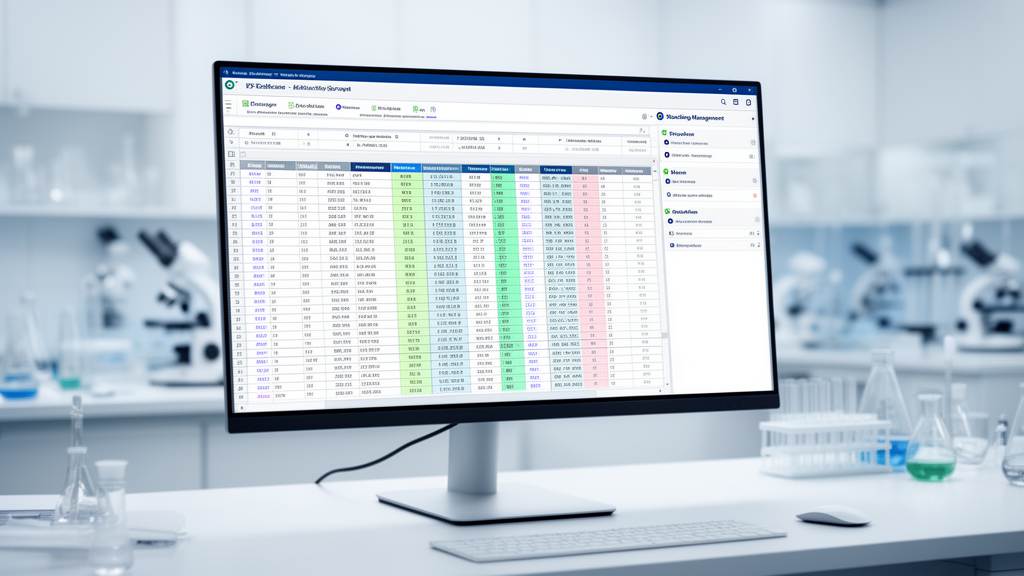
This implementation study, conducted at a single center from September 2024 to August 2025, detailed the integration of several sophisticated functionalities into the spreadsheet-based platform. The system was designed to manage teaching plans, document individual learning activities, and utilize QR code technology for efficient attendance tracking. Furthermore, it incorporated structured mechanisms for collecting teaching evaluations, aggregating instructor workloads, and providing comprehensive data visualization tools, thereby transforming the manual, fragmented process of educational administration into a structured, data-driven workflow.
The system demonstrated significant operational capacity during its deployment. Over the course of the study, the platform recorded 208 distinct teaching activities, facilitated by 51 dedicated instructors, accumulating a total of 218.32 teaching hours. Trainee engagement was also high, with 65 trainees submitting a total of 1,211 teaching-evaluation questionnaires, supplemented by 141 submissions of free-text qualitative feedback. These metrics provided a comprehensive view of both the volume of instruction delivered and the level of trainee participation in the evaluation process.
A key focus of the research was quantifying the efficiency gains achieved through the automation of administrative tasks. For instructors, the median time needed to complete a system-related recording task was 2.47 minutes, with an interquartile range spanning 1.43 to 3.56 minutes.
Perhaps the most substantial administrative impact was observed in the reduction of workload compilation time. Based on aggregated departmental estimates, the monthly effort required to compile detailed teaching-workload statistics underwent a dramatic transformation. Prior to the implementation of the smart spreadsheet system, this compilation required approximately 2 hours of manual labor per month. Following the system’s integration, this time decreased significantly to only 0.17 hours, representing a substantial increase in administrative efficiency and freeing up valuable time for instructional duties.
The usability and reliability of the system were rigorously assessed through instructor feedback. The questionnaire designed to gauge instructor satisfaction and perceived usability demonstrated a high degree of internal consistency, evidenced by a Cronbach’s alpha coefficient of 0.982. This high value provides preliminary evidence supporting the system’s robust usability and suggesting that the design effectively met the needs of the faculty in a clinical laboratory medicine setting.
In conclusion, the smart spreadsheet-based teaching management system proved to be a feasible and highly effective solution for the specific requirements of a single-center clinical laboratory medicine department. The system successfully supported structured documentation of educational activities, automated the aggregation of complex data, and streamlined the collection of feedback from students. Its practical application was directly associated with measurable reductions in administrative processing time and garnered favorable feedback from the teaching staff.
Subject of Research: Implementation and evaluation of a smart spreadsheet-based management system for clinical laboratory medicine education.
Article Title: Design and application of an intelligent laboratory medicine teaching management system based on smart spreadsheets
Article References: Zhang, Y., Song, L., Dong, J., Zhao, X., & Li, R. (2026). Design and application of an intelligent laboratory medicine teaching management system based on smart spreadsheets. BMC Medical Education. https://doi.org/10.1186/s12909-026-10431-3
Image Credits: AI Generated
DOI: 10.1186/s12909-026-10431-3
Keywords: Medical Education, Laboratory Medicine, Educational Technology, Workflow Automation, Spreadsheet Systems, Digital Transformation, Clinical Training, Design, application, intelligent, laboratory, medicine
News Source: Courtney Benton. (October 27, 2026). Smart Spreadsheet System Streamlines Laboratory Medicine Teaching Management. Scienmag.