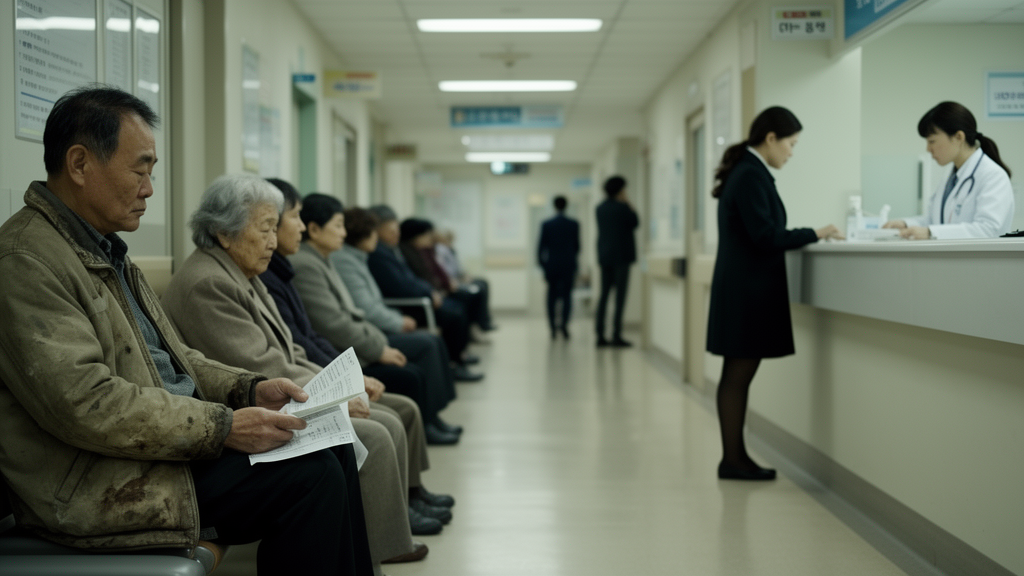
A new study published in the International Journal for Equity in Health examines how the burden of cancer in South Korea is distributed across income levels and age groups, using national data for 2020 and 2021. The research, led by Chung-Nyun Kim with colleagues Yongseok Choi and Seok-Jun Yoon, combined population-level disease burden estimates with individual patient records to assess whether income is associated with differences in cancer-related health loss and premature mortality.
At the national level, the team drew on cause-of-death and life table data from the National Health Insurance Service and Statistics Korea. They applied the disability-adjusted life-year (DALY) framework from the Korean National Burden of Disease Study, calculating DALYs with an incidence-based approach. The analysis focused on the fifteen cancers carrying the highest burden and compared patterns between non-older adults, defined as those under 65 years, and older adults aged 65 and above.
The results showed that total DALYs varied by cancer type, age and income level. Among the fifteen highest-burden cancers, non-older adults displayed highly variable trends across income levels, whereas older adults showed relatively stable patterns. A consistent gradient also emerged within the DALY composition itself: as income level increased, the proportion of DALYs attributed to years of life lost (YLLs) decreased. Years of life lost reflect premature mortality, so this pattern indicates that the share of cancer burden attributable to premature mortality, relative to other components of the burden, decreased with increasing income level.
To complement the population-level picture, the researchers conducted an individual-level analysis using the Cancer Public Library Database. They fitted a generalised gamma linear model with a log link to estimate adjusted mean years of life lost, stratified by age group, income level and SEER stage at cancer diagnosis. After adjusting for covariates, the high-income group generally exhibited fewer years of life lost than the low- and middle-income groups. This patient-level finding aligns with the national analysis in pointing to income-related differences in premature mortality among people with cancer.
The authors conclude that they observed a decline in health equity across various parameters according to income levels. They argue that the differential disease burden and premature mortality patterns by income level highlight the need for more detailed national cancer management policies, and for policy design that takes age group into account, since the income-related patterns differed markedly between younger and older adults.
As an observational analysis of South Korean data for 2020 and 2021, the study documents associations between income and cancer burden rather than establishing causal effects. The national estimates rely on the established Korean burden of disease methodology, while the individual-level model adjusts for measured covariates including age, income and stage at diagnosis.
Subject of Research: Income-related inequalities in cancer burden and years of life lost across age groups in South Korea
Article Title: Income-related inequities in cancer burden and patient-level years of life lost across age groups in South Korea
Article References: Kim, C.-N., Choi, Y., & Yoon, S.-J. (2026). Income-related inequities in cancer burden and patient-level years of life lost across age groups in South Korea. International Journal for Equity in Health. https://doi.org/10.1186/s12939-026-03095-4
Image Credits: AI Generated
DOI: 10.1186/s12939-026-03095-4
Keywords: South Korea, cancer burden, DALY, years of life lost, health equity, income inequality, age groups, National Health Insurance Service, Korean National Burden of Disease Study, SEER stage, premature mortality, observational study
News Source: Nathaniel Bowman. (October 27, 2026). Cancer burden in South Korea falls unevenly across income levels and age groups. Scienmag.