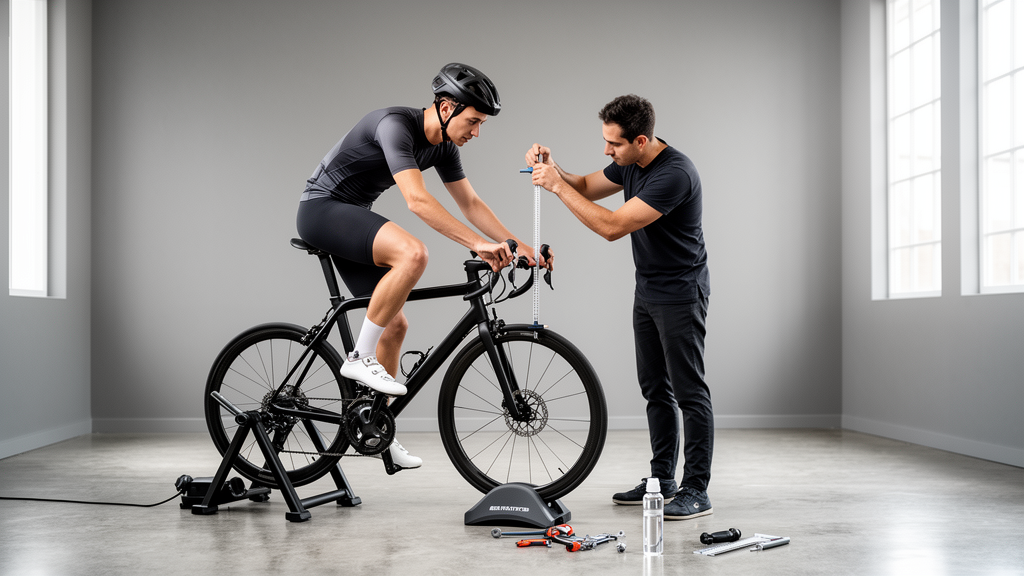
Common formulas used to set saddle, handlebar and pedal positions on road bikes are not consistently supported by scientific evidence, according to a systematic review published in Sports Engineering. The review, which followed the PRISMA 2020 reporting guidelines, found substantial variability in the methods used across studies and concluded that formula-based approaches do not reliably identify optimal saddle positioning for individual cyclists.
The review was carried out by Sofia Scataglini, Michelle Pyckhout and colleagues, with Steven Truijen as senior author. The team searched six databases—PubMed, Web of Science, IEEE, MEDLINE, Embase and ScienceDirect—on 16 February 2026 for studies of cycling posture in adult, injury-free road cyclists. Eligible designs included randomised controlled trials, controlled and clinical trials, cohort and prospective studies, longitudinal studies and pilot studies that used anthropometric and biomechanical parameters, covering saddle, handlebar and pedal positioning as well as range of motion.
Study selection was based on prespecified Population, Intervention, Comparison, Outcomes and Study design (PICOS) criteria, and the risk of bias in the included studies was assessed with the ROBINS-I tool. Data were tabulated and synthesised narratively, organised by outcome domains and measurement approaches rather than by a formal meta-analysis.
Thirteen articles met the inclusion criteria. Across those studies, the researchers found that multiple different formulas were employed to determine saddle height, with substantial variability in the methods used and inconsistent outcomes between them. This heterogeneity meant the authors could not establish universally applicable recommendations for bike fitting.
The central conclusion is that applying standardised measurements without taking individual characteristics into account has clear limitations. Because cyclists differ in anthropometrics, flexibility and cycling discipline, a single formula may not transfer well from one rider to another, even though such formulas are widely used in practice.
The authors do not dismiss the formulas outright. They note that formula-based approaches may still provide a useful starting point for bike fitting, but argue that their practical application should be complemented by individualised anthropometric and biomechanical assessment, increasingly supported by biomechanical assessment technologies.
The review’s motivation lies in the scale of cycling participation and the importance of optimising the cyclist–bicycle interface for performance, comfort and injury prevention. Bike fitting considers individual anthropometric characteristics, flexibility and cycling discipline when determining appropriate bicycle configurations, yet the evidence behind the commonly used formulas for saddle, handlebar and pedal positions had not previously been comprehensively synthesised.
Looking forward, the authors call for future research to prioritise standardised measurement protocols, consistent outcome reporting and more diverse study populations, in order to strengthen the evidence base and improve the practical applicability of bike-fitting recommendations. Until then, riders and fitters should treat published formulas as a starting approximation rather than a definitive prescription.
As with any systematic review, the findings reflect the quality and scope of the underlying studies. With only thirteen included articles, heterogeneous methods and inconsistent outcome reporting, the review’s own authors emphasise that the current evidence base remains limited—making individualised assessment, rather than any single formula, the most defensible approach to positioning a cyclist on a road bike.
Subject of Research: Systematic review of the evidence behind bike-fitting formulas for road cyclist positioning
Article Title: Optimising cycling performance and comfort: a systematic review of bike fitting methods and formulas
Article References: Scataglini, S., Pyckhout, M., Vielfont, E., Rosseel, L., De Backer, K., Van Hoof, L., Homblé, M., Van Bocxlaer, C., & Truijen, S. (2026). Optimising cycling performance and comfort: a systematic review of bike fitting methods and formulas. Sports Engineering, 29(2), Article 37. https://doi.org/10.1007/s12283-026-00574-3
Image Credits: AI Generated
DOI: 10.1007/s12283-026-00574-3
Keywords: bike fitting, cycling, saddle height, systematic review, biomechanics, anthropometry, road cyclists, sports engineering, PRISMA, injury prevention, handlebar position, evidence synthesis
News Source: Denise Maddox. (October 27, 2026). Bike-fitting formulas lack consistent evidence, systematic review finds. Scienmag.