A chemokine signaling pathway involving CXCL1, CXCL8 and their receptors CXCR1/2 appears to orchestrate the inflammatory tumor microenvironment and extracellular matrix remodeling that characterize tumors arising in neurofibromatosis type 1, according to a study published in Acta Neuropathologica Communications. The article was shared ahead of final publication as a peer-reviewed, accepted manuscript carrying a permanent DOI, and is subject to further editorial edits before the version of record appears.
Neurofibromatosis type 1 is a genetic disorder in which patients develop peripheral nerve tumors called neurofibromas. These benign lesions contain a highly heterogeneous tumor microenvironment that can facilitate progression toward malignant peripheral nerve sheath tumors, or MPNSTs, which are lethal. Despite the clinical importance of this progression, the master regulatory signals driving the chronic neuro-inflammatory and mechanical niche of these tumors had remained uncharacterized, the authors report.
To identify those signals, the research team performed immune secretome profiling on patient-matched immortalized Schwann cell lines carrying different NF1 genotypes: one with complete loss of NF1 function (NF1−/−) and one with a single functional copy (NF1+/−). This comparison identified CXCL1 and CXCL8 as the predominant hyper-secreted chemokines coordinating the peripheral nerve lesion, suggesting that altered chemokine release from Schwann cells themselves helps shape the tumor environment.
The team then tested whether these chemokines were sufficient to reproduce the pathological signaling pattern. Transient genetic overexpression of CXCL1 or CXCL8 in control NF1+/− Schwann cells successfully recapitulated the native neurofibroma secretome, inducing a secondary cascade of pro-inflammatory mediators that included members of the CCL and CXCL chemokine families. In other words, the two chemokines acted as upstream drivers that triggered a broader inflammatory program rather than acting alone.
Functional assays using engineered conditioned media showed how these glia-derived chemokines reprogram the surrounding neural microenvironment. Macrophages exposed to the signals shifted toward a pro-inflammatory M1-like phenotype, neutrophils showed an N1-like lineage influx, and fibroblasts were activated into an inflammatory cancer-associated fibroblast, or iCAF, phenotype. These findings are based on laboratory assays with engineered culture conditions and cell lines rather than on observations in patients, so they define mechanisms operating at the cellular level.
The activated iCAFs displayed enhanced motility and upregulated matrix metalloproteinase-1, an enzyme involved in matrix degradation. According to the study, this directly contributed to the characteristic low-stiffness, collagen-depleted extracellular matrix of benign neurofibromas, while also initiating a self-reinforcing feed-forward loop through secondary secretion of monocyte chemoattractant protein. This loop links matrix remodeling back to continued immune cell recruitment, potentially sustaining the chronic inflammatory niche over time.
The most therapeutically relevant result concerned pharmacological blockade of the pathway. Targeted inhibition of the CXCR1/2 receptors using the allosteric antagonist Reparixin collapsed the pathological cascade in the experimental system: the treatment suppressed pro-inflammatory transcripts and reduced the migratory and invasive capacity of both neurofibroma and MPNST cells. The authors present this as evidence that the CXCR1/2 axis is an actionable vulnerability in these tumors, though blockade was tested in laboratory models and not in patients.
Overall, the study delineates a CXCL1/8-driven chemokine network governing the neurofibroma pathobiological landscape and proposes that disrupting CXCR1/2 signaling could impair the pro-tumorigenic niche and potentially impede malignant transformation in NF1-associated neural tumors. Because the work relies on patient-matched cell lines, secretome profiling and engineered conditioned-media assays, translating these findings into clinical strategies will require further validation, and the published manuscript remains subject to the final version of record.
Subject of Research: The role of the CXCL1/8-CXCR1/2 chemokine axis in the inflammatory tumor microenvironment of NF1-mutant tumors
Article Title: The CXCL1/8-CXCR1/2 axis orchestrates the inflammatory tumor microenvironment and matrix remodeling in NF1-mutant tumor pathogenesis
Article References: Lee, Y.-T., Hsu, T.-Y., Antipova, A., Yeh, Y.-W., Chang, C.-C., Lee, S.-R., Hung, P.-L., Chen, Y.-Z., & Liao, C.-P. (2026). The CXCL1/8-CXCR1/2 axis orchestrates the inflammatory tumor microenvironment and matrix remodeling in NF1-mutant tumor pathogenesis. Acta Neuropathologica Communications. https://doi.org/10.1186/s40478-026-02465-x
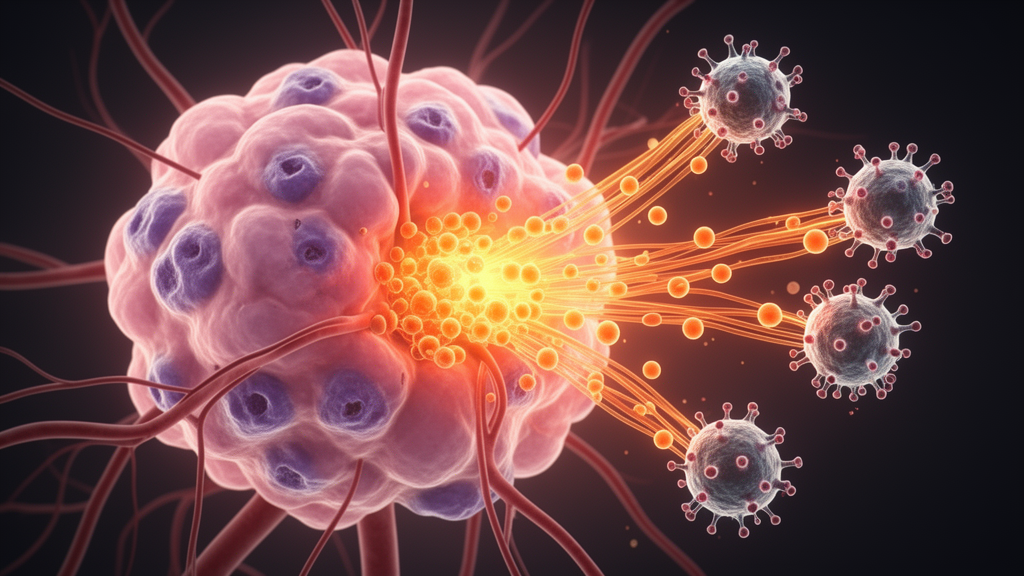
Image Credits: AI Generated
DOI: 10.1186/s40478-026-02465-x
Keywords: neurofibromatosis type 1, CXCL1, CXCL8, CXCR1/2, Reparixin, neurofibroma, MPNST, Schwann cells, tumor microenvironment, cancer-associated fibroblasts, chemokines, matrix remodeling
News Source: Nathaniel Bowman. (October 27, 2026). Chemokine CXCL1/8-CXCR1/2 axis drives inflammatory niche in NF1 tumors. Scienmag.