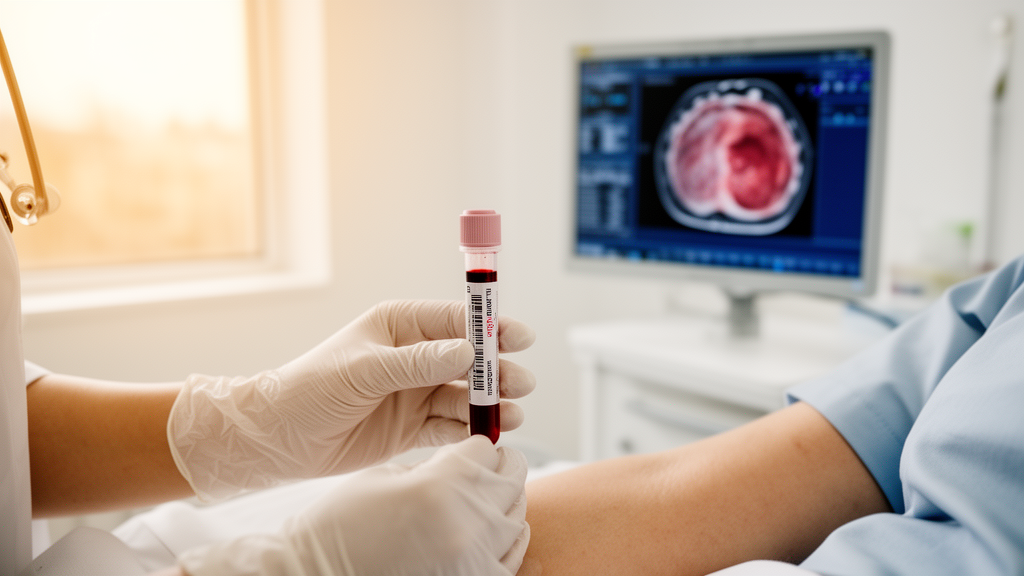
Patients with sarcoma may soon have another way to follow their disease: a blood test that reads fragments of tumor DNA shed into the bloodstream. A retrospective real-world study at a certified high-volume sarcoma center reports that tumor-informed circulating tumor DNA (ctDNA) monitoring agreed closely with radiologic assessment, matching imaging results in the vast majority of paired comparisons.
Sarcomas are rare and heterogeneous malignant tumors of bone and soft tissue, and reliable blood-based biomarkers for longitudinal disease monitoring remain limited for them. Although ctDNA has emerged as a minimally invasive biomarker in several solid tumors, its clinical utility in sarcoma has been incompletely defined, because biological heterogeneity, variable ctDNA shedding, and the scarcity of recurrent genomic alterations that can be covered by targeted panels have complicated its application across subtypes.
In the new study, the researchers screened twenty patients treated at the center. Fourteen of them, or 70 percent, had an identifiable tumor-informed ctDNA target and were included in the longitudinal analysis. Each patient first underwent tumor-normal molecular profiling to identify tumor-specific DNA alterations, which were then tracked in plasma using a unique molecular identifier (UMI)-based targeted sequencing approach.
A total of 67 longitudinal plasma samples were analyzed, with a median of four samples per patient and a range of two to ten. All 67 paired liquid biopsy-radiologic assessments entered the concordance analysis. The two methods agreed in 59 of 67 cases, a concordance rate of 88.1 percent, corresponding to substantial agreement between ctDNA findings and imaging, with a Cohen’s kappa of 0.755 (95 percent confidence interval, 0.598 to 0.913).
Using radiologic assessment as the reference standard, ctDNA showed a sensitivity of 80.0 percent and a specificity of 94.6 percent for detecting progressive disease. The authors note that these assessment-level estimates were descriptive and did not account for repeated measurements within patients, an important limitation when interpreting the performance figures.
Beyond the aggregate statistics, a descriptive review of the longitudinal ctDNA trajectories identified patterns consistent with the radiologic and clinical disease course in individual patients. In other words, rising or falling levels of tumor-derived DNA in the plasma tended to mirror what scans showed as each patient’s disease evolved under treatment.
The study also explored whether ctDNA could signal prognosis. In a three-month landmark analysis, patients whose ctDNA indicated progression had numerically shorter progression-free survival than patients without ctDNA-defined progression, at 9.0 versus 16.0 months. The researchers emphasize that this difference was not statistically significant, so it should be viewed as a hypothesis-generating observation rather than an established predictive result.
As an exploratory extension, the team performed whole-genome-based molecular residual disease (MRD) analysis in two selected patients with extended longitudinal follow-up. This broader, genome-wide approach was concordant with the radiologic disease course in both patients, hinting that methods not restricted to predefined panel targets could widen the fraction of sarcoma patients who can benefit from blood-based monitoring.
The authors conclude that tumor-informed ctDNA monitoring was feasible in 70 percent of screened patients and showed high concordance with radiologic disease assessment in this real-world sarcoma cohort. They frame the findings as support for prospective evaluation of ctDNA as an adjunct to imaging for longitudinal disease monitoring in patients with a suitable tumor-informed target, rather than as a replacement for scans.
They also point out that broader tumor-informed approaches may be required for patients whose tumors are not adequately covered by predefined targeted panels, since nearly a third of screened patients lacked an identifiable target. Because the study was a single-center retrospective analysis with a modest sample size, the results will need confirmation in larger prospective studies before any change to clinical monitoring practice could be considered.
Subject of Research: Tumor-informed circulating tumor DNA monitoring as a companion to imaging for longitudinal disease assessment in sarcoma
Article Title: Association of tumor-informed circulating tumor DNA dynamics with radiologic disease assessment in a single-center real-world sarcoma cohort
Article References: Calukovic, B., Benzler, K., Schulze, M., Battke, F., Zender, L., Lauer, U. M., Biskup, S., & Deinzer, C. K. W. (2026). Association of tumor-informed circulating tumor DNA dynamics with radiologic disease assessment in a single-center real-world sarcoma cohort. BMC Cancer. https://doi.org/10.1186/s12885-026-17180-y
Image Credits: AI Generated
DOI: 10.1186/s12885-026-17180-y
Keywords: sarcoma, circulating tumor DNA, ctDNA, liquid biopsy, molecular residual disease, radiologic assessment, targeted sequencing, UMI, progression-free survival, real-world cohort, tumor-informed monitoring, BMC Cancer
News Source: Nathaniel Bowman. (October 27, 2026). Blood test tracks sarcoma progression closely alongside imaging in real-world cohort. Scienmag.