
• HOME
  • NEWS
  • EXPLORE
    • CAREER
      • Companies
      • Jobs
    • EVENTS
    • iGEM
      • News
      • Team
    • PHOTOS
    • VIDEO
    • WIKI
  • BLOG
  • COMMUNITY
    • FACEBOOK
    • INSTAGRAM
    • TWITTER
Tuesday, October 27, 2026
BIOENGINEER.ORG
No Result
View All Result
  • Login
  • HOME
  • NEWS
  • EXPLORE
    • CAREER
      • Companies
      • Jobs
        • Lecturer
        • PhD Studentship
        • Postdoc
        • Research Assistant
    • EVENTS
    • iGEM
      • News
      • Team
    • PHOTOS
    • VIDEO
    • WIKI
  • BLOG
  • COMMUNITY
    • FACEBOOK
    • INSTAGRAM
    • TWITTER
No Result
View All Result
Bioengineer.org
No Result
View All Result
Home NEWS Science News Health

Rheumatism drug teriflunomide shows subtype-dependent effects in breast cancer cells

by
October 27, 2026
in Health
Reading Time: 2 mins read
0
Rheumatism drug teriflunomide shows subtype-dependent effects in breast cancer cells

Rheumatism drug teriflunomide shows subtype-dependent effects in breast cancer cells

Share on FacebookShare on TwitterShare on LinkedinShare on RedditShare on Telegram

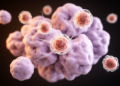
Teriflunomide, the active metabolite of the rheumatoid arthritis drug leflunomide, has drawn attention as a candidate for cancer drug repurposing because it does more than inhibit dihydroorotate dehydrogenase (DHODH), its canonical target. A new open-access study in BMC Pharmacology and Toxicology reports that the drug reduces tumour-cell fitness in both luminal and triple-negative breast cancer cell models, but that its downstream molecular effects differ sharply between the two subtypes.

Researchers treated luminal MCF-7 cells and triple-negative MDA-MB-231 cells with teriflunomide and analysed the response using cell viability, clonogenicity and migration assays, label-free proteomics, KEGG pathway analysis and phospho-kinase profiling. Treated cells were compared with untreated counterparts and with non-tumorigenic MCF-10A cells to distinguish treatment-associated proteomic remodelling from baseline differences between cancerous and normal-like cells.

In MCF-7 cells, the treatment was associated with a clearer shift in protein abundance and with suppression of growth-related phospho-signalling, particularly along the PI3K/AKT/mTOR/p70S6K/RSK axis, a central growth-promoting signalling cascade. In contrast, MDA-MB-231 cells showed a more limited abundance-level proteomic shift but broader activation of phospho-signalling involving EGFR/Src/STAT3, MAPK and AKT-related pathways, a pattern the authors interpret as adaptive rewiring under drug-induced stress.

One of the study’s technical insights is that changes in kinase abundance were often uncoupled from changes in kinase activation state, meaning that integrating proteomic and phospho-kinase data was necessary to see the full picture of how the cells responded.

To assess the relevance of these markers beyond the cell culture setting, the team used TCGA data for validation. Most of the top-regulated proteins differed between breast cancer tissue and normal tissue, while only a subset varied across pathological stages, which the authors say supports their potential as candidates for combination strategies rather than as stage-specific markers.

The authors conclude that teriflunomide exerts subtype-dependent anticancer effects in breast cancer cells and reshapes signalling networks in a context-specific manner, supporting further evaluation of the drug in subtype-informed combination strategies targeting adaptive kinase and metabolic pathways. Because the findings come from in vitro cell models, they represent early mechanistic evidence rather than demonstrated clinical benefit, and the authors note that the article is an accepted manuscript shared early, subject to further edits before the final version of record.

Subject of Research: Subtype-dependent proteomic and phospho-kinase effects of teriflunomide in breast cancer cell models

Article Title: Teriflunomide modulates proteomic and phospho-kinase landscapes in breast cancer: evidence for non-canonical effects beyond DHODH inhibition

Article References: Iskender, B., Sarihan, M., Kongur, Z. S., Kocyigit, E., & Kasap, M. (2026). Teriflunomide modulates proteomic and phospho-kinase landscapes in breast cancer: evidence for non-canonical effects beyond DHODH inhibition. BMC Pharmacology and Toxicology. https://doi.org/10.1186/s40360-026-01265-2

Image Credits: AI Generated

DOI: 10.1186/s40360-026-01265-2

Keywords: teriflunomide, drug repurposing, breast cancer, DHODH, phospho-kinase, proteomics, MCF-7, MDA-MB-231, PI3K/AKT/mTOR, EGFR/Src/STAT3, TCGA, cell culture

News Source: Nathaniel Bowman. (October 27, 2026). Rheumatism drug teriflunomide shows subtype-dependent effects in breast cancer cells. Scienmag.

Tags: Breast CancerCell cultureDHODHDrug repurposingEGFR/Src/STAT3MCF-7MDA-MB-231phospho-kinasePI3K/AKT/mTORProteomicsTCGAteriflunomide
Share12Tweet7Share2ShareShareShare1

Related Posts

T cells in AML are not uniformly dysfunctional, researchers argue in new analysis

T cells in AML are not uniformly dysfunctional, researchers argue in new analysis

October 27, 2026
Combining Brain and Body Stimulation After Spinal Cord Injury Shows Promise but Unproven Benefit

Combining Brain and Body Stimulation After Spinal Cord Injury Shows Promise but Unproven Benefit

October 27, 2026

Bacterial targets dominate respiratory infections in hospitalized Chinese patients

October 27, 2026

Human metapneumovirus pneumonia hits hardest in adults aged 80 and over

October 27, 2026

POPULAR NEWS

  • Neonatal researcher Kata Kovacs links early phosphate levels to mortality risk in newborn encephalopathy

    Neonatal researcher Kata Kovacs links early phosphate levels to mortality risk in newborn encephalopathy

    29 shares
    Share 12 Tweet 7
  • Rheumatism drug teriflunomide shows subtype-dependent effects in breast cancer cells

    29 shares
    Share 12 Tweet 7
  • Patients and Doctors Rank Rare Cancer Care Needs Differently in EORTC Survey

    29 shares
    Share 12 Tweet 7
  • Italy’s alien flora grows: new records and rising invasive species mapped

    29 shares
    Share 12 Tweet 7

About

We bring you the latest biotechnology news from best research centers and universities around the world. Check our website.

Follow us

Recent News

Neonatal researcher Kata Kovacs links early phosphate levels to mortality risk in newborn encephalopathy

Rheumatism drug teriflunomide shows subtype-dependent effects in breast cancer cells

Patients and Doctors Rank Rare Cancer Care Needs Differently in EORTC Survey

Subscribe to Blog via Email

Enter your email address to subscribe to this blog and receive notifications of new posts by email.

Join 85 other subscribers
  • Contact Us

Bioengineer.org © Copyright 2023 All Rights Reserved.

Welcome Back!

Login to your account below

Forgotten Password?

Retrieve your password

Please enter your username or email address to reset your password.

Log In
No Result
View All Result
  • Homepages
    • Home Page 1
    • Home Page 2
  • News
  • National
  • Business
  • Health
  • Lifestyle
  • Science

Bioengineer.org © Copyright 2023 All Rights Reserved.