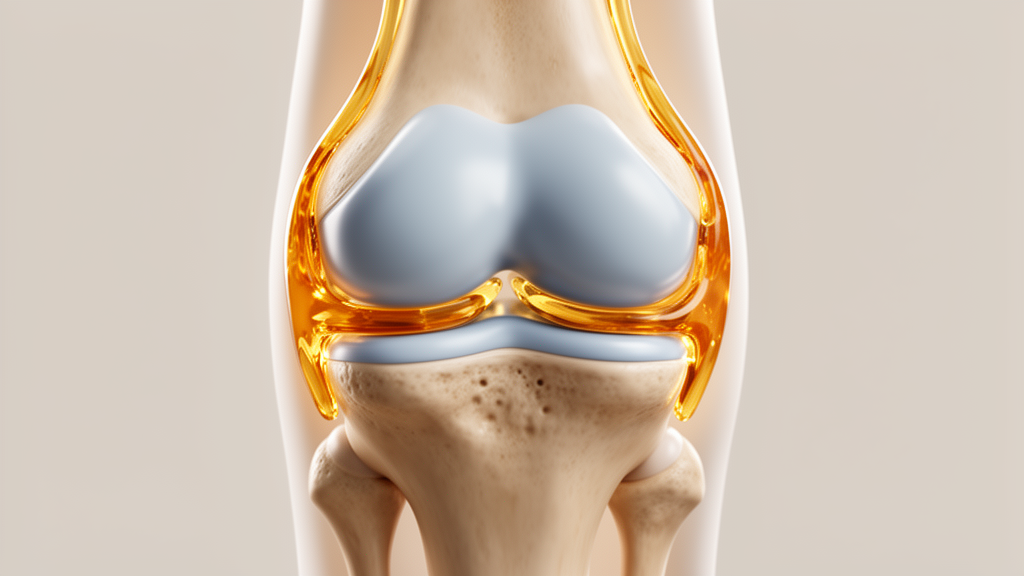
A biomimetic lubricant that mimics the natural coating on healthy joint cartilage has alleviated osteoarthritis in rat and miniature pig models, researchers report in Nature Biomedical Engineering. The material, a polyzwitterionic coacervate dubbed pZCO, combines three functions in one water-immiscible formulation: it binds tightly to cartilage, establishes an ultralow-friction lubricating layer on the joint surface, and serves as a depot for sustained release of anti-inflammatory drugs and mesenchymal stem cells.
The design is modelled on the boundary lubrication layer that keeps healthy articular cartilage nearly frictionless. In natural joints, that layer is built from a complex of zwitterionic lipids, hyaluronic acid and the glycoprotein lubricin. The zwitterionic lipids mediate lubrication itself, while hyaluronic acid and lubricin anchor the complex to the cartilage matrix. In osteoarthritis, this lubrication system is progressively degraded, which increases cartilage wear and contributes to joint dysfunction. Because the damage begins with lost lubrication, the authors argue that early, lubrication-based intervention is urgently needed.
The engineered coacervates reproduce both halves of that natural system. According to the study, pZCOs show strong binding affinity to fibronectin, an adhesive protein in the cartilage matrix, which allows them to establish a stable, ultralow-friction lubrication layer on the cartilage surface. The material also resists dilution by synovial fluid, a property the researchers link to its fluidity and physiological stability, and it outperformed clinical hyaluronic acid lubricants in lubrication performance and in how long it remained in the joint.
Beyond lubrication, the coacervate acts as a delivery vehicle. The team showed that pZCO enables sustained release of anti-inflammatory drugs and preserves the viability of mesenchymal stem cells encapsulated within it, along with the cells’ anti-inflammatory paracrine secretion. In cell experiments, the formulation also suppressed the expression of pro-inflammatory factors, and pZCO promoted the expression of cartilage matrix proteins while inhibiting inflammation in the articular cavity of osteoarthritic rats.
In vivo, intra-articular injection of drug- and MSC-laden pZCOs reduced cartilage degradation, suppressed inflammation and promoted cartilage integrity in both rat and miniature pig models of osteoarthritis, outperforming clinical hyaluronic acid lubricants in lubrication performance, retention in the joint and therapeutic efficacy. Single-cell and spatial transcriptomic analyses of treated joints pointed to reparative and immunomodulatory effects of the cell-laden coacervate, and in miniature pigs the treatment alleviated the major osteoarthritis symptoms measured in the model.
The findings highlight the translational potential of engineered biomimetic coacervates as next-generation joint lubricants for the integrated management of osteoarthritis, the authors write. They caution, however, that the evidence so far comes from animal models; efficacy in human patients remains to be demonstrated in clinical studies, and the safety, dosing and durability of the treatment in human joints are questions for future work.
Subject of Research: A cartilage-binding biomimetic coacervate lubricant that delivers anti-inflammatory drugs and stem cells to treat osteoarthritis in animal models.
Article Title: Cartilage-binding coacervate with therapeutic payload delivery and biomimetic lubrication alleviates osteoarthritis by reducing joint friction and inflammation
Article References: Chen, S., Jiang, T., Qiu, X., Luo, R., Yao, H., Wang, R., Li, Z., Zhao, P., & Bian, L. (2026). Cartilage-binding coacervate with therapeutic payload delivery and biomimetic lubrication alleviates osteoarthritis by reducing joint friction and inflammation. Nature Biomedical Engineering. https://doi.org/10.1038/s41551-026-01819-z
Image Credits: AI Generated
DOI: 10.1038/s41551-026-01819-z
Keywords: osteoarthritis, coacervate, biomimetic lubricant, cartilage, hyaluronic acid, lubricin, mesenchymal stem cells, drug delivery, joint friction, inflammation, Nature Biomedical Engineering, preclinical models
News Source: Ophelia Keating. (October 27, 2026). Cartilage-binding coacervate lubricant eases osteoarthritis in animal models. Scienmag.