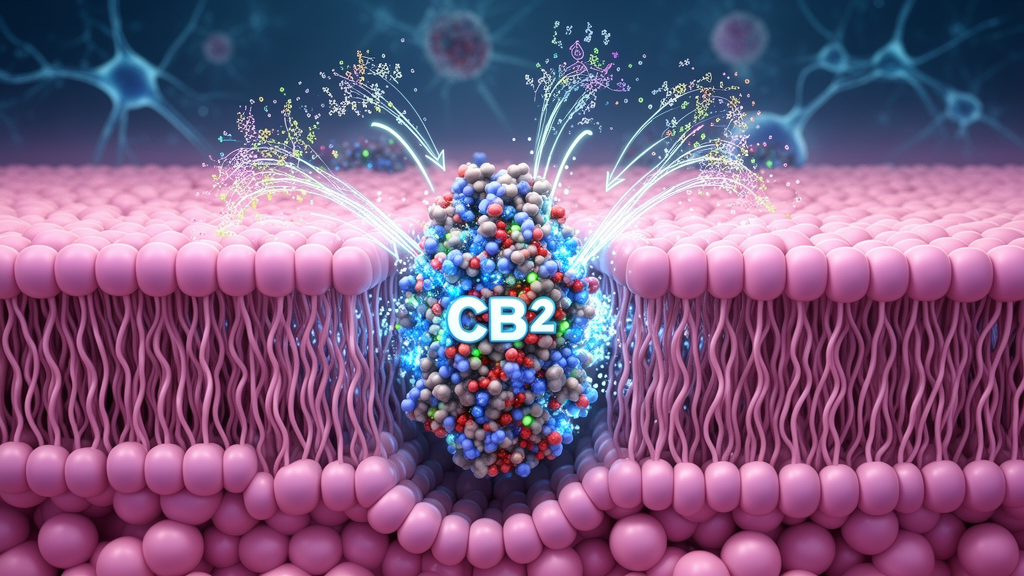
Early-life experiences are among the strongest predictors of vulnerability to emotional disorders, including depression in adulthood. Yet the neurodevelopmental mechanisms underlying this link remain poorly understood. A new review published in Frontiers in Cell and Developmental Biology argues that an often-overlooked component of the brain’s endocannabinoid system—the cannabinoid receptor type 2, or CB2r—may be a crucial modulator of how the developing brain responds to environmental challenges, and therefore of lifelong affective vulnerability.
The endocannabinoid system is a neuromodulatory lipid signaling network that regulates stress responses and emotional behavior throughout development.
Crucially, CB2r is found in multiple brain cell types—neurons, astrocytes and microglia—and its expression appears to be dynamically regulated across development. It has been identified in neural progenitor cells and in specific neuronal populations within the hippocampus, as well as in human fetal astrocytes, supporting its presence during the earliest stages of brain development. Its expression also differs between pre-pubertal and adult stages, suggesting that developmental timing matters. Functionally, CB2r modulates microglial proliferation and migration and promotes a shift from pro-inflammatory to anti-inflammatory states, reducing the release of inflammatory mediators. Pharmacological activation of CB2r attenuates stress-induced inflammation and depressive-like behaviors, whereas genetic deletion of the receptor enhances neuroinflammatory responses and vulnerability to stress.
The review, authored by Abraham B. Torregrosa, Francisco Navarrete and María Salud García-Gutiérrez of the Instituto de Neurociencias in Alicante, Spain, synthesizes evidence from models of early-life stress, prenatal or perinatal drug exposure, adolescent stress, and recreational drug use. Its central conclusion is that CB2r expression is dynamically regulated by developmental stage, brain region and biological sex—and that these alterations persist well beyond the initial insult, coinciding with the emergence of stress-related behavioral abnormalities.
The evidence begins with early-life stress. Increased CB2r immunoreactivity has been detected in the hippocampus shortly after maternal deprivation in rats, indicating that alterations emerge rapidly following adverse experiences. But rather than producing a uniform increase or decrease in receptor expression, early-life stress appears to reshape CB2r according to developmental stage, sex and brain region. Maternal separation increased CB2r expression in parvalbumin-positive interneurons of the prefrontal cortex during early adolescence, whereas receptor expression declined later in adolescence, coinciding with the emergence of depressive-like behaviors and emotional deficits. Maternal deprivation induced sex-dependent changes in CB2r protein expression during adolescence, with increased hippocampal and prefrontal levels in females but reduced expression in males, accompanied by depressive- and psychotic-like phenotypes. These alterations appear to extend into adulthood: increased Cnr2 gene expression has been reported in the medial prefrontal cortex of adult females exposed to limited bedding and nesting, together with sex-dependent behavioral alterations.
Perhaps the most striking findings come from functional studies that go beyond merely describing expression changes. In one model, maternal separation reduced MARCH7 expression while promoting NLRP3 inflammasome activation and IL-1β signaling in cortical microglia, producing a persistent pro-inflammatory state associated with depressive-like behaviors. Pharmacological activation of CB2r with the agonist HU-308 partially restored MARCH7 expression, attenuated inflammasome activation and reduced neuroinflammatory signaling. Furthermore, both HU-308 treatment and CB2r overexpression in the prelimbic cortex through lentiviral delivery prevented the development of anhedonia and depressive-like behaviors during adolescence. Together, these results provide functional evidence that enhancing CB2r signaling may attenuate the long-term neuroimmune and behavioral consequences of early-life stress, promoting resilience.
Beyond stress, prenatal and perinatal drug exposure also leaves its mark on the receptor. Perinatal exposure to dronabinol induced long-lasting emotional and cognitive alterations in mice, together with changes in Cnr2 expression in the hippocampus and amygdala. Perinatal alcohol exposure increased hippocampal Cnr2 expression in both male and female offspring, accompanied by persistent emotional and cognitive alterations. Interestingly, early and chronic treatment with cannabidiol (CBD) attenuated several of these behavioral alterations and partially normalized Cnr2 expression in males, whereas this effect was not observed in females. Perinatal alcohol exposure also increased Cnr2 expression in the nucleus accumbens, particularly in males, and these changes were associated with alterations in gut microbiota composition—suggesting that CB2r-related adaptations may occur within broader gut-brain and behavioral changes.
During adolescence, a period marked by synaptic pruning, myelination and the maturation of prefrontal-limbic circuits, CB2r again proves sensitive to environmental challenges. Repeated tail-shock stress reduced CB2r protein expression in the prefrontal cortex of both male and female adolescent rats, while females exhibited higher basal Cnr2 gene expression across several corticolimbic regions. In contrast, both acute and repeated restraint stress increased amygdalar Cnr2 expression and induced persistent anxiety-like behaviors in adulthood, with the acute paradigm accompanied by elevated plasma corticosterone and increased circulating levels of the endocannabinoid 2-AG. Recreational drugs add further complexity: cocaine and alcohol consumption reduced CB2r protein levels in the prefrontal cortex and hippocampus respectively, yet chronic alcohol consumption during late adolescence increased CB2r expression in the prefrontal cortex—an example of how the direction of change depends on the experimental paradigm. Adolescent exposure to JWH-018, the main compound of synthetic drugs sold as Spice or K2, induced persistent deficits in sensorimotor gating and sex-dependent alterations in anxiety-like behaviors, accompanied by reduced CB2r expression and glial activation in the prefrontal cortex.
Pharmacological studies during adolescence reinforce the receptor’s functional relevance. The selective CB2r agonist AM1241 prevented alcohol-induced neuroinflammatory changes in the prefrontal cortex—including NLRP3 inflammasome activation—and ameliorated anxiety-like behaviors during withdrawal. Conversely, administration of the CB2r antagonist SR144528 during adolescence impaired the acquisition of Pavlovian conditioned responses in adulthood without affecting instrumental conditioning, suggesting that CB2r activity during this developmental window contributes to specific aspects of reward-related learning. In another model, prior restraint stress prevented alcohol-induced reductions in hippocampal Cnr2 expression and attenuated long-term memory deficits, indicating that adolescent stress can even modify the receptor’s response to subsequent insults.
The authors are careful to emphasize the limitations of the current evidence. Heterogeneity across experimental models—in the nature, duration and intensity of stressors, as well as in the developmental stages and brain regions evaluated—makes comparisons across studies difficult. Changes in Cnr2 or CB2r protein expression do not necessarily reflect changes in receptor activity or downstream signaling, and relatively few studies have directly compared males and females under the same experimental conditions, so consistent sex-dependent patterns cannot yet be identified. The reviewed alterations likely occur within broader endocannabinoid system adaptations rather than representing an exclusively CB2r-mediated response. Translating these findings to humans will require substantially more evidence; the authors propose exploring whether CB2r-related alterations can be detected in peripheral immune cells, such as lymphocytes, from children or adolescents exposed to early-life adversity. They also note a translational gap: human studies often focus on social adversity such as bullying, while preclinical CB2r research has mainly used physical stressors and drug exposure. Still, the overall picture is compelling—adversity during sensitive developmental windows is associated with persistent, dynamic alterations in CB2r that vary by developmental stage, sex and brain region, occurring alongside affective, behavioral and neuroimmune changes. Whether CB2r modulation ultimately proves therapeutically relevant will depend on future studies defining the timing, cellular targets and functional contribution of this receptor to the consequences of developmental adversity.
Subject of Research: The role of the CB2 cannabinoid receptor in mediating the neuroimmune and behavioral effects of early-life and adolescent adversity.
Article Title: Time matters: CB2 receptor, developmental stress sensitivity and affective vulnerability
Article References: Torregrosa, A. B., Navarrete, F., & García-Gutiérrez, M. S. (2026). Time matters: CB2 receptor, developmental stress sensitivity and affective vulnerability. Frontiers in Cell and Developmental Biology, 14, 1967345. https://doi.org/10.3389/fcell.2026.1967345
Image Credits: AI Generated
DOI: 10.3389/fcell.2026.1967345
Keywords: CB2 receptor, endocannabinoid system, early-life stress, adolescence, neuroinflammation, microglia, depression, anxiety, prenatal drug exposure, brain development, HPA axis, affective disorders
News Source: Drew Townsend. (October 27, 2026). Research report: Time matters: CB2 receptor, developmental stress sensitivity and affective vulnerability. Scienmag.