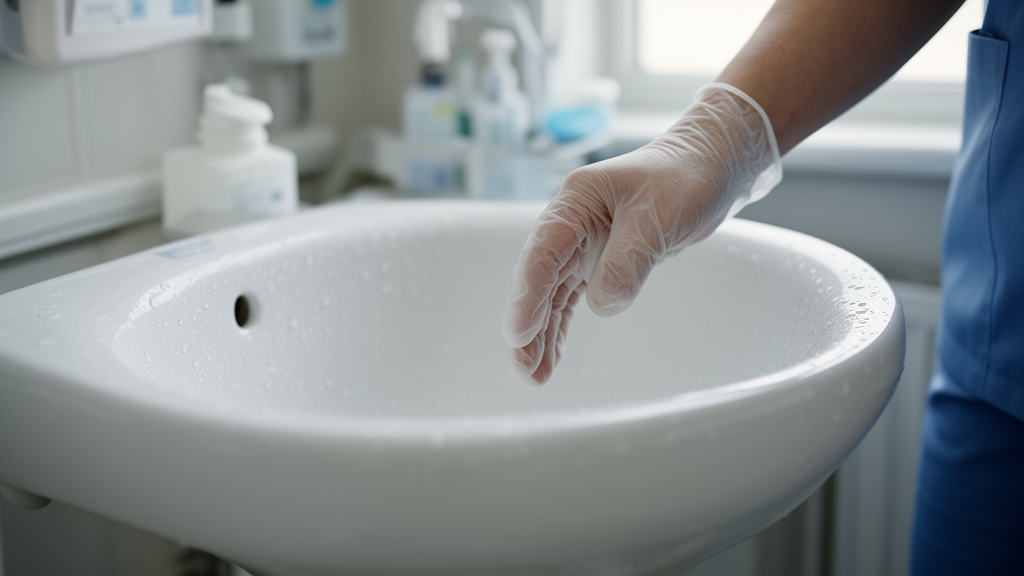
Handbasins are a cornerstone of hospital infection control, but new research from Flinders University warns that the basins themselves may be helping drug-resistant bacteria spread in healthcare settings. A review published in the Journal of Hospital Infection compared healthcare handbasin design guidelines across 39 countries with the available scientific evidence, and found substantial inconsistencies between international guidelines. The authors argue that better basin engineering could reduce the risk of pathogen transmission, including from difficult-to-treat organisms such as Carbapenemase-producing Enterobacterales (CPE).
Lead author Mikaela Todarello, a PhD candidate in Environmental Health at Flinders University, says handbasins need to support effective handwashing without creating avoidable opportunities for pathogens to spread. Microbes can build up in taps and drains, and when water hits contaminated surfaces, splashing can carry them onto nearby equipment and surfaces. According to Todarello, there is evidence that handbasin design influences how microbes spread, which she describes as a real opportunity to improve these designs and reduce the risk to patients. Healthcare handbasins can become contaminated with pathogens from incoming water, wastewater plumbing, or during handwashing itself, meaning the very fixtures intended to protect patients can become reservoirs if poorly designed or maintained.
The review identified several design features that deserve closer attention. Flat basin surfaces can allow water to pool and may produce more splashing than curved surfaces, creating conditions that favour microbial growth and spread. Shallow basins have been associated with greater dispersal of small airborne droplets, known as bioaerosols, beyond the basin than deep bowls. Drain position also matters: when the drain sits directly beneath the tap, the water stream can strike it and generate droplets and aerosols, particularly at higher water pressure. Positioning the drain away from the water stream can reduce splashing.
Water flow and bowl slope can also change splash behaviour, and how a basin is positioned and used, and whether water pools in it, need to be considered as well. Taken together, these features suggest that the physical geometry of a handbasin, from the curvature of the bowl to the placement of the drain relative to the water stream, can shape how far contaminated droplets travel and how readily microbes establish themselves within the fixture.
Despite these observations, the evidence base remains thin. Todarello notes that there is still limited research examining how these features work together during everyday use, or which combinations best reduce infection risk. She says the gap needs to be closed so that future design guidelines are based on strong evidence from real healthcare environments. The review’s comparison of 39 countries’ guidelines revealed that the limited evidence available makes it difficult to determine which design features best reduce the risk of pathogen spread, underscoring how far regulation has run ahead of the science in this area.
Professor Harriet Whiley, Professor in Environmental Health at Flinders University, says the findings point to a practical opportunity to strengthen infection prevention. Healthcare workers are asked to wash their hands to protect patients, she argues, so the handbasins they use should be designed with the same goal in mind. According to Whiley, better engineering could reduce splashing, limit biofilm buildup and prevent contamination from spreading, and she says improvements can be made, particularly in areas caring for patients who are most vulnerable to infection.
The study, ‘Healthcare handbasin design and microbial safety: A review of guidelines and current evidence’ (2026) by Mikaela Todarello, Kirstin E Ross, Melissa H Brown, Jason Hinds, Andrew Ang, Mats Andersson, Claire Hayward, Marnie Blackburn and Harriet Whiley, has been published in the Journal of Hospital Infection (DOI: 10.1016/j.jhin.2026.08.012). The work was conducted as a literature review, and its findings are drawn from comparing published design guidelines with the current evidence on microbial safety rather than from new experiments in clinical wards.
The authors caution that the limited evidence available makes it difficult to determine which design features best reduce the risk of pathogen spread, and they call for research carried out in real healthcare environments to close that gap so future guidelines rest on strong evidence. In the meantime, the review suggests that even modest engineering changes, such as repositioning drains away from the water stream or favouring curved, deeper bowls over flat, shallow surfaces, could offer a practical route to reducing splashing, bioaerosol dispersal and microbial buildup in healthcare handbasins.
Subject of Research: Healthcare handbasin design and microbial safety reviewed against international guidelines
Article Title: Better handbasin design could help block superbug outbreaks
Article References: Better handbasin design could help block superbug outbreaks. Original publication (Bibliographic details unavailable.)
Image Credits: AI Generated
DOI: Not provided
Keywords: handbasin design, hospital infection control, superbugs, CPE, bioaerosols, splashing, drain position, Flinders University, Journal of Hospital Infection, guidelines review, pathogen spread, environmental health
News Source: Kristina Jarvis. (October 26, 2026). Contaminated hospital handbasins may fuel superbug spread, review finds. Scienmag.