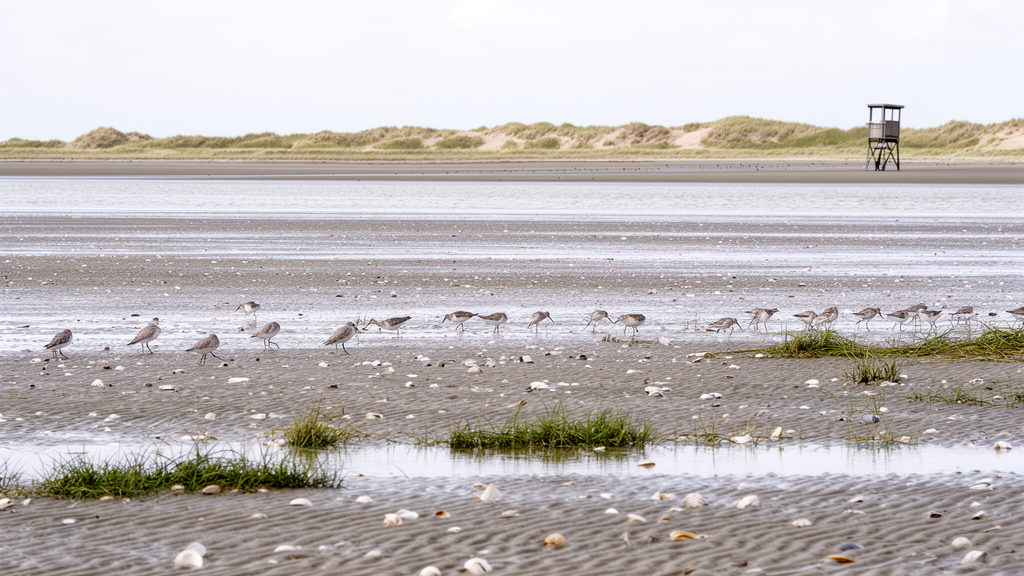
A global systematic review led by the University of British Columbia reports that rising sea levels are expected to reduce coastal-wetland habitat and negatively affect shorebird populations. The review examined evidence on 29 species, including plovers, sandpipers and oystercatchers, and identified coastal squeeze as a major additional threat: roads, seawalls, dykes and other development can prevent tidal flats and salt marshes from shifting inland as the sea advances. Published in Biodiversity and Conservation , the analysis is described by the researchers as the first global systematic review of how sea-level rise affects shorebirds.
Lead author Jennifer Magel, a PhD student in UBC’s Faculty of Forestry and Environmental Stewardship, and co-author Tara Martin, a professor in the same faculty, reviewed 37 studies containing data on the effects of sea-level rise on shorebirds. Of these studies, 78 per cent found negative effects on habitat, while 89 per cent found negative effects on shorebird populations or individual birds. These figures summarize the direction of the findings across the included literature rather than a single experiment or a uniform forecast for every species and coastal location.
Many of the studies assessed impacts projected toward the end of the century, but the researchers argue that coastal adaptation decisions must be made earlier because wetlands need time and space to move inland. The review describes coastal squeeze as a conflict between rising water and fixed coastal development. Without human barriers, coastal wetlands can sometimes migrate inland, and accumulated sediment can help them build elevation.
Where roads, buildings, dykes or shoreline armouring block that movement, habitat becomes trapped between the advancing water and the developed shoreline. The consequences may extend beyond direct habitat loss. In eight of nine studies that examined both habitat and population effects, projected population impacts were more severe than would be expected from habitat loss alone.
Rising seas can reduce the time available for birds to feed on exposed tidal flats, while changes in sediment, salinity and water depth can alter prey availability. Higher water levels can also increase the risk of nest flooding for nesting birds. The ecological importance of these coastal habitats may be amplified by their role in migration.
Shorebirds may travel anywhere from hundreds to tens of thousands of kilometres during migration, stopping at tidal flats and other coastal habitats to rest and feed before continuing their journeys. The Fraser River Estuary in British Columbia is an important bottleneck along the Pacific Flyway, where large numbers of birds gather in a relatively small area to replenish their energy. If a major stopover site is degraded, birds relying on that site may have fewer opportunities to refuel during migration.
Based on their review, the researchers urge planners to protect space inland of existing wetlands, remove or alter artificial barriers, enhance sediment supplies and, where appropriate, consider managed coastal retreat. They point to the Sturgeon Bank Sediment Enhancement Pilot Project in the Fraser River Estuary as an example of testing how added sediment can build wetland elevation to support coastal habitat. The project is presented as a test of a nature-based adaptation approach, not as evidence that the measure will reverse projected shorebird losses.
Acting earlier could give wetlands more room to move and preserve more habitat for the future. Overall, the predominance of negative findings in the 37-study review indicates that sea-level rise poses a broad threat to shorebirds and that development constraints can intensify the exposure.
Subject of Research: Effects of sea-level rise and coastal squeeze on shorebirds
Article Title: Sea-level rise could squeeze shorebirds out of critical coastal habitat, researchers find
Article References: Sea-level rise could squeeze shorebirds out of critical coastal habitat, researchers find. Original publication (Bibliographic details unavailable.)
Image Credits: AI Generated
DOI: Not provided
Keywords: shorebirds, sea-level rise, coastal wetlands, coastal squeeze, habitat loss, bird migration, migration bottlenecks, sediment enhancement, managed retreat, systematic review, Sea-level, rise
News Source: Thomas Green. (October 26, 2026). Global review projects shorebird losses from sea-level rise. Scienmag.