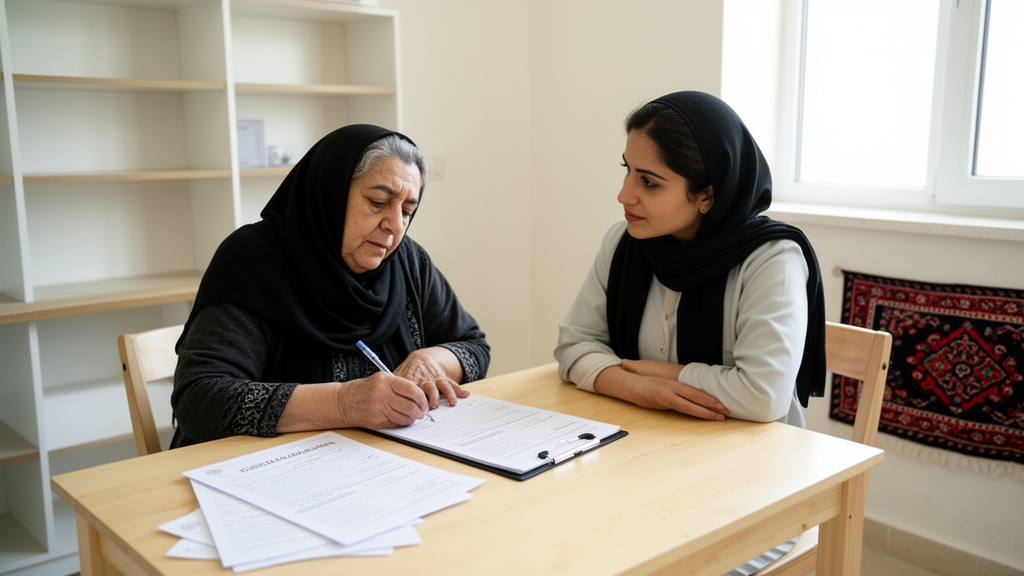
A 28-item health literacy instrument adapted for community-dwelling older adults in Iran demonstrated strong overall validity and internal consistency in a psychometric study of 495 participants. The Health Literacy Instrument for Older Adults, known as HELIO, retained the five-factor structure of the Health Literacy Instrument for Adults after content-validity assessment led researchers to remove five items. Principal component and confirmatory factor analyses supported the resulting structure, which accounted for 35.9% of the variance in the data.
Health literacy plays an important role in enabling older adults to manage health conditions and make informed health decisions, according to the study’s background. The Health Literacy Instrument for Adults, or HELIA, was already available in Iran, but its psychometric properties had not previously been evaluated in older adults. To address that gap, the researchers adapted HELIA for this population and tested the resulting HELIO among people living in the community rather than in institutional care.
The participants were selected through a two-stage cluster sampling method. Their mean age was 64.87 years, with a standard deviation of 5.49 years, and 53.8% were women. Reliability testing included Cronbach’s alpha and an intraclass correlation coefficient, while the analysis of construct validity used principal component analysis and confirmatory factor analysis.
Data were analyzed with SPSS version 25 and STATA version 15. Five items were removed from the original instrument following the content-validity assessment, leaving 28 items in HELIO. The researchers divided the sample for two complementary factor analyses: principal component analysis included 247 participants, and confirmatory factor analysis included 248.
The principal components jointly explained 35.9% of the variance and supported the original five-factor structure. The Kaiser-Meyer-Olkin value was 0.71, while Bartlett’s test was significant at P < 0.001. The confirmatory model showed a reported comparative fit index of 0.99, a Tucker-Lewis index of 0.99, a goodness-of-fit index of 0.91 and an adjusted goodness-of-fit index of 0.89.
Its root mean square error of approximation was 0.000, with a 90% confidence interval of 0.000 to 0.019. The researchers interpreted these indices as indicating a strong fit of the five-factor model to the data. The total scale had a Cronbach’s alpha of 0.94 and McDonald’s omega of 0.95, indicating high internal consistency across the 28 items when assessed as one scale.
However, the study reports that not all subscales met the criterion for satisfactory reliability, so the strongest support applies to HELIO’s performance as a complete instrument rather than to every component individually. Overall, the researchers concluded that HELIO has acceptable validity and reliability for assessing health literacy among Persian-speaking, community-dwelling older adults in Iran. They also identified further cross-cultural validation as necessary.
The study evaluates a measurement instrument, not an intervention, and therefore does not show that using HELIO changes health decisions, clinical outcomes or quality of life.
Subject of Research: Psychometric validation of a health literacy scale for community-dwelling older adults in Iran
Article Title: Psychometric properties of the health literacy instrument for Iranian community-dwelling older adults (HELIO)
Article References: Omidi, K., Heizomi, H., Pourrazavi, S., Nadrian, H., Iraji, Z., Anakhi, N. S., Heizomi, H., & Abbasi, M. (2026). Psychometric properties of the health literacy instrument for Iranian community-dwelling older adults (HELIO). BMC Public Health. https://doi.org/10.1186/s12889-026-30064-x
Image Credits: AI Generated
DOI: 10.1186/s12889-026-30064-x
Keywords: health literacy, older adults, Iran, psychometrics, HELIO, scale validation, factor analysis, measurement reliability, public health, Psychometric, properties, health
News Source: Ophelia Keating. (October 26, 2026). Research report: Psychometric properties of the health literacy instrument for Iranian community-dwelling older adults (HELIO). Scienmag.