• HOME
  • NEWS
  • EXPLORE
    • CAREER
      • Companies
      • Jobs
    • EVENTS
    • iGEM
      • News
      • Team
    • PHOTOS
    • VIDEO
    • WIKI
  • BLOG
  • COMMUNITY
    • FACEBOOK
    • INSTAGRAM
    • TWITTER
Monday, October 26, 2026
BIOENGINEER.ORG
No Result
View All Result
  • Login
  • HOME
  • NEWS
  • EXPLORE
    • CAREER
      • Companies
      • Jobs
        • Lecturer
        • PhD Studentship
        • Postdoc
        • Research Assistant
    • EVENTS
    • iGEM
      • News
      • Team
    • PHOTOS
    • VIDEO
    • WIKI
  • BLOG
  • COMMUNITY
    • FACEBOOK
    • INSTAGRAM
    • TWITTER
No Result
View All Result
Bioengineer.org
No Result
View All Result
Home NEWS Science News Agriculture

Research report: Integrative systems analysis reveals heat-induced functional divergence in cultivated and wild tomato genotypes

by
October 26, 2026
in Agriculture
Reading Time: 2 mins read
0
Research report: Integrative systems analysis reveals heat-induced functional divergence in cultivated and wild tomato genotypes

Research report: Integrative systems analysis reveals heat-induced functional divergence in cultivated and wild tomato genotypes

Share on FacebookShare on TwitterShare on LinkedinShare on RedditShare on Telegram

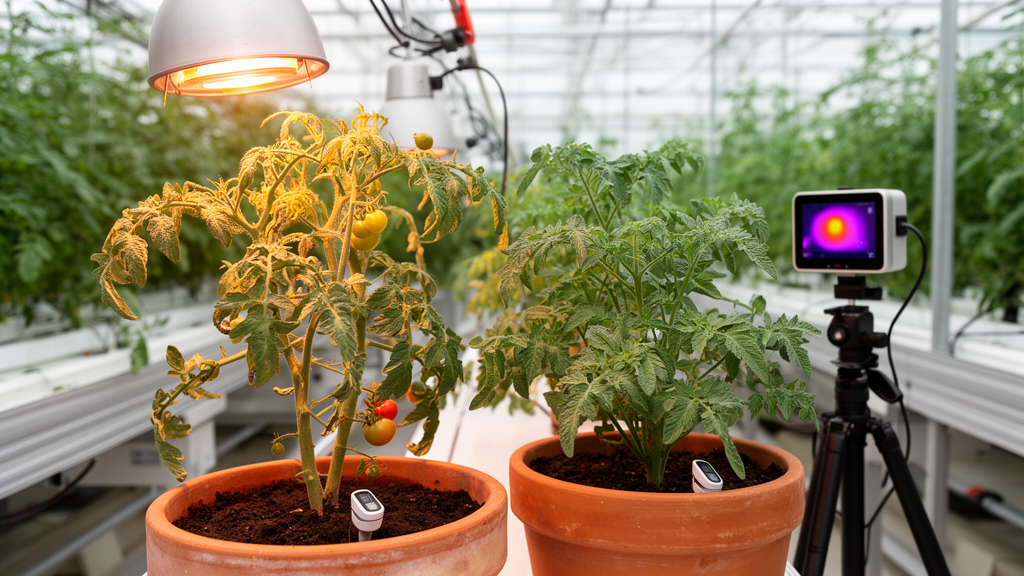
Acute heat produced sharply different responses in a panel of cultivated and wild tomato genotypes, according to an integrative study that combined measurements of growth, membrane stability, pigment integrity, osmotic adjustment and antioxidant capacity. The researchers found that the most thermotolerant entries combined retained biomass and structural stability with complementary patterns of stress protection, indicating that resilience emerged from coordinated responses across several biological levels rather than from one measured trait alone. Researchers systematically quantified morphological, physiological and biochemical traits and integrated the results using the Stress Tolerance Index, Membership Function Value and correlation-network analysis.

Genotypes were exposed to acute thermal stress at 45 °C, allowing the study to compare how different genetic backgrounds reorganized their measured functions under the same treatment. Heat-induced divergence was pronounced across the panel. Sensitive accessions showed severe growth suppression, chlorophyll loss and elevated lipid peroxidation; S. chilense PI 251313 was cited as one example of this sensitive response.

In contrast, the commercial cultivar S. lycopersicum cv. İksir maintained biomass and structural stability. The wild accession S. pimpinellifolium PI 365957 showed a different profile, characterized by enhanced antioxidant coordination and membrane protection.

These observations demonstrate distinct responses among the tested genotypes rather than a single response shared equally by cultivated and wild material. Correlation analysis indicated that heat shifted the tomatoes’ regulatory emphasis from growth-centered regulation toward a tightly interconnected stress-response module. Proline, superoxide dismutase and catalase were strongly associated within that module.

Multivariate integration consistently ranked cv. İksir and S. pimpinellifolium PI 365957 as the most thermotolerant genotypes under the study’s 45 °C treatment, although the cultivated and wild entries achieved their rankings through different measured profiles. The findings position thermotolerance as an emergent systems property and identify wild tomato relatives as potential reservoirs of coordinated stress-adaptive traits for breeding climate-resilient cultivars.

The scope remains bounded by the defined genotype panel, the acute 45 °C treatment and the vegetative stage: the study does not establish how the same rankings would hold across all tomato genotypes, developmental phases or field environments. Its central result is therefore not that one accession is universally superior, but that cultivated and wild genetic backgrounds can preserve different combinations of measured functions under acute heat through complementary, systems-level responses.

Subject of Research: Heat-response strategies and thermotolerance in cultivated and wild tomato genotypes

Article Title: Integrative systems analysis reveals heat-induced functional divergence in cultivated and wild tomato genotypes

Article References: Şimsek, E., Yıldız, K., Çevik, S., & Akbudak, M. A. (2026). Integrative systems analysis reveals heat-induced functional divergence in cultivated and wild tomato genotypes. BMC Plant Biology, 26(1), Article 1818. https://doi.org/10.1186/s12870-026-09807-w

Image Credits: AI Generated

DOI: 10.1186/s12870-026-09807-w

Keywords: tomato, heat stress, thermotolerance, wild genotypes, antioxidant capacity, membrane stability, osmotic adjustment, stress-response networks, climate-resilient crops, plant breeding, Integrative, systems

News Source: Alan Morgan. (October 26, 2026). Research report: Integrative systems analysis reveals heat-induced functional divergence in cultivated and wild tomato genotypes. Scienmag.


Tags: antioxidant capacityClimate-Resilient CropsHeat stressIntegrativemembrane stabilityosmotic adjustmentplant breedingstress-response networkssystemsthermotolerancetomatowild genotypes
Share12Tweet7Share2ShareShareShare1

Related Posts

Maize ZmCK1-8 loss associated with enhanced roots under low nitrogen

Maize ZmCK1-8 loss associated with enhanced roots under low nitrogen

October 26, 2026
Gamma Irradiation Narrows Preliminary Dose Range for ‘Meymand’ Rose Cuttings

Gamma Irradiation Narrows Preliminary Dose Range for ‘Meymand’ Rose Cuttings

October 26, 2026

GWAS links plateau winter wheat landraces to 62 stable quality loci

October 26, 2026

Greater yam study identifies traits and genotypes for higher yields

October 26, 2026

POPULAR NEWS

  • Peer-reviewed scat study finds Seattle coyote density ninefold above wild Washington

    Peer-reviewed scat study finds Seattle coyote density ninefold above wild Washington

    29 shares
    Share 12 Tweet 7
  • Coprolite study reveals extinct bird feathers linked to extinction survival

    29 shares
    Share 12 Tweet 7
  • Research report: Integrative systems analysis reveals heat-induced functional divergence in cultivated and wild tomato genotypes

    29 shares
    Share 12 Tweet 7
  • Systematic review maps PCR accuracy for newborn cytomegalovirus screening

    29 shares
    Share 12 Tweet 7

About

We bring you the latest biotechnology news from best research centers and universities around the world. Check our website.

Follow us

Recent News

Coprolite study reveals extinct bird feathers linked to extinction survival

Peer-reviewed scat study finds Seattle coyote density ninefold above wild Washington

Research report: Integrative systems analysis reveals heat-induced functional divergence in cultivated and wild tomato genotypes

Subscribe to Blog via Email

Enter your email address to subscribe to this blog and receive notifications of new posts by email.

Join 85 other subscribers
  • Contact Us

Bioengineer.org © Copyright 2023 All Rights Reserved.

Welcome Back!

Login to your account below

Forgotten Password?

Retrieve your password

Please enter your username or email address to reset your password.

Log In
No Result
View All Result
  • Homepages
    • Home Page 1
    • Home Page 2
  • News
  • National
  • Business
  • Health
  • Lifestyle
  • Science

Bioengineer.org © Copyright 2023 All Rights Reserved.