• HOME
  • NEWS
  • EXPLORE
    • CAREER
      • Companies
      • Jobs
    • EVENTS
    • iGEM
      • News
      • Team
    • PHOTOS
    • VIDEO
    • WIKI
  • BLOG
  • COMMUNITY
    • FACEBOOK
    • INSTAGRAM
    • TWITTER
Monday, October 26, 2026
BIOENGINEER.ORG
No Result
View All Result
  • Login
  • HOME
  • NEWS
  • EXPLORE
    • CAREER
      • Companies
      • Jobs
        • Lecturer
        • PhD Studentship
        • Postdoc
        • Research Assistant
    • EVENTS
    • iGEM
      • News
      • Team
    • PHOTOS
    • VIDEO
    • WIKI
  • BLOG
  • COMMUNITY
    • FACEBOOK
    • INSTAGRAM
    • TWITTER
No Result
View All Result
Bioengineer.org
No Result
View All Result
Home NEWS Science News Cancer

Mobile CT lung cancer screening expands access for underserved populations in Brazil

by
October 26, 2026
in Cancer
Reading Time: 2 mins read
0
Mobile CT lung cancer screening expands access for underserved populations in Brazil

Mobile CT lung cancer screening expands access for underserved populations in Brazil

Share on FacebookShare on TwitterShare on LinkedinShare on RedditShare on Telegram

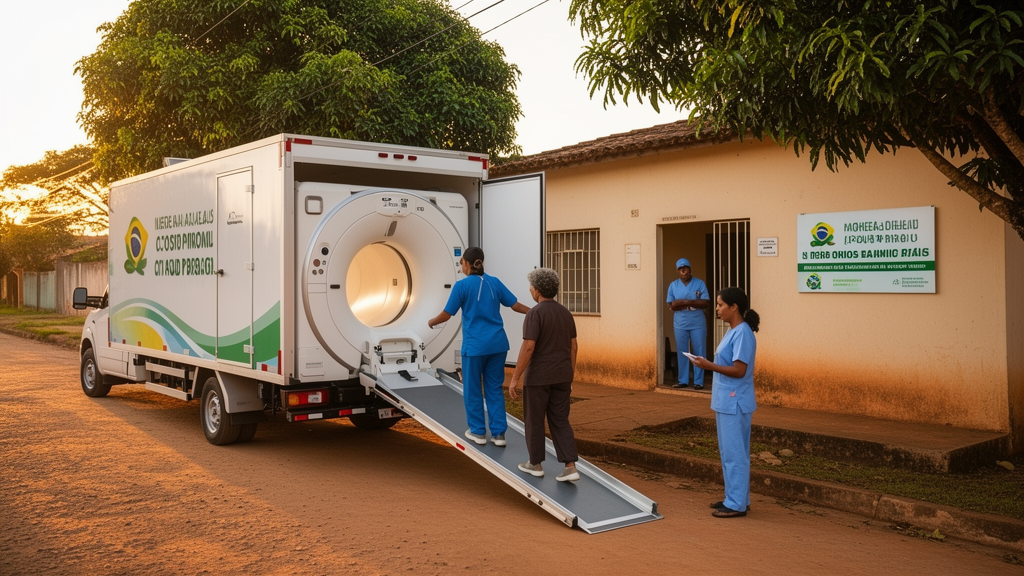
Initial results from the Third Brazilian Early Lung Cancer Trial, or BRELT3, show that mobile low-dose computed tomography screening reached high-risk and socially vulnerable populations in four cities in Northeast Brazil. The prospective, single-arm observational study screened 2,018 eligible people between 2023 and 2025 and detected 19 lung cancers, a yield of 0.94%. Presented at the 2026 World Conference on Lung Cancer, the findings indicate that mobile screening was feasible in resource-limited settings, although the study did not compare screening with a control group or measure an effect on lung cancer mortality.

Researchers operated a mobile CT unit across the four cities, using media campaigns and active outreach by trained community health workers to recruit people aged 50 to 80 who were current or former smokers. Of 5,223 people identified as potential participants, 2,018 met the eligibility criteria and underwent low-dose CT screening. The screened group had a mean age of 62 years; 53% were women, 87% self-identified as non-White, and 64% had primary-level education. Most participants were current smokers, and 70.7% had high or very high nicotine dependence. The population recruited for the program therefore included people facing several social, geographic or economic barriers that can limit access to lung cancer screening.

The screening findings classified 283 participants as Lung-RADS 3 or 4. Biopsy was indicated for 46 participants, 34 biopsy procedures were performed, and 19 people were diagnosed with lung cancer. Seven cancers were diagnosed at advanced stages, and seven patients underwent surgical treatment. Because BRELT3 was a single-arm observational study, these results document detection, diagnostic procedures and treatment among those screened rather than the causal effect of screening on survival or mortality. The release also does not establish how many of the people recommended for biopsy ultimately underwent diagnostic evaluation beyond the 34 procedures reported.

Community health workers contributed 894 participants, accounting for 44.3% of the screened population. People recruited by these workers were more likely than those reached through other routes to have lower educational levels, live in rural areas and be current smokers; nearly 60% of rural participants were recruited through community health workers. The researchers said community-based recruitment helped include rural and socially vulnerable individuals who might otherwise face substantial barriers to screening. Ricardo Sales Santos of the ProPulmão Institute in Salvador, Brazil, said the initial findings demonstrated that mobile low-dose CT screening could be implemented in resource-limited settings and could connect rural and socially vulnerable people with screening. Overall, BRELT3 provides evidence of feasibility and reach for one mobile screening program in Northeast Brazil, with further evidence needed to determine whether broader organized screening programs reduce lung cancer mortality.

Subject of Research: Feasibility and reach of mobile low-dose CT lung cancer screening among socially vulnerable populations in Northeast Brazil

Article Title: Mobile CT lung cancer screening expands access for underserved populations in Brazil

Article References: Mobile CT lung cancer screening expands access for underserved populations in Brazil. Original publication (Bibliographic details unavailable.)

Image Credits: AI Generated

DOI: Not provided

Keywords: lung cancer screening, low-dose CT, mobile screening, BRELT3, Brazil, health equity, community health workers, rural populations, Lung-RADS, observational study, Mobile, lung

News Source: Nathaniel Bowman. (October 26, 2026). Mobile CT lung cancer screening expands access for underserved populations in Brazil. Scienmag.


Tags: BrazilBRELT3community health workershealth equitylow-dose CTlunglung cancer screeningLung-RADSmobilemobile screeningObservational studyrural populations
Share12Tweet7Share2ShareShareShare1

Related Posts

Retrospective HCC surgery study compares indices for GLIM-defined malnutrition

Retrospective HCC surgery study compares indices for GLIM-defined malnutrition

October 26, 2026
Single-cell study reveals how interferon redirects mutant blood stem cells

Single-cell study reveals how interferon redirects mutant blood stem cells

October 26, 2026

Cardiovascular disease tops cancer as leading cause of death among Hispanic adults in U.S.

October 26, 2026

Early work associated with modestly higher cancer odds in older Ecuadorians

October 26, 2026

POPULAR NEWS

  • Research report: Integrative systems analysis reveals heat-induced functional divergence in cultivated and wild tomato genotypes

    Research report: Integrative systems analysis reveals heat-induced functional divergence in cultivated and wild tomato genotypes

    29 shares
    Share 12 Tweet 7
  • Systematic review maps PCR accuracy for newborn cytomegalovirus screening

    29 shares
    Share 12 Tweet 7
  • Mobile CT lung cancer screening expands access for underserved populations in Brazil

    29 shares
    Share 12 Tweet 7
  • Arginine extends quantum material behavior above room temperature

    29 shares
    Share 12 Tweet 7

About

We bring you the latest biotechnology news from best research centers and universities around the world. Check our website.

Follow us

Recent News

Research report: Integrative systems analysis reveals heat-induced functional divergence in cultivated and wild tomato genotypes

Systematic review maps PCR accuracy for newborn cytomegalovirus screening

Mobile CT lung cancer screening expands access for underserved populations in Brazil

Subscribe to Blog via Email

Enter your email address to subscribe to this blog and receive notifications of new posts by email.

Join 85 other subscribers
  • Contact Us

Bioengineer.org © Copyright 2023 All Rights Reserved.

Welcome Back!

Login to your account below

Forgotten Password?

Retrieve your password

Please enter your username or email address to reset your password.

Log In
No Result
View All Result
  • Homepages
    • Home Page 1
    • Home Page 2
  • News
  • National
  • Business
  • Health
  • Lifestyle
  • Science

Bioengineer.org © Copyright 2023 All Rights Reserved.