• HOME
  • NEWS
  • EXPLORE
    • CAREER
      • Companies
      • Jobs
    • EVENTS
    • iGEM
      • News
      • Team
    • PHOTOS
    • VIDEO
    • WIKI
  • BLOG
  • COMMUNITY
    • FACEBOOK
    • INSTAGRAM
    • TWITTER
Monday, July 13, 2026
BIOENGINEER.ORG
No Result
View All Result
  • Login
  • HOME
  • NEWS
  • EXPLORE
    • CAREER
      • Companies
      • Jobs
        • Lecturer
        • PhD Studentship
        • Postdoc
        • Research Assistant
    • EVENTS
    • iGEM
      • News
      • Team
    • PHOTOS
    • VIDEO
    • WIKI
  • BLOG
  • COMMUNITY
    • FACEBOOK
    • INSTAGRAM
    • TWITTER
  • HOME
  • NEWS
  • EXPLORE
    • CAREER
      • Companies
      • Jobs
        • Lecturer
        • PhD Studentship
        • Postdoc
        • Research Assistant
    • EVENTS
    • iGEM
      • News
      • Team
    • PHOTOS
    • VIDEO
    • WIKI
  • BLOG
  • COMMUNITY
    • FACEBOOK
    • INSTAGRAM
    • TWITTER
No Result
View All Result
Bioengineer.org
No Result
View All Result
Home NEWS Science News Biology

Heat-loving Australian ants believe in diversity, hint 74 species new to science

Bioengineer by Bioengineer
September 21, 2017
in Biology
Reading Time: 2 mins read
0
Share on FacebookShare on TwitterShare on LinkedinShare on RedditShare on Telegram
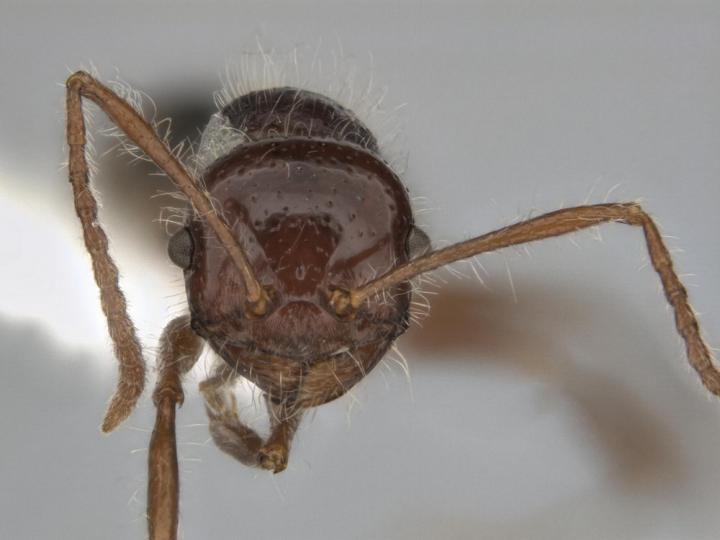
IMAGE

Credit: Dr. Brian Heterick

The 'furnace ants' or 'honeypot ants' present a very large genus of ants, Melophorus, confined to Australia. Long believed to be megadiverse, some scientists have even suggested that the group may contain 'well over 1000 species'. However, to this point, only 32 species and subspecies had been described.

Scientists Dr Brian Heterick of Curtin University, Dr Mark Castalanelli of Ecodiagnostics Pty Ltd and Dr Steve Shattuck of the Australian National University, funded by an internationally competitive Australian Biological Resources (ABRS) grant, set out to find the true facts.

As a result, they discovered as many as 74 new species belonging to Melophorus. In their study, published in the open access journal ZooKeys, they also provide a taxonomic key to the workers of a total of 93 species in the genus.

Among the studied ants, there are quite bizarre ones, including a species (Melophorus hirsutus) whose eyes are strangely protruding out of his head to a varying degree. In the extreme cases, the eyes are so pointy that could be likened to ice-cream cones. Named many years ago, this ant appears to be older than the rest of the examined living species. Furthermore, unlike most of them, it does not seem adapted to heat. It is confined to the wet eastern coast of Australia.

Dr Heterick spent two weeks collecting specimens in the often rugged and forbidding terrain of Western Australia, while the team also asked a number of major museum collections to loan them specimens.

The newly collected ants were placed in alcohol and subjected to genetic tests using one mitochondrial and four nuclear genes. The findings were then compared with those from physical examinations to prepare the taxonomic key – a set of distinctive features per species that can be used to differentiate within the group.

Given the generally complex nature of these ants, the authors expect for the genus to further expand in future. They speculate that even though the numbers may increase to around 100 species, not the 'well over 1000' previously predicted, they still illustrate an incredible diversity.

The authors estimate that Melophorus arose around 35 million years ago. The closest relatives of the genus are also confined to the Australasian region with the exception of a single genus living in South America.

Furthermore, the genus is also quite astonishing thanks to another trait shared among the species.

"By the way, this group of ants has a thing or two to tell those of us who get lost easily!" comments lead author Dr Brian Heterick.

"They can find their way home in a featureless landscape by means of an internal compass influenced by information gathered on earlier journeys. We are not the first species to use a computing system!"

###

Original source:

Heterick B, Castalanelli M, Shattuck S (2017) Revision of the ant genus Melophorus (Hymenoptera, Formicidae). ZooKeys 700: 1-420. https://doi.org/10.3897/zookeys.700.11784

Media Contact

Dr. Brian Heterick
[email protected]
@Pensoft

http://www.pensoft.net

Related Journal Article

http://dx.doi.org/10.3897/zookeys.700.11784

Share13Tweet8Share2ShareShareShare2

Related Posts

American Ornithological Society Grants Seven 2026 Kessel Research Fellowships

American Ornithological Society Grants Seven 2026 Kessel Research Fellowships

July 13, 2026
Heat Exposure in Early Life Linked to Changes in Children’s Brain Development

Heat Exposure in Early Life Linked to Changes in Children’s Brain Development

July 13, 2026

Modeling Fish Breeding Programs Incorporating Social Behavior in Large Groups

July 13, 2026

New Guidelines Released for Prolactinoma Treatment by Chinese Neurosurgical Journal

July 13, 2026
Please login to join discussion

POPULAR NEWS

  • Detection of EDCs in Breast Milk and Infant Urine Up to Six Months Highlights Early Exposure Risks

    77 shares
    Share 31 Tweet 19
  • New Drug Candidate Developed at McMaster Shows Potential for Treating Brain Cancer

    58 shares
    Share 23 Tweet 15
  • KTU Researchers Explore Ultrasound’s Role in Enhancing Blood Flow Beyond Diagnostics

    53 shares
    Share 21 Tweet 13
  • Experimental Therapy Simultaneously Destroys Prostate Tumor Cells and Reactivates Antitumor Immunity

    46 shares
    Share 18 Tweet 12

About

We bring you the latest biotechnology news from best research centers and universities around the world. Check our website.

Follow us

Recent News

American Ornithological Society Grants Seven 2026 Kessel Research Fellowships

Nrf2 Metabolic Shift Boosts Regulatory T Cells in Liver Cancer

Screen Use to Calm Children: Benefits and Risks Explored

Subscribe to Blog via Email

Enter your email address to subscribe to this blog and receive notifications of new posts by email.

Join 85 other subscribers
  • Contact Us

Bioengineer.org © Copyright 2023 All Rights Reserved.

Welcome Back!

Login to your account below

Forgotten Password?

Retrieve your password

Please enter your username or email address to reset your password.

Log In
No Result
View All Result
  • Homepages
    • Home Page 1
    • Home Page 2
  • News
  • National
  • Business
  • Health
  • Lifestyle
  • Science

Bioengineer.org © Copyright 2023 All Rights Reserved.