Apple growers face a quiet arms race every season. Venturia inaequalis, the fungus behind apple scab, can strip 20 to 70 percent of a harvest, while Alternaria alternata blots leaves with damage that reaches 60 to 80 percent in severe cases, and Gymnosporangium yamadae triggers Japanese apple rust with its telltale yellow-orange spots, defoliation, and fruit drop. Now a team of researchers has taken a purely computational route into how apple’s own genetic machinery responds to these three invaders, and their genome-wide survey of one particular family of gene regulators has surfaced a handful of genes that appear to sit at the center of the plant’s fungal defense response.
The study, published as an open-access research article in Discover Plants, set out to characterize the C3H transcription factor family in Malus domestica. C3H proteins are zinc finger regulators defined by a distinctive structural signature: three cysteine residues and one histidine residue coordinated around a zinc ion, typically repeated in the consensus pattern C-X4-15-C-X4-6-C-X3-H. Most C3H proteins carry one to six copies of this motif, with maize’s ZmC3H03 standing out as a rare exception bearing seven. These proteins operate on both sides of gene regulation, binding DNA or RNA and thereby controlling gene expression at transcriptional and post-transcriptional levels. In plants they have been tied to embryo development, seed germination, secondary cell wall biosynthesis, flowering, oxidative stress, zinc homeostasis, and resistance to fungal disease.
Despite that breadth of known roles across species, the C3H family had never been systematically mapped in apple, one of the world’s most economically significant temperate fruit crops. The apple genome is a formidable subject: it contains more than 57,000 predicted genes, the highest count reported in any plant, and the species itself descends from hybridization between wild ancestors such as Malus sieversii and Malus sylvestris, giving it exceptional genetic diversity. More than 7,500 cultivars have been identified globally, and the crop ranks fourth in economic value among temperate fruits. Understanding which of its tens of thousands of genes orchestrate defense signaling is therefore a practical priority for breeders seeking disease-resistant varieties.
The researchers began with protein sequences from the Plant Transcription Factor Database and, after screening the whole apple genome, initially flagged 113 C3H candidates. Fifty-three redundant sequences were removed, leaving 60 non-redundant genes that the team named MdC3H01 through MdC3H60 according to their chromosomal positions. The family showed considerable physical variety. The shortest protein, MdC3H42, spans just 218 amino acids, while the longest, MdC3H29, stretches to 2,583, with an average of 597.6 across the family. Molecular weights ranged from 24.04 to 288 kilodaltons, and isoelectric points spanned 4.073 to 11.16, averaging 7.5.
Mapping the genes onto apple’s 17 chromosomes revealed an uneven distribution. Chromosome 15 carries the largest share, eight genes or 13.3 percent of the family, followed by chromosome 3 with six. Chromosomes 5, 8, and 10 each host only a single MdC3H gene, while 24 genes, four apiece, sit on chromosomes 2, 4, 7, 11, 13, and 14. To trace the family’s evolutionary history, the team built a neighbor-joining phylogenetic tree combining 224 C3H proteins from apple, Arabidopsis thaliana, peach (Prunus persica), and rice (Oryza sativa), with 1,000 bootstrap replicates for branch support. The proteins sorted into nine groups, with group 6 the largest at 43 members and group 9 the smallest at 13. Conserved domain analysis identified 34 distinct domains, with zf-CCCH and ZnF_C3H1 the most prevalent, appearing in 24 and 20 genes respectively; notably, MdC3H14 and MdC3H39 carried no conserved domain at all.
Duplication events emerged as a major force in the family’s expansion. The analysis uncovered 25 duplicated gene pairs, 23 of them segmental duplications and only two, MdC3H22/MdC3H23 and MdC3H57/MdC3H58, tandem duplications. Duplicated genes clustered on multiple chromosomes, with chromosome 15 again hosting the most, seven, while chromosomes 5 and 10 contained no duplication segments at all. Comparative synteny analysis reinforced the family’s evolutionary story: apple shared only limited conserved regions with rice and moderate conservation with Arabidopsis, but showed the strongest syntenic overlap with peach, a fellow Rosaceae member, underscoring their close evolutionary kinship.
Structural and regulatory features added further texture. Fourteen of the 60 genes are entirely intronless, a trait the authors note may permit faster transcription and rapid induction under stress, while the remainder carry between one and 21 introns; MdC3H29 alone holds 21 introns and 22 exons. Motif analysis with the MEME suite identified ten conserved motifs, with motifs 1 and 3 the most widespread, present in 49 and 41 proteins respectively and concentrated in group 6. The longest motif, motif 2, runs 50 amino acids; the shortest, motif 4, is just 11. Scanning 1-kilobase promoter regions upstream of each gene revealed a dense array of cis-regulatory elements: TATA and CAAT boxes dominated, abscisic acid-responsive ABRE elements appeared in 40 genes, light-responsive Box 4 elements in 38, anaerobic induction ARE elements in 32, and methyl jasmonate-responsive CGTCA and TGACG motifs in 27, hinting that these genes are wired into hormone, light, and stress signaling networks.
Functional enrichment analysis connected the family to RNA-related processes such as mRNA binding and snoRNA splicing, zinc finger motifs including CCCH-type and Nab2-type domains, and, intriguingly, regulation of lignin biosynthetic processes, vernalization response, and responses to metal ions. A predicted protein-protein interaction network built with the STRING database linked 12 of the MdC3H proteins, with MdC3H31 emerging as a hub connected to MdC3H18, MdC3H53, and others, and a notable predicted association between MdC3H40 and MdC3H58 that the authors flag as requiring experimental validation.
The centerpiece of the study was expression profiling against the three fungal pathogens, using publicly available transcriptomic datasets from the NCBI Sequence Read Archive totaling more than 150 gigabases of sequencing data, mapped to the apple reference genome with Bowtie2 and quantified as FPKM values. Under Venturia inaequalis infection, the scab fungus, MdC3H06, MdC3H16, MdC3H37, and MdC3H42, all belonging to phylogenetic groups 1 and 4, were strongly upregulated, while MdC3H03, MdC3H26, and MdC3H39 were suppressed. Against Alternaria alternata, tracked at 6, 18, 24, and 48 hours post-inoculation, MdC3H25 showed the strongest upregulation, with MdC3H16, MdC3H37, and MdC3H46 also elevated, while MdC3H03, MdC3H26, MdC3H30, and MdC3H59 were consistently downregulated. During Japanese apple rust infection, MdC3H16, MdC3H25, MdC3H37, and MdC3H42 were upregulated at both 10 and 30 days post-infection, while MdC3H03, MdC3H26, and MdC3H39 were markedly repressed at both time points.
The pattern that stands out is convergence: MdC3H16 and MdC3H37 were highly induced in response to all three pathogens, marking them as candidate central regulators coordinating defense against multiple fungal attackers rather than pathogen-specific responders. The authors are careful about what this means. The expression data, drawn from RNA sequencing rather than laboratory experiments on the genes themselves, show correlation, not causation, and the team explicitly notes that future work must determine whether stress-induced MdC3H genes function as genuine regulators of fungal defense or merely as downstream markers of infection. Even so, the study delivers a foundational resource: a fully annotated catalog of apple’s C3H family, complete with chromosomal positions, phylogenetic groupings, conserved motifs, promoter elements, duplication history, and pathogen-responsive expression profiles. For molecular breeders, genes like MdC3H16, MdC3H25, and MdC3H37 now represent concrete targets for functional validation and, ultimately, for building apple cultivars that can better withstand the fungal diseases that have long constrained yield and fruit quality.
Subject of Research: In silico characterization of the C3H transcription factor family in apple and its responses to fungal pathogens
Article Title: In silico characterization of C3H transcription factors reveals key regulators of fungal disease responses in apple (Malus domestica)
Article References: Shahid, M. A., Sharif, M., Riaz, M., ur Rehman, M., Shafique, I., Awan, S. I., & Ali, M. A. (2026). In silico characterization of C3H transcription factors reveals key regulators of fungal disease responses in apple (Malus domestica). Discover Plants, 3(1), Article 496. https://doi.org/10.1007/s44372-026-00970-w
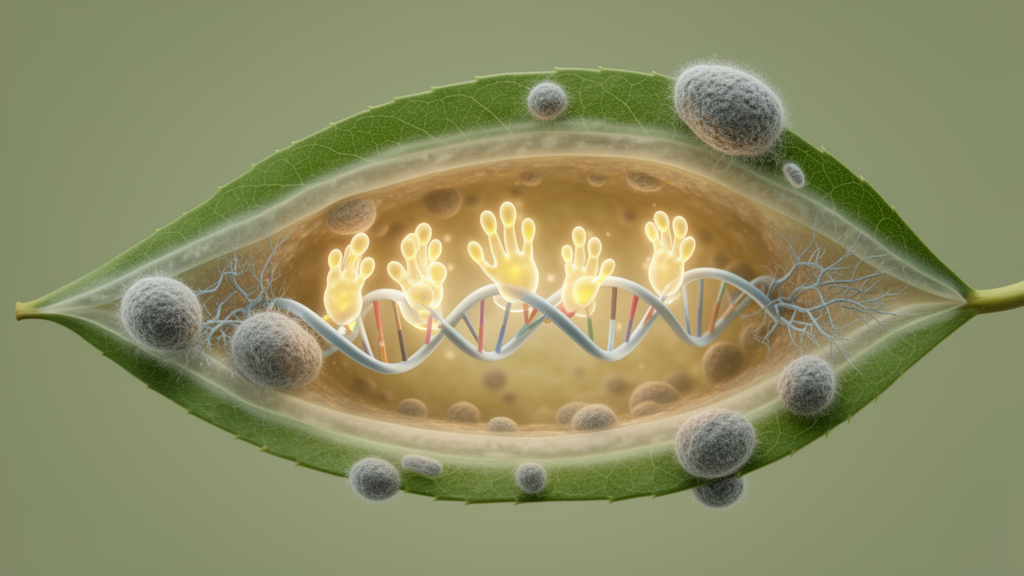
Image Credits: AI Generated
DOI: 10.1007/s44372-026-00970-w
Keywords: apple, C3H transcription factors, zinc finger proteins, fungal disease, apple scab, Alternaria leaf blotch, Japanese apple rust, genomics, synteny, gene expression, molecular breeding, plant defense
News Source: Juliet Wilcox. (October 26, 2026). Apple’s C3H Zinc Finger Genes Emerge as Candidate Switches Against Fungal Disease. Scienmag.