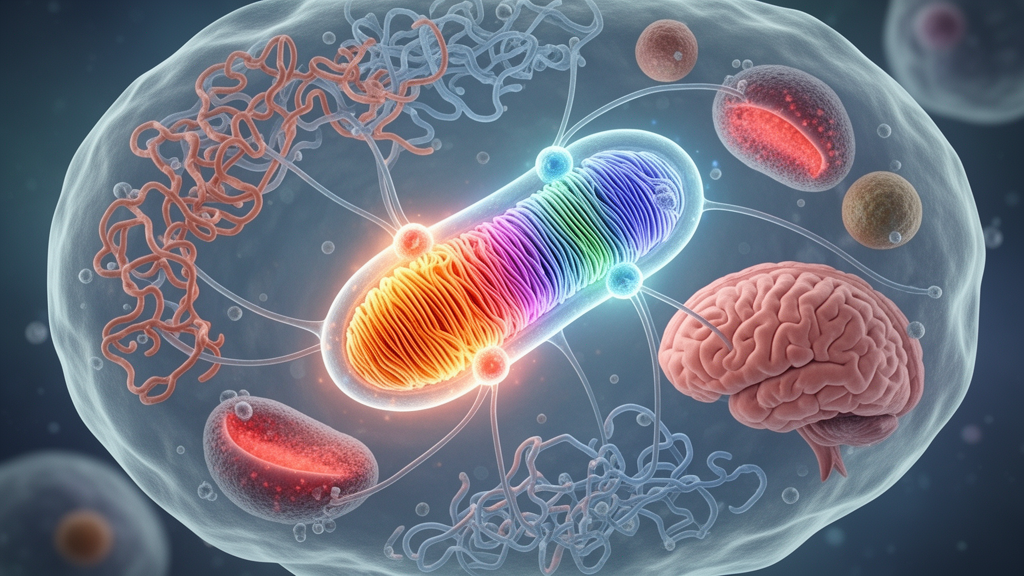
Mitochondrial dysfunction forms part of a self-reinforcing network of cellular changes associated with aging, according to a 2026 mechanistic review in Molecular Biology Reports . The review argues that aging-associated mitochondrial alterations do not occur in isolation: oxidative damage to the mitochondrial genome, disturbed redox balance, energy depletion and defective molecular signaling interact with the endoplasmic reticulum, lysosomes and peroxisomes. Mitochondria also send retrograde signals to the nucleus, allowing organellar stress to influence gene expression and broader regulators of aging.
The article is a review rather than a new experiment or clinical study, and it reports that no datasets were generated or analysed. At the molecular level, the review focuses on damage to mitochondrial DNA as a connection between cellular injury and declining organelle function. Oxidative damage to the mitochondrial genome can impair mitochondrial activity, while redox imbalance and energy depletion reinforce the loss of normal function.
The authors also identify defective poly(ADP-ribose) polymerase 1, or PARP1, signaling and reduced cellular NAD+ as part of the same molecular axis. These changes affect SIRT1, a sirtuin, and peroxisome proliferator-activated receptor gamma coactivator 1-alpha, or PGC-1α. Because both regulators are central to mitochondrial dynamics and function, the proposed pathway links molecular damage with the systems that control mitochondrial behavior.
The review presents mitochondrial decline as a process embedded in a wider communication network. Alongside mitochondria, the endoplasmic reticulum, lysosomes and peroxisomes participate in age-related changes, while mitochondria generate retrograde signals that regulate nuclear gene expression. The resulting feedback loop connects organellar alterations with mitochondrial dysfunction and inter-organellar crosstalk.
The authors describe this as a framework in which classical aging pathways operate together rather than as isolated mechanisms, potentially allowing several age-associated processes to sustain one another. The source material supplied for this article does not provide results from interventions or patient cohorts. Instead, its stated scope is to organize the mechanistic links among mitochondrial damage, molecular regulation and communication between organelles, with further research needed to resolve the details of that crosstalk and its relationship to classical aging pathways.
Subject of Research: Mechanisms linking mitochondrial dysfunction and inter-organellar crosstalk to aging
Article Title: The organellar biology of aging: A mitochondrial vantage
Article References: Pala, M., Nayak, A., & Rath, B. (2026). The organellar biology of aging: A mitochondrial vantage. Molecular Biology Reports, 53(1), Article 1477. https://doi.org/10.1007/s11033-026-12674-1
Image Credits: AI Generated
DOI: 10.1007/s11033-026-12674-1
Keywords: mitochondrial dysfunction, organelle crosstalk, aging, oxidative damage, mitochondrial DNA, NAD+ depletion, PARP1 signaling, SIRT1, PGC-1α, retrograde signaling, organellar, biology
News Source: Beatrice Stafford. (October 25, 2026). Review links mitochondrial dysfunction to inter-organellar aging network. Scienmag.