Congenital syphilis remains a stubborn public health problem in Brazil despite the availability of effective diagnostics and treatment, and a nationwide analysis published in BMC Infectious Diseases now pinpoints where prevention efforts are failing. Drawing on publicly available data from the Brazilian Information System on Live Births and the Notifiable Diseases Information System for 2015 to 2023, researchers Débora Castanheira, Letícia de Azevedo and Mônica Campos traced the full congenital syphilis prevention cascade, from live births and antenatal care attendance through gestational syphilis diagnosis, treatment adequacy, partner treatment and congenital syphilis outcomes. Their findings reveal that the largest losses occur after women enter care, not before.
The scale of the data is considerable. Over the nine-year period, Brazil registered 25,099,825 live births, 558,951 cases of gestational syphilis and 221,120 cases of congenital syphilis. Antenatal care coverage was strikingly high: 98.2 percent of women attended at least one visit, and 71.6 percent attended seven or more.
Yet these near-universal contact points did not translate into protection. Among women with notified gestational syphilis, only 69.2 percent were diagnosed during the first or second trimester, 64.6 percent received a treatment regimen compatible with their reported clinical stage, 48.6 percent met the criteria for potentially correct treatment, and just 46.4 percent reported partner treatment. Each step down the cascade represents a missed opportunity to prevent transmission from mother to child.
The temporal trends compound the concern. Gestational syphilis rates more than tripled over the study window, rising from 10.7 to 34.4 cases per 1,000 live births, while congenital syphilis rates climbed from 6.6 to 10.0 per 1,000 live births. These increases occurred despite the country's high antenatal attendance, suggesting that the problem lies not in getting women through the clinic door but in the quality and completeness of the care they receive once there.
The authors emphasize that major opportunities for prevention are lost particularly during treatment and partner management. To understand who was falling through the cracks, the researchers used multivariable logistic regression models to evaluate factors associated with timely diagnosis, compatible treatment regimen, potentially correct treatment and partner treatment among notified gestational syphilis cases. The results revealed a consistent pattern of sociodemographic and territorial inequality.
Lower adjusted odds of completing the cascade were associated with identifying as Pardo, or Mixed-race, or Indigenous; residing outside the Southeast region; lower educational attainment; and living in municipalities with lower social progress. These associations held across all stages of the cascade, indicating that disadvantage accumulates at every step rather than at a single bottleneck. Regional disparities were particularly stark.
The North and Northeast regions of Brazil showed marked inequalities across all cascade stages. Because the analysis linked individual-level notification data with municipal indicators of social progress, the study could connect gaps in clinical management to broader structural conditions. The study's observational design, based on routinely collected surveillance and birth registry data, means the findings describe associations rather than tested causal mechanisms.
The authors conclude that improving the quality of antenatal care, strengthening partner management and addressing social determinants are essential to accelerate congenital syphilis elimination in Brazil. They also argue that the lessons apply beyond Brazil, to other settings where vertical transmission of syphilis persists despite available tools. What emerges from this analysis is a portrait of a prevention cascade that functions well at its entry point and deteriorates thereafter.
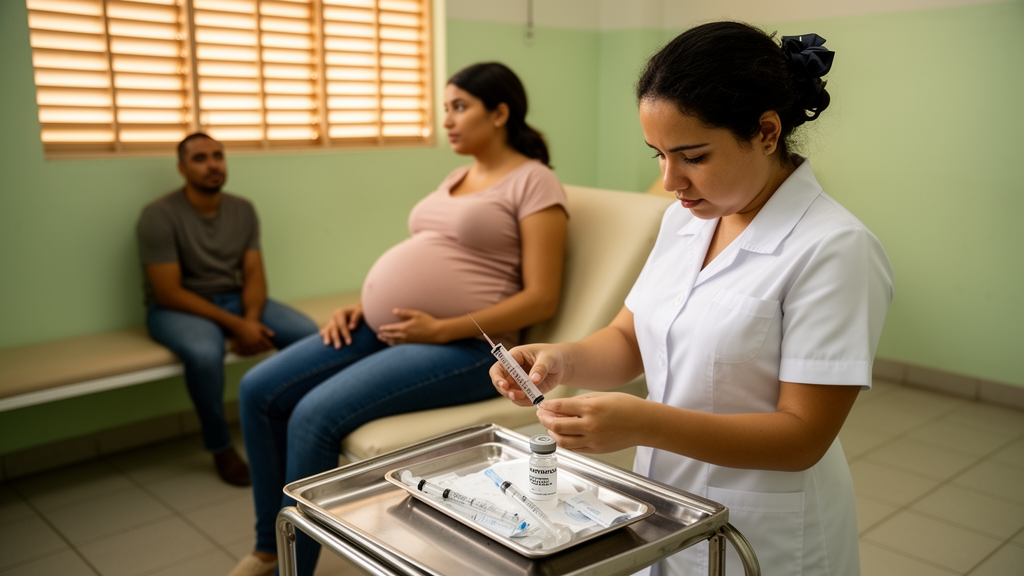
Nearly every pregnant woman in Brazil sees a health worker, yet fewer than half of those diagnosed with gestational syphilis receive potentially correct treatment, and fewer than half report that their partners were treated.
Subject of Research: Congenital syphilis prevention cascade and sociodemographic inequalities in Brazil, 2015–2023
Article Title: Congenital syphilis prevention cascade in Brazil, 2015–2023: a national analysis of regional and sociodemographic inequalities
Article References: Castanheira, D., de Azevedo, L., & Campos, M. (2026). Congenital syphilis prevention cascade in Brazil, 2015–2023: a national analysis of regional and sociodemographic inequalities. BMC Infectious Diseases. https://doi.org/10.1186/s12879-026-14637-0
Image Credits: AI Generated
DOI: 10.1186/s12879-026-14637-0
Keywords: congenital syphilis, gestational syphilis, Brazil, antenatal care, prevention cascade, health inequalities, vertical transmission, partner treatment, surveillance data, BMC Infectious Diseases, Congenital, syphilis
News Source: Ophelia Keating. (October 25, 2026). Brazil’s Congenital Syphilis Prevention Cascade Leaks Most at Treatment and Partner Stages. Scienmag.