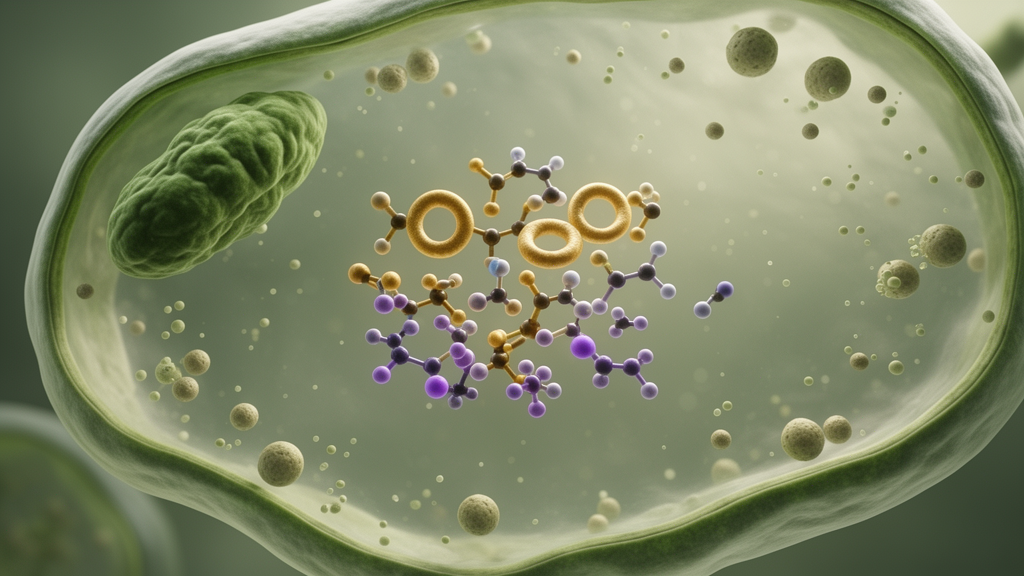
Plant metabolites used in traditional Chinese medicine can form organized nanoscale structures during decoction or in formulations made with purified molecules, according to a 2026 narrative review. The assemblies include micelles, vesicles, nanoparticles, nanofibers and supramolecular gels whose dimensions, shapes, surfaces and mechanical behavior may influence delivery and preclinical activity. However, the review found that detecting particles, reconstituting them from purified ingredients or observing better performance than with free metabolites does not by itself prove that assembly is necessary for the effect of a complete preparation. The authors argue that conclusions must remain tied to the particular material tested, the measurements used and the biological comparisons performed.
The distinction begins with how a material was made. Engineered assemblies are prepared from purified metabolites under controlled conditions; decoction-derived structures are characterized directly in a traditional preparation; extract-recombined samples mix previously extracted, freeze-dried and redissolved materials; and semi-defined systems combine a specified molecule with a complex extract. Polymer-containing gels, carbonized particles and chemically modified metabolites are related comparators rather than reversible assemblies of unmodified plant compounds. These categories answer different questions. A structure generated from purified molecules may support a proposed interaction mechanism, but it cannot automatically be attributed to the same structure in a fresh codecoction, where composition, temperature, extraction history and intermolecular competition differ.
Several non-covalent forces can cooperate to organize plant metabolites. Amphiphilic saponins, including glycyrrhizic acid and ginsenosides, can associate through hydrophobic regions while remaining dispersed through hydrophilic groups. Electrostatic attraction may link positively charged alkaloids such as berberine to negatively charged phenols or carboxylates, while hydrogen bonds, aromatic stacking and hydrophobic association can organize glycosides, flavonoids, terpenoids and polysaccharides. Molecular geometry, concentration, pH, ionization, solvent and mixing history determine whether the result is a micelle, vesicle, solid particle, fiber, gel or precipitate. The review emphasizes that assigning a single driving force requires perturbations that change the proposed interaction while simultaneously monitoring solubility, composition and structure.
Decoction-derived examples demonstrate why detecting an assembly is not equivalent to proving its biological importance. In Ma-Xing-Shi-Gan-Tang, size-exclusion separation recovered colloidal nanoparticles with radii of gyration between 50 and 150 nanometers; 99.7% of measured ephedrine and 95.5% of pseudoephedrine were associated with the particles. In an Astragalus–Angelica codecoction, retained amorphous nanoparticles varied with decoction time, although amorphous character did not guarantee unchanged size. Zexie Tang generated approximately one-micrometre particles involving an inulin-type fructan and triterpenoids after separate decoctions were mixed and heated; reassembly experiments and molecular dynamics supported a proposed formation mechanism. These particles were associated with increased oral triterpenoid bioavailability and activity in a mouse model of metabolic dysfunction-associated steatohepatitis, but the review says that such observations do not show that the assembly is the sole or necessary cause of the formula’s effect.
Characterizing the right physical state is especially difficult in complex preparations. Light scattering can report an intensity-weighted size distribution but may be dominated by large particles; microscopy can reveal shape while introducing drying or sampling artifacts; and zeta potential depends on ionic strength, hydration and steric effects. Separation by chromatography, dialysis, dilution, filtration or centrifugation may itself alter the equilibrium or trap a transient state. The proposed solution is convergence among independent measurements, including time-dependent dilution and reconcentration, testing of temperature and ionic-strength effects, and comparisons between material before and after separation. The review distinguishes four levels of conclusion: an assembly is detected; it persists for a measured interval; it responds reversibly to a perturbation; and its behavior is consistent with equilibrium. None automatically establishes biological relevance.
Where the structure–function connection has been studied, several candidate variables emerge. Defined berberine–flavonoid nanoparticles and nanofibers displayed different antibacterial behavior associated with molecular organization and presentation of glucuronic-acid groups, although different partner molecules prevent attribution to shape alone. Heating a recombined Scutellaria and Coptis extract mixture shifted structures from fibrous to spherical, with different antibacterial preferences against Staphylococcus aureus and Bacillus subtilis; that experiment did not sample a fresh codecoction. Flexible oleanolic-acid nanogels showed less cellular uptake than rigid nanoparticles but greater lysosomal escape, tumor penetration and antitumor activity. Yet packing, hydration and preparation differed along with mechanical behavior, so uptake or efficacy could not be assigned exclusively to deformability.
Interfacial and responsive properties add further layers. Saponin micelles can interact with membrane cholesterol, and a glycyrrhizic-acid–oxymatrine ionic liquid can form nanomicelles that interact with skin lipids and enhance peptide penetration. Engineered systems also use pH-sensitive Schiff-base bonds, reactive-oxygen-species-cleavable boronate esters, metal coordination or near-infrared irradiation to transform networks and release cargo. These results support particular delivery strategies, not the existence of the same responsive structures in traditional decoctions. Carbon dots are another boundary case: high-temperature carbonization creates new chemical domains, so a nanoscale carbon particle sharing the size range of a reversible metabolite assembly does not demonstrate the same formation mechanism.
Computational methods can prioritize plausible contacts and formulations, but they do not replace experiments. Molecular dynamics simulations explore assembly trajectories under selected composition, force fields, timescales and boundary conditions; molecular docking can suggest how representative constituents might engage a biological target; and density functional theory can rank weak intermolecular contacts after candidate pairs have been identified. Agreement with experimental observations supports a hypothesis, yet omitted solutes, sampling limits and alternative arrangements remain relevant in a chemically complex decoction. Artificial intelligence could connect molecular descriptors, processing variables and measured properties such as particle size, polydispersity, zeta potential, gelation, mechanics and release. Its present role is prospective: heterogeneous datasets, missing preparation metadata, selection of successful studies and domain shifts from synthetic or peptide systems prevent confident prediction across untested botanical products.
Preclinical applications include antitumor, anti-inflammatory, antimicrobial, wound-repair and tissue-regeneration models, but the evidence remains formulation-specific. Engineered oleanolic-acid micelles, polysaccharide–metallic assemblies, self-assembled hydrogels and responsive nanoparticles have produced altered tumor-cell signaling, immune responses, bacterial burden or drug exposure in animal studies. Many contain crosslinkers, polymers, metals, irradiation or other components whose contributions must be separated from those of the assembled plant molecules. A saponin micelle that improved pulmonary levofloxacin delivery, for example, was an adjunct to a subsequently administered antibiotic rather than evidence that the micelle directly permeabilized bacterial membranes. None of these studies establishes clinical benefit from supramolecular organization as a general property of traditional Chinese medicine.
The review proposes tighter validation before assembly-based quality control or predictive design can be credible. Studies should document botanical identity, voucher specimens, extraction ratios, heating, mixing order, filtration, storage and sampling; use orthogonal structural methods; and compare free metabolites, physical mixtures, disrupted assemblies, reassembled structures and composition-matched controls. Candidate critical quality attributes, including particle distribution, surface properties, mechanics and release, must be reproducible and demonstrably linked to a relevant product outcome. Translational work must also determine what happens in plasma, mucus and tissue, where dilution, proteins, enzymes and other molecules may disassemble or remodel a structure. The central conclusion is that plant-derived self-assembly offers a promising lens for understanding preparation and delivery, not a new universal mechanism for traditional Chinese medicine or established proof of improved human treatment.
Subject of Research: Supramolecular assemblies of plant metabolites in traditional Chinese medicine preparations
Article Title: Supramolecular soft matter in traditional Chinese medicine: multiscale structure–function evidence, critical limitations, and translational challenges
Article References: Li, T., Huang, B., Wang, X., Zhang, J., Zhu, Y., Guan, S., & Wang, J. (2026). Supramolecular soft matter in traditional Chinese medicine: multiscale structure–function evidence, critical limitations, and translational challenges. Frontiers in Pharmacology, 17, Article 1945675. https://doi.org/10.3389/fphar.2026.1945675
Image Credits: AI Generated
DOI: 10.3389/fphar.2026.1945675
Keywords: supramolecular assembly, plant metabolites, traditional Chinese medicine, nanoparticles, self-assembly, decoctions, drug delivery, structure–function relationships, quality by design, preclinical evidence, Supramolecular, soft
News Source: Ophelia Keating. (October 25, 2026). Plant metabolites self-assemble, but links to efficacy remain incomplete. Scienmag.