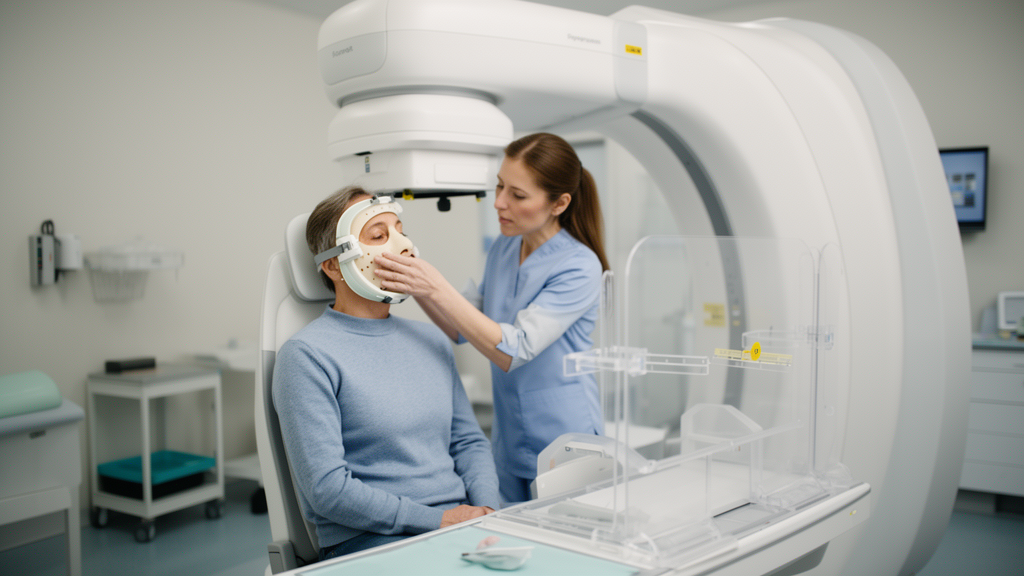
The multicenter COMPORT phase II trial will prospectively test whether postoperative radiotherapy for head and neck squamous cell carcinoma can be tailored to anatomical compartments while limiting cancer recurrence in areas left untreated. The planned study will enroll 50 patients with resected disease in the oral cavity, oropharynx, larynx or hypopharynx who have an indication for adjuvant postoperative radiotherapy, as determined by a multidisciplinary tumor board. Because COMPORT is a single-arm study protocol, it will not establish whether compartmentalized treatment is safer or more effective than standard care; it is designed to generate prospective evidence on recurrence, toxicity, quality of life and other patient outcomes.
Postoperative radiotherapy can improve outcomes in patients whose surgically removed tumors have high- or intermediate-risk pathological features, but the treatment is associated with substantial morbidity. De-escalation strategies have previously been explored mainly in human papillomavirus-positive oropharyngeal cancer, leaving limited prospective evidence across broader head and neck squamous cell carcinoma populations. COMPORT addresses that gap by evaluating a pathology-driven algorithm across four common tumor localizations.
Under the proposed approach, anatomical compartments judged to carry low recurrence risk may be omitted from the radiation plan. For some patients, this decision could result in no radiotherapy at all. The trial’s primary endpoint is the rate of recurrence within omitted, non-irradiated compartments during 30 months.
Its Bayesian design will treat the strategy as successful if the probability that recurrence rates remain below 18% exceeds 90%. The protocol describes 18% as the historical recurrence rate plus a 10-percentage-point safety margin. This is a prespecified decision rule rather than a treatment result, and it cannot yet be interpreted as evidence that the approach is safe or effective.
COMPORT will also assess locoregional control, progression-free survival and overall survival. Patient assessments will include physician-rated toxicity through the TAME score and quality of life through the MD Anderson Dysphagia Inventory, EORTC QLQ-C30 and EORTC QLQ-HN43. An interim safety analysis is planned once 20 participants have been enrolled and each has at least six months of follow-up.
The study will be stopped if recurrences in omitted compartments exceed five cases. This stopping rule is intended to identify excessive recurrence in the untreated anatomical areas during the trial. It also illustrates the central safety question posed by the design: reducing irradiation in selected compartments is acceptable only if recurrence within those compartments remains controlled.
COMPORT is registered as ClinicalTrials.gov NCT07058805, registered on 22 June 2025, and has approval from the Cantonal Ethics Committee under reference KEK-BE 2025-01420. The investigators describe the trial as a possible foundation for more individualized postoperative radiotherapy that could reduce treatment toxicity and improve quality of life while preserving oncologic outcomes. They also state that the approach should be evaluated in a subsequent randomized non-inferiority trial.
That qualification is important because a single-arm study of 50 patients cannot by itself determine whether outcomes are comparable with those from conventional treatment, and it must accommodate patients with different tumor sites, pathological risks and postoperative radiotherapy indications. The protocol was published as an open-access study protocol in BMC Cancer, with early online publication listed for 4 September 2026 and the version subject to further editorial changes. COMPORT will therefore test whether a pathology-based strategy can safely reduce treatment volumes without an unacceptably high recurrence risk.
Whether that approach produces lower toxicity, better quality of life or preserved cancer control remains to be established by the prospective study and any subsequent randomized evaluation.
Subject of Research: Prospective evaluation of compartmentalized postoperative radiotherapy for resected head and neck squamous cell carcinoma
Article Title: COMPORT: Compartmentalization in Postoperative Radiotherapy for Head and Neck Squamous Cell Carcinoma – a single-arm phase II clinical trial
Article References: Dietze, A., Balermpas, P., Giger, R., Joosten, A., Martucci, F., Mueller, S. A., Stanowska, O., Wartenberg, M., Radovic, M., Riesterer, O., Riggenbach, E., Tran, S., Zimmermannn, F., Schanne, D. H., & Elicin, O. (2026). COMPORT: Compartmentalization in Postoperative Radiotherapy for Head and Neck Squamous Cell Carcinoma – a single-arm phase II clinical trial. BMC Cancer. https://doi.org/10.1186/s12885-026-16888-1
Image Credits: AI Generated
DOI: 10.1186/s12885-026-16888-1
Keywords: head and neck cancer, postoperative radiotherapy, treatment de-escalation, phase II trial, anatomical compartments, radiotherapy toxicity, quality of life, cancer recurrence, COMPORT, Compartmentalization, Postoperative, Radiotherapy
News Source: Nathaniel Bowman. (October 25, 2026). COMPORT trial to test tailored radiotherapy after head and neck cancer surgery. Scienmag.