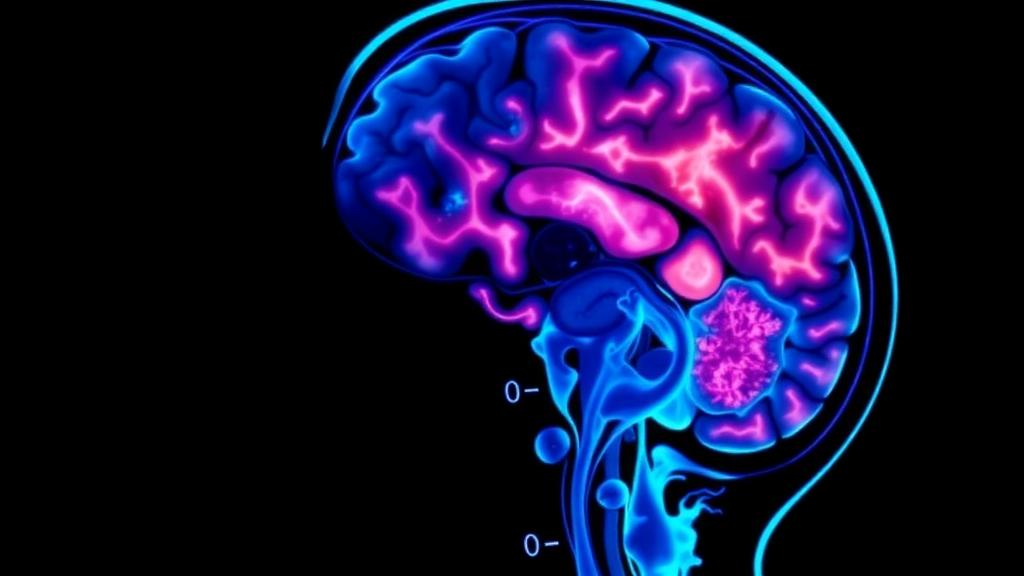
Reston, VA — Six ahead-of-print studies published in The Journal of Nuclear Medicine (JNM) on October 23, 2026, span oncology imaging, radiopharmaceutical therapy, and dementia diagnostics. The journal, published by the Society of Nuclear Medicine and Molecular Imaging (SNMMI), an international scientific and medical organization dedicated to advancing nuclear medicine, molecular imaging, and theranostics, released summaries covering PET imaging of a targeted cancer therapy, alpha-emitting treatment for resistant uterine cancer, metabolic signatures of pancreatic tumors, synaptic imaging for cognitive decline, metastasis detection in gastric cancer, and recurrence prediction in lung cancer.
In the first study, researchers evaluated PET imaging with radiolabeled trastuzumab deruxtecan (T-DXd), a targeted cancer therapy, across 11 preclinical tumor models. Imaging detected therapy accumulation across tumors with varying HER2 levels, and in mice receiving T-DXd, changes in tumor uptake between weeks one and two correlated with changes in tumor volume. Because these results come from preclinical models, they describe measured associations in mice rather than demonstrated clinical benefits in patients. A separate preclinical effort targeted uterine serous carcinoma, an aggressive endometrial cancer that can resist standard HER2-targeted treatment. In laboratory studies, astatine-211 (211At)-labeled trastuzumab specifically targeted HER2-positive cancer cells and reduced their viability, and a single dose significantly suppressed tumor growth in three mouse models representing different forms of trastuzumab resistance, without severe toxicity. These are animal and cell findings, and clinical translation will require further testing.
Pancreatic neuroendocrine tumors were the focus of a study linking PET imaging patterns to molecular features and patient outcomes. Higher uptake of 18F-DOPA on PET imaging was associated with gene activity linked to amino acid transport, more advanced disease features, and shorter event-free survival, while increased expression of the amino acid transporter gene SLC7A5 was associated with poorer outcomes across patient cohorts. These are associations observed in the studied cohorts, not proof that the imaging causes or modifies outcomes. In neurology, a diagnostic comparison study evaluated 18F-SynVesT-1 PET/MRI, which assesses synaptic integrity, against standard 18F-FDG PET for distinguishing causes of cognitive decline in 94 patients. For Alzheimer disease, 18F-SynVesT-1 showed lower diagnostic sensitivity than the standard approach, whereas for frontotemporal degeneration, visual assessments showed similar sensitivity and specificity between the two imaging approaches. The mixed results indicate that performance varies by the specific disease being assessed.
Two further clinically oriented studies examined gastrointestinal and thoracic cancers. A prospective study compared 68Ga-FAPI-46 PET/CT with standard 18F-FDG PET/CT and contrast-enhanced CT in 20 patients with gastric or gastroesophageal junction cancer. FAPI PET identified potential distant metastases in four patients, potentially shifting treatment recommendations from curative-intent to palliative care in three of them. With only 20 patients enrolled, the findings should be interpreted as hypothesis-generating for this cancer type rather than practice-changing evidence. In lung cancer, a study of 37 patients with resectable non–small cell lung cancer evaluated whether preoperative 68Ga-uPAR PET/CT could predict postoperative recurrence. Higher tracer uptake, reflecting the tumor protein uPAR, which is associated with invasion and metastatic spread, was linked to recurrence, while standard 18F-FDG PET/CT uptake was not predictive in this cohort. The small cohort size limits generalizability.
Collectively, the six studies illustrate the range of current nuclear medicine research: radiolabeled therapeutics that pair diagnosis with treatment, tracers that image specific proteins such as FAP and uPAR, metabolic imaging connected to gene expression, and synaptic imaging applied to neurodegenerative disease. Several findings, including the T-DXd uptake-volume correlation, the 211At-trastuzumab tumor suppression, and the FAPI-driven treatment shifts, are drawn from preclinical models or small prospective cohorts, and the journal’s summaries consistently frame them as early-stage observations. SNMMI describes theranostics as precision medicine that allows diagnosis and treatment to be tailored to individual patients in order to achieve the best possible outcomes, a framing that unites the diverse studies in this release. As these ahead-of-print articles move toward final publication, their ultimate clinical impact will depend on validation in larger human cohorts, but the release offers a concrete look at where molecular imaging research is heading, from imaging drug delivery in HER2-low tumors to predicting which lung cancer patients are most likely to relapse after surgery.
Subject of Research: Ahead-of-print nuclear medicine research on PET imaging of cancer therapy, radiopharmaceutical treatment, tumor metabolism, synaptic imaging, and recurrence prediction
Article Title: The Journal of Nuclear Medicine ahead-of-print tip sheet: Oct. 23, 2026
Article References: The Journal of Nuclear Medicine ahead-of-print tip sheet: Oct. 23, 2026. Original publication (Bibliographic details unavailable.)
Image Credits: AI Generated
DOI: Not provided
Keywords: nuclear medicine, PET imaging, theranostics, trastuzumab deruxtecan, uterine serous carcinoma, pancreatic neuroendocrine tumors, synaptic PET, gastric cancer, FAPI PET, uPAR, lung cancer, cognitive decline
News Source: Nathaniel Bowman. (October 24, 2026). PET Imaging Advances Track Cancer Therapy, Metastases and Dementia Signals. Scienmag.