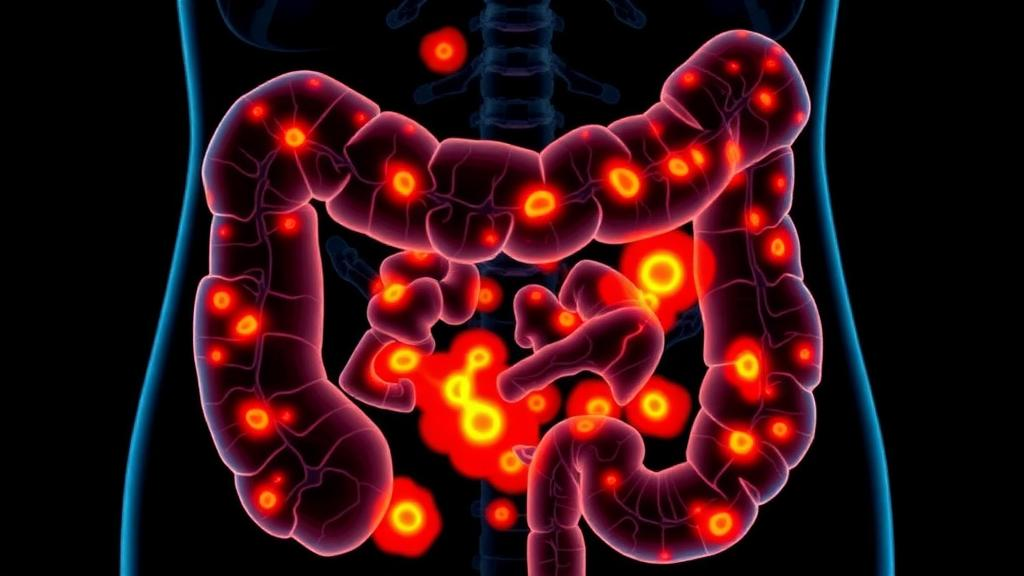
One of the most stubborn problems in oncology has just been given a detailed new map. An international research team led by RCSI University of Medicine and Health Sciences in Dublin and The Institute of Cancer Research, London, has published a major study identifying potential new ways to treat microsatellite stable (MSS) colorectal cancer, the most common type of bowel cancer in Ireland and, by the researchers’ account, one of the most challenging to treat. The work, published in the leading oncology journal Cancer Cell on 22 October 2026, provides what the team describes as a clear roadmap for repurposing existing drugs and developing new ones, with the aim of creating more effective, personalised treatments for thousands of patients who currently have limited options.
The scale of the unmet need is considerable. Of the roughly 2,500 new bowel cancer cases diagnosed annually in Ireland, MSS colorectal cancer accounts for 80 to 85 percent. Despite its prevalence, this subtype remains difficult to treat, showing limited response to many newer therapies. Clinical trials that have combined chemotherapy with newer targeted drugs or immunotherapies have delivered only modest improvements over current standard treatments. For patients whose disease no longer responds to standard therapy, particularly those with MSS RAS-mutant metastatic colorectal cancer, the therapeutic landscape is especially sparse, a gap that Professor Annette Byrne, Head of the RCSI Precision Cancer Medicine Group, described as urgent in her comments on the findings.
The study’s central innovation lies in how the tumours were analysed. Using 2,000 patient tumour samples, the researchers integrated genetic, metabolic, protein and clinical data with the help of artificial intelligence tools, revealing previously unrecognised ways in which the cancer cells divide, grow, adapt and interact with their environment. Rather than examining each data type in isolation, as previous studies have done, the team built an approach capable of seeing the tumour as an interconnected biological system, allowing connections between different elements of the tumour biology to emerge that had been missed before.
To achieve this, the researchers developed an AI method called iPhenMap, which creates a biological map of the tumour. Using this map, the team could spot connections between the different features of the tumour, such as its genetic and metabolic characteristics, that previous studies looking at the data in isolation had not detected. The result is a multiomic portrait of MSS colorectal cancer that the paper’s title describes as revealing distinct biology and targetable vulnerabilities. By layering DNA, RNA, epigenetic, protein, metabolic, single-cell and clinical data at scale, the approach exposed connections between tumour biology and therapeutic dependency that would otherwise remain hidden.
Identifying vulnerabilities is only the first step; the crucial question is whether they can be exploited therapeutically. The researchers addressed this by testing the newly identified weaknesses in laboratory models, and showed that certain drug combinations could work well to target them and treat the cancer. Importantly, some of the drugs involved are already approved to treat other tumour types, which is precisely what makes the findings so consequential for the pace of future development. Repurposing drugs that have already been developed and approved could substantially accelerate the path to clinical testing of new treatment strategies for bowel cancer.
One example stands out from the study. The targeted drug trametinib, approved to treat various cancers including melanoma, lung cancer and thyroid cancer in tumours with a specific mutation, was shown to significantly reduce tumour growth and extend survival in the laboratory models when combined with other drugs. In the preclinical models, this combination approach demonstrated meaningful activity against the vulnerabilities the AI analysis had flagged. The researchers emphasise that these findings remain preclinical, but they argue that the results highlight promising therapeutic opportunities and provide a strong foundation for further development towards clinical evaluation.
Professor Byrne, who jointly led the research with Professor Anguraj Sadanandam, Group Leader of the Systems and Precision Cancer Medicine Group at The Institute of Cancer Research, London, framed the next steps carefully. “Patients with MSS RAS-mutant metastatic colorectal cancer urgently need better treatment options, particularly when their disease no longer responds to standard therapy,” she said. “While these findings remain preclinical, they highlight promising therapeutic opportunities and provide a strong foundation for further development. The next step will be to identify the biological features that predict response and determine how these approaches can be advanced safely towards clinical evaluation.”
Professor Sadanandam pointed to the scale and diversity of the dataset as the study’s defining strength, made possible through collaboration with European partners. “By bringing together data from patients across multiple countries and integrating DNA, RNA, epigenetic, protein, metabolic, single-cell and clinical data at this scale, we were able to expose connections between tumour biology and therapeutic dependency that would otherwise be missed,” he said. He also looked beyond this single cancer type, arguing that AI and machine learning will increasingly help cancer researchers bring complex data together, not just to classify tumours but to understand how they behave, identify their vulnerabilities and guide the development and repurposing of treatments so that patients can live longer and healthier lives. Dr Rodrigo Dienstmann of the Vall d’Hebron Institute of Oncology in Barcelona and the University of Vic–Central University of Catalonia was co-senior author of the study.
The collaborative footprint of the research is extensive, spanning institutions across Europe and beyond. Beyond RCSI and The Institute of Cancer Research, London, the research collaborators included VIB KU Leuven in Belgium, the Candiolo Cancer Institute in Italy, University College Dublin, the Centre de Recherche des Cordeliers and INSERM in France, University Medical Center Mannheim and Heidelberg University in Germany, the Vall d’Hebron Institute of Oncology in Spain, Cancer Trials Ireland, Veracyte SAS, Epigenomics AG and geneXplain GmbH, alongside clinical teams from Irish hospitals including Beaumont Hospital, Tallaght University Hospital, St. Vincent’s University Hospital and Bon Secours Cork Cancer Centre. Ensuring that the patient voice was embedded throughout the project, and that the findings were disseminated in an accessible format, was described as a priority for the team.
The research was funded by the European Union’s Horizon 2020 Research and Innovation Programme through funding awarded to the COLOSSUS project, and by a Research Ireland Project Award to Professor Byrne. COLOSSUS, led by Professor Byrne, brings together leading European and international academics, clinicians, private sector and not-for-profit partners. The team believes the AI approach behind iPhenMap could be used to identify more effective drugs for other tumour types, extending the value of the method well beyond colorectal cancer. For now, the study stands as a detailed biological atlas of the most common and most treatment-resistant form of bowel cancer in Ireland, one that catalogues its previously unrecognised behaviours and pairs them with drug combinations already proven in other cancers, offering a concrete starting point for the clinical trials that patients with limited options have long been waiting for.
Subject of Research: Microsatellite-stable colorectal cancer, multiomic tumour mapping and repurposed drug combinations identified through AI analysis of 2,000 patient tumour samples
Article Title: Major new study identifies potential new treatment targets for the most common type of bowel cancer
Article References: Major new study identifies potential new treatment targets for the most common type of bowel cancer. Original publication (Bibliographic details unavailable.)
Image Credits: AI Generated
DOI: Not provided
Keywords: colorectal cancer, microsatellite stable, AI in oncology, drug repurposing, trametinib, precision cancer medicine, Cancer Cell, RCSI, Institute of Cancer Research, COLOSSUS project, Major, identifies
News Source: Nathaniel Bowman. (October 24, 2026). AI map of bowel tumours reveals drug vulnerabilities in hardest-to-treat colorectal cancer. Scienmag.