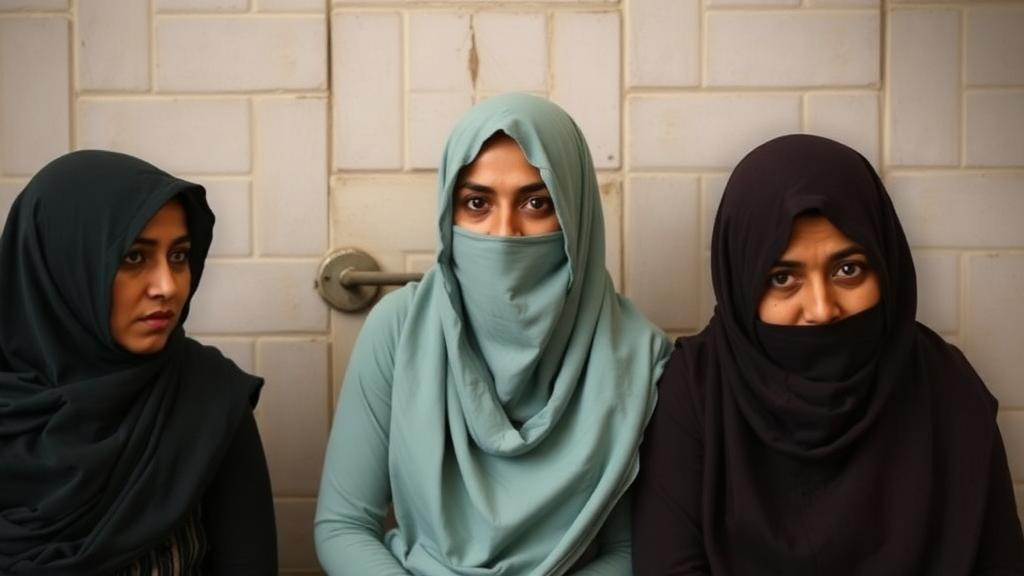
More than half of women in Pakistan have experienced at least one form of domestic violence, according to a systematic review and meta-analysis published in BMC Public Health. Pooling data from 24 cross-sectional studies, researchers estimated the overall prevalence of violence against Pakistani women at 52 percent, with a 95 percent confidence interval ranging from 40.6 percent to 64.1 percent. The review, which followed the PRISMA reporting protocol, was conducted by Reza Ghanei Gheshlagh, Khashayar Farnoud, Zahra Nemati, Muhammad Ayaz, Ali Parouhan and colleagues, and is described by its authors as an effort to resolve the scattered and contradictory findings that have characterized research on this topic in Pakistan.
The analysis broke violence down into three categories, and psychological abuse emerged as the most common form. Psychological violence affected an estimated 54.2 percent of women (95 percent CI: 42.7 to 65.7 percent), physical violence affected 40.4 percent (95 percent CI: 31.9 to 48.9 percent), and sexual violence affected 27.9 percent (95 percent CI: 17.9 to 37.9 percent). Because the confidence intervals overlap considerably, the ranking of the three forms should be read with caution, though the pooled point estimates place emotional and psychological mistreatment at the top of the burden.
The reviewers searched six electronic databases through August 2025 and included only cross-sectional studies reporting prevalence figures for violence among Pakistani women. Each study’s methodological quality was appraised with the Joanna Briggs Institute checklist, and the statistical synthesis was carried out in Stata using a random effects model, the standard approach when combining estimates that are expected to differ between studies. Heterogeneity was quantified with the I² statistic and publication bias was tested with Egger’s test.
One technical finding stands out: the heterogeneity between studies was extremely high, with an I² exceeding 99 percent. In practical terms, this means the individual studies produced wildly divergent prevalence estimates, and the pooled figure of 52 percent should be understood as a central tendency across a very dispersed set of results rather than a precise national rate. The authors also identified a measurement problem as a likely contributor: studies that used investigator-developed questionnaires reported higher estimates than studies that used standard, validated instruments, suggesting that tool choice materially shapes how much violence surveys detect.
The analysis suggested a potential downward trend in overall violence over time, meaning that more recent studies tended to report lower prevalence than older ones. The authors describe this as a significant downward trend observed across the pooled data, though they pair it with the caveat that estimates varied substantially between studies and measurement tools. Whether the trend reflects genuine change in Pakistani households, shifting survey methods, or changing willingness to report abuse cannot be determined from the pooled data alone.
The authors frame domestic violence as a global public health issue that is often normalized in patriarchal societies such as Pakistan because of institutionalized cultural norms. Against that backdrop, they argue the findings underscore the need for routine enquiry about violence and support for survivors within health services, alongside sustained legal and educational interventions. With more than half of women in the pooled studies reporting at least one form of abuse, and psychological violence the most frequently reported, the review positions domestic violence against Pakistani women as a persistent and measurable public health burden whose true scale remains difficult to pin down because of the very high variability in how it has been studied.
Subject of Research: Prevalence of domestic violence against women in Pakistan, estimated through a systematic review and meta-analysis of cross-sectional studies
Article Title: Prevalence of domestic violence against women in Pakistan: a systematic review and meta-analysis
Article References: Ghanei Gheshlagh, R., Farnoud, K., Nemati, Z., Ayaz, M., & Parouhan, A. (2026). Prevalence of domestic violence against women in Pakistan: a systematic review and meta-analysis. BMC Public Health. https://doi.org/10.1186/s12889-026-30073-w
Image Credits: AI Generated
DOI: 10.1186/s12889-026-30073-w
Keywords: domestic violence, Pakistan, women, systematic review, meta-analysis, psychological violence, physical violence, sexual violence, prevalence, public health, BMC Public Health, heterogeneity
News Source: Ophelia Keating. (October 24, 2026). More Than Half of Pakistani Women Report Domestic Violence, Review Finds. Scienmag.