Researchers at Cairo University have engineered a topical eye gel that packages two complementary medicines inside hyaluronic acid–filled nanovesicles, and in a rabbit model it nearly halved intraocular pressure while lasting far longer than a marketed glaucoma drop. The formulation, described in Frontiers in Pharmacology, co-delivers nifedipine—a blood pressure drug repurposed here for its vasodilating effects—and citicoline sodium, a neuroprotective and antioxidant agent, in a single hydrogel designed to fight both the pressure elevation and the oxidative damage that drive glaucoma.
Glaucoma is a progressive optic neuropathy that principally affects middle-aged and older people. Its central problem is impaired regulation of aqueous humour, the fluid inside the eye: secretion or outflow goes awry, fluid accumulates, and intraocular pressure climbs, damaging the optic nerve. Conventional drug classes—beta-blockers, carbonic anhydrase inhibitors, prostaglandin analogues, and alpha-2 agonists—target the pressure side of the disease. But pressure is only part of the story. Oxidative stress plays a key pathogenic role in the degeneration of retinal ganglion cells, the neurons that carry visual signals from the eye to the brain, which is why the study’s authors argued for a multi-targeted strategy rather than a single-molecule approach.
The choice of the two drugs reflects that logic. Nifedipine is a dihydropyridine calcium channel blocker long used for hypertension and angina. Recent findings suggest it may also lower elevated intraocular pressure by counteracting the vasoconstrictive action of endothelin-1, promoting vasodilation in ocular vascular smooth muscle, with prior studies hinting at improved visual fields in low-tension glaucoma. Citicoline—cytidine-5′-diphosphocholine—works on the other front: it stabilizes and repairs neuronal membranes by boosting phosphatidylcholine synthesis, reduces oxidative stress–induced apoptosis through mitochondrial pathways, and indirectly reinforces endogenous antioxidant defenses such as glutathione-mediated redox balance, thereby supporting retinal ganglion cell survival.
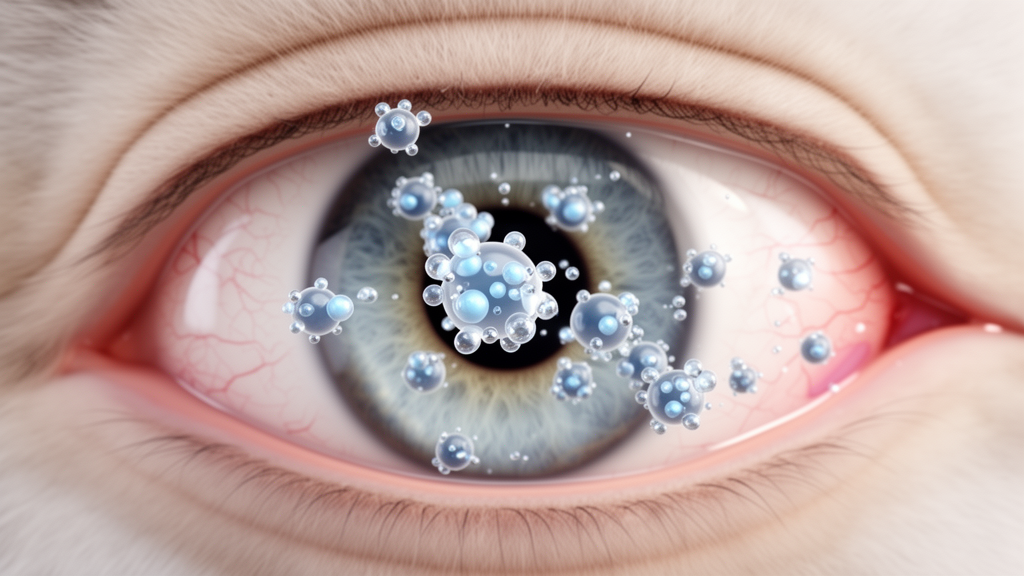
The delivery vehicle is as important as the cargo. Topical eye drops suffer from nasolacrimal drainage, tear turnover, and drug loss on the eyelids, which sharply limits how much medicine actually reaches target tissues. The Cairo team turned to hyalurosomes—phospholipid vesicles with a gel-like hyaluronic acid core—which combine the penetration-enhancing properties of liposomes with the mucoadhesive, hydrating, and biocompatible qualities of hyaluronic acid, a natural component of the extracellular matrix already used in artificial tears. The nanovesicles were embedded in a hydroxypropyl methylcellulose (HPMC) hydrogel to further extend residence time on the eye’s surface.
Formulation was statistically rigorous. The researchers prepared nifedipine-loaded hyalurosomes by thin-film hydration and used a D-optimal experimental design to test seventeen recipes, varying the amount of phosphatidylcholine, the amount and type of an edge activator (sodium cholate or sodium deoxycholate), while tracking entrapment efficiency, particle size, and polydispersity index. Phosphatidylcholine amount was the only significant main effect on entrapment efficiency, with more lipid yielding higher loading. Particle size responded in complex ways: more lipid thickened bilayers and enlarged vesicles, while the more hydrophobic deoxycholate produced smaller, more deformable vesicles through stronger membrane disruption.
The statistically optimized formula, after 40 seconds of probe sonication, produced spherical vesicles of 198.6 ± 23.1 nm with a high entrapment efficiency of 70.7 ± 1.8 percent and a stable zeta potential of −39.1 ± 1.3 mV. Transmission electron microscopy confirmed distinct, non-aggregated spherical particles with intact membranes and a visible gel core. Citicoline sodium was then dissolved into the aqueous phase of these vesicles, and the whole system was gelled with HPMC. The finished gel showed a pH of 6.9 ± 0.02, comfortable for ocular use, a refractive index of 1.37 that should not blur vision, reduced surface tension to aid corneal spreading, and pseudoplastic shear-thinning flow—viscosity drops during blinking for comfort but recovers between blinks to prolong retention.
Release behavior underscored the platform’s versatility. Over 24 hours, the gel released 65.5 percent of the poorly water-soluble nifedipine and 99.5 percent of the highly water-soluble citicoline, sustaining both far better than their free forms. Notably, the system simultaneously enhanced the release of the hydrophobic drug compared with its suspension and slowed the release of the hydrophilic one compared with its solution. Kinetic modeling showed first-order, concentration-dependent release for both drugs, with citicoline following Fickian diffusion and nifedipine exhibiting non-Fickian transport, suggesting a combination of diffusion with polymer swelling and relaxation. In vitro, the dual gel also proved a powerful antioxidant, scavenging DPPH free radicals with an IC50 of 16.44 ± 0.7 µg/mL—more than tenfold better than either drug alone.
Evidence of enhanced delivery came from confocal laser scanning microscopy in rabbits, using a lipophilic rhodamine B probe loaded into the same nanosystem. The hyalurosomal gel drove fluorescence to a depth of 110 µm into the cornea, a 2.2-fold improvement over the 50 µm achieved by a control solution. The pharmacodynamic payoff was equally striking. In a crossover study of six normotensive rabbits, the gel reduced intraocular pressure by a maximum of 51.85 ± 8.2 percent, versus 36.4 ± 5.9 percent for the commercial dorzolamide drop Xola™ and 31.8 ± 3.3 percent for a free drug dispersion. The gel’s mean residence time reached 8.9 ± 2.7 hours—more than double that of either comparator—and its relative exposure, measured as the area under the pressure-reduction curve extrapolated to infinity, was 494.1 ± 191.9 against 182.8 ± 33.7 for Xola™.
Safety and robustness results were encouraging. Terminal sterilization with 25 kGy of gamma radiation, performed with the gel packed in dry ice to prevent thermal damage, left particle size, entrapment efficiency, zeta potential, and release profiles essentially unchanged, with similarity factors above 50 for both drugs and TEM confirming intact vesicles. Draize testing scored zero irritation at every observation point over three days of repeated instillation, and histopathological examination of excised ocular tissues showed no alterations, with epithelial and stromal structures preserved.
The authors are candid about the study’s limits. No ocular pharmacokinetic data were collected, so drug concentration–time profiles in eye tissues remain unknown, even though the measured pressure response directly demonstrates pharmacological activity. Formal sterility testing to validate the gamma sterilization was not performed, and the pharmacodynamic study lacked blank gel and single-drug groups, which would help separate carrier effects from the benefits of combination therapy. Crucially, the work was done in healthy normotensive rabbits, so efficacy in an experimentally induced glaucoma model—and eventually in patients—still needs to be established. The team recommends future studies in diseased animal models, cellular antioxidant and neuroprotective assays, and comprehensive clinical evaluation of long-term tolerability and compliance. For now, the CTC/NFD-OF gel stands as a proof of concept that a single, patient-friendly topical platform can integrate pressure reduction, neuroprotection, and antioxidant activity in one formulation.
Subject of Research: A nanovesicle hydrogel co-delivering nifedipine and citicoline for topical glaucoma therapy
Article Title: Engineered hyalurosomal gel co-delivering citicoline sodium and nifedipine for potential glaucoma management: formulation and pharmacodynamic evaluation
Article References: Hegazy, D., Ibrahim, M. M., El-Shiekh, R. A., Saher, O., & Ali, N. A. (2026). Engineered hyalurosomal gel co-delivering citicoline sodium and nifedipine for potential glaucoma management: formulation and pharmacodynamic evaluation. Frontiers in Pharmacology, 17, Article 1977895. https://doi.org/10.3389/fphar.2026.1977895
Image Credits: AI Generated
DOI: 10.3389/fphar.2026.1977895
Keywords: glaucoma, nanovesicles, hyalurosomes, nifedipine, citicoline, drug delivery, intraocular pressure, neuroprotection, antioxidant, ophthalmology, hydrogel, pharmacodynamics
News Source: Ophelia Keating. (October 24, 2026). Dual-Drug Nanovesicle Gel Cuts Eye Pressure in Rabbits, Offering a New Glaucoma Strategy. Scienmag.