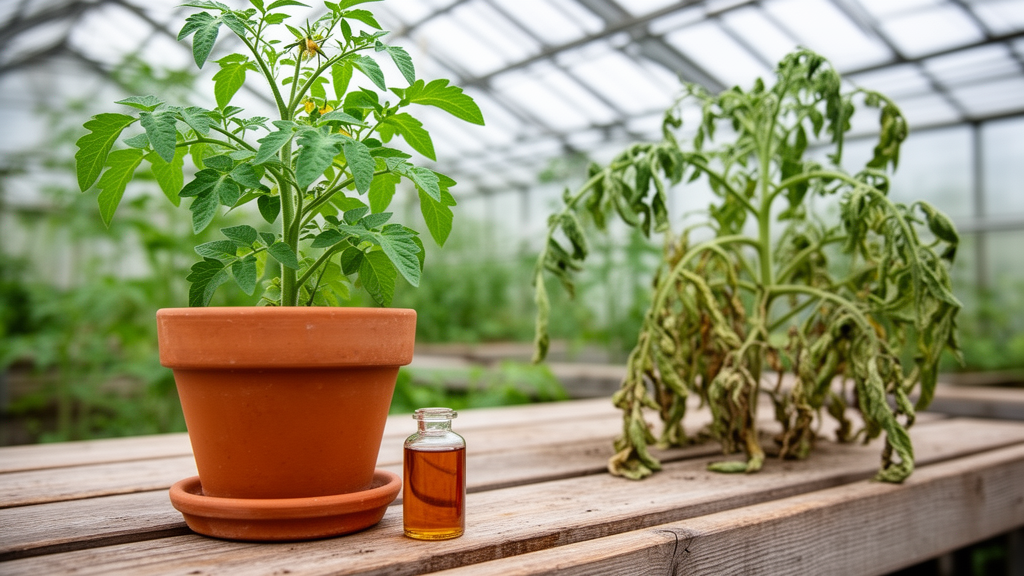
A common tree from northeast India may offer tomato growers a new weapon against one of the world’s most destructive plant diseases. Researchers report that bark extracts of Litsea glutinosa, a member of the laurel family known locally as Kukurchita, can sharply reduce the severity of bacterial wilt in tomato plants, a disease caused by the soil-borne bacterium Ralstonia solanacearum that can wipe out more than 70 percent of yields in susceptible varieties. The study, published in the journal Discover Plants, combined two years of greenhouse and field trials with detailed chemical analysis and enzyme assays, and it points to a dual mechanism: the extracts directly inhibit the pathogen while simultaneously switching on the plant’s own immune machinery.
The economic stakes are considerable. In Tripura and neighboring regions of North East India, high-yielding tomato varieties such as Sakthi, TPS, Loknath, Udaipur Local and RCMT-6 are routinely devastated by the wilt bacterium, with losses to the rural agricultural economy estimated at 70 to 80 percent in affected fields. Ralstonia solanacearum is notorious for its wide host range among solanaceous crops and its ability to persist in soil independent of a living host plant. Infection typically enters through cuts and wounds, and the disease is favored by high humidity and temperature. A telltale diagnostic sign is a whitish ooze of bacterial slime from the cut end of an infected stem when placed in pure water. Chemical control has struggled to keep pace, both because of cost and because of concerns that the pathogen will develop resistance to synthetic pesticides.
The research team, led by Sandeep Acharya and Kananbala Sarangthem, began by preparing aqueous and methanolic extracts from the inner bark of trees growing in a cultivated garden in West Tripura, with the botanical identity confirmed by a university botanist. In laboratory assays on tetrazolium chloride agar, the crude methanolic bark extract produced clear zones of inhibition against Ralstonia solanacearum, demonstrating direct antibacterial toxicity. Distilled water served as the negative control, and the antibiotic gentamycin at one part per million achieved complete inhibition of colony-forming units, providing a benchmark for comparison.
Chemical characterization of the bark extract was carried out using high performance liquid chromatography on a C18 column with an acetonitrile and formic acid gradient, followed by a battery of spectral techniques including infrared and ultraviolet spectroscopy, proton nuclear magnetic resonance and electron impact mass spectrometry. From six phytoconstituents isolated from the bark, two emerged as the most bioactive: kaempferol, a flavonoid that crystallized as yellow granules with a melting point of 271 to 273 degrees Celsius, and beta-sitosterol, a plant sterol that formed colorless needles melting at 135 to 137 degrees Celsius. Both compounds were identified by matching their spectral data and physical constants against authentic reference samples and published literature.
When kaempferol and beta-sitosterol were applied together in a one-to-one combination, they produced the largest inhibition zones against the bacterium in vitro, outperforming either compound alone and rivaling the full methanolic bark extract. This effect carried over into living plants. In greenhouse experiments, six-week-old tomato plants of the susceptible Sakthi variety received a soil drench of 50 milliliters per pot of either the aqueous bark extract or the combined active compounds, and two days later their stems were injected with a bacterial suspension calibrated to 10 to the power of 8 colony-forming units per milliliter. Disease severity was scored six weeks after inoculation on a five-category scale based on the percentage of infected leaves per plant.
The results were consistent across two successive growing seasons, 2024 and 2025, and across both greenhouse and open field conditions laid out in a randomized complete block design with six replications. Treated plants showed significantly lower disease severity indices than inoculated control plants that received only distilled water, with the combined kaempferol and beta-sitosterol treatment followed by the methanolic bark extract proving most effective. Bacterial populations recovered from stem tissues confirmed the pattern, with the combination treatment yielding the lowest pathogen counts in planta. Non-inoculated control plants sprayed with water remained disease-free throughout.
Crucially, the protective effect was not purely a matter of killing bacteria. The researchers tracked the activity of key defense enzymes in tomato leaves at intervals of 0, 48, 96, 144 and 192 hours after treatment, in plants that were either challenged with the pathogen or left unchallenged. Peroxidase activity rose significantly in treated plants and peaked eight days after application, remaining elevated for up to ten days. Phenylalanine ammonia lyase, an enzyme gateway to the phenylpropanoid pathway that produces lignin and other defensive compounds, climbed from two days after treatment and reached a maximum at day eight before declining slightly. Polyphenol oxidase and beta-1,3-glucanase, a pathogenesis-related protein, followed similar trajectories, both peaking at day eight and then stabilizing.
The accumulation of total phenolic substances, measured with Folin-Ciocalteau reagent, also increased dramatically in treated leaves regardless of whether the plants were subsequently inoculated. This pattern is the signature of induced systemic resistance: the plant’s defenses are activated preemptively by the extract and remain armed even before the pathogen arrives. Peroxidase contributes to defense through lignin formation, cross-linking of cell wall proteins and generation of reactive oxygen species, while elevated PAL and PPO activity is associated with the reinforcement of cell walls and the accumulation of phytoalexins. The authors note that protection was generally strongest when extracts were applied two days before inoculation, giving the induced defenses time to build.
The findings align with earlier work showing that plant extracts can suppress bacterial diseases in both greenhouse and field settings. Previous studies documented enhanced peroxidase activity in potato plants treated with extracts of Hibiscus sabdariffa, Punica granatum and Eucalyptus globulus, and combinations of resistance-inducing chemicals have been shown to reduce bacterial populations in apple seedlings. What distinguishes the new study is the identification of the specific active principles in L. glutinosa bark and the demonstration that a simple botanical preparation can elicit a full suite of pathogenesis-related responses in a major vegetable crop.
The authors argue that botanical disease management addresses several shortcomings of synthetic agrochemicals: rising costs, environmental toxicity, harm to beneficial soil microorganisms, and the erosion of the plant’s own acquired resistance. Litsea glutinosa is already woven into rural life in Tripura, where it serves as a host for muga silk moth production, a traditional treatment for livestock injuries, a source of timber for farm tools and an organic binding agent, making it an accessible and low-cost resource for smallholder farmers. Practical deployment still requires further work: the researchers state that quantification of kaempferol and beta-sitosterol for per-hectare field application is in progress, along with trials across different climatic zones, soil conditions and seasons. For now, the study establishes that a bark extract long valued in traditional practice carries measurable, reproducible and chemically traceable power to prime a crop plant’s immune system against one of agriculture’s most stubborn pathogens.
Subject of Research: Induction of systemic resistance in tomato against Ralstonia solanacearum using Litsea glutinosa bark extracts
Article Title: Bark extracts of Litsea glutinosa induces systemic resistance for controlling wilt of tomato caused by Ralstonia solanacearum
Article References: Acharya, S., & Sarangthem, K. (2026). Bark extracts of Litsea glutinosa induces systemic resistance for controlling wilt of tomato caused by Ralstonia solanacearum. Discover Plants, 3(1), Article 480. https://doi.org/10.1007/s44372-026-00938-w
Image Credits: AI Generated
DOI: 10.1007/s44372-026-00938-w
Keywords: Litsea glutinosa, Ralstonia solanacearum, bacterial wilt, tomato, kaempferol, beta-sitosterol, systemic acquired resistance, plant defense enzymes, botanical pesticides, plant pathology, Tripura, HPLC
News Source: Alan Morgan. (October 24, 2026). Bark Extracts of Litsea glutinosa Prime Tomato Defenses Against Bacterial Wilt. Scienmag.