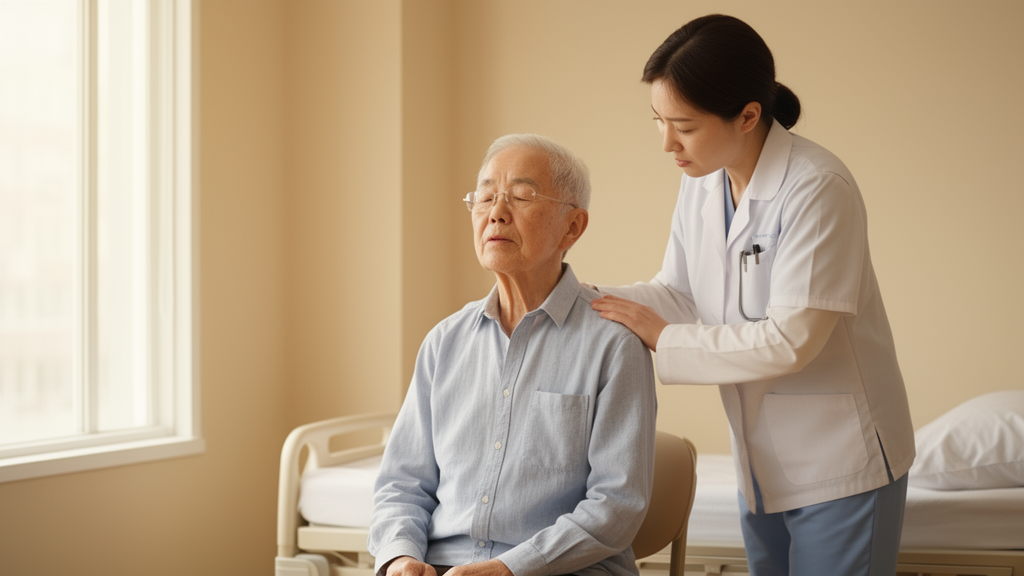
Stroke survivors may soon be prescribed something deceptively simple to protect their lungs: structured breathing exercises against resistance. A new systematic review and meta-analysis of randomized controlled trials, published in Frontiers in Neurology, reports that respiratory muscle training in patients with subacute stroke significantly improves respiratory function, walking capacity, and trunk control, and is associated with a reduction in pneumonia risk of nearly 60 percent. The synthesis, led by Ying Guo, Yanping Shang, Li Tian, Wen Li, Siwen Zhu, and Jing Jia at Guangdong Provincial Work Injury Rehabilitation Hospital in Guangzhou, China, pooled data from eleven randomized controlled trials encompassing 737 patients, and is the first meta-analysis to focus exclusively on the subacute phase of stroke recovery, the period from roughly two weeks to six months after onset, when the brain’s plasticity is at its most responsive.
The clinical stakes are considerable. Stroke affects approximately 12.2 million people each year, and while acute care has improved survival, most survivors are left with persistent impairments; only 50 to 70 percent achieve good functional recovery, and 15 to 30 percent remain permanently disabled at three months. Among the underrecognized consequences is respiratory dysfunction. Neurological damage from stroke impairs the neural control and contractile function of the diaphragm, intercostal muscles, and abdominal muscles, through mechanisms that include direct injury to corticospinal pathways projecting to respiratory motor neurons, reduced central respiratory drive, diaphragmatic atrophy, and chest wall stiffness from hemiplegic posturing. The numbers are striking: mean maximal inspiratory and expiratory pressures in stroke patients are roughly 25 to 33 percent lower than in healthy controls, and up to 89 percent of patients show inspiratory muscle weakness when defined as pressures below 70 percent of predicted values.
These deficits ripple outward across the body. Diminished respiratory muscle strength is independently associated with reduced exercise tolerance, impaired trunk control and balance, increased fatigue, and heightened risk of pulmonary complications. Most seriously, stroke-associated pneumonia affects 7 to 12 percent of patients and is independently linked to markedly increased mortality, up to six-fold during hospitalization and two- to three-fold at 30 days and one year, along with prolonged hospital stays. Respiratory muscle training, which uses hand-held devices providing pressure-threshold or flow-dependent resistance to train the inspiratory muscles, expiratory muscles, or both, rests on a physiological principle familiar from sports science: skeletal muscles, including respiratory muscles, respond to overload with structural and functional adaptations such as increased fiber cross-sectional area, enhanced mitochondrial density, and improved neural drive.
The pooled results are consistent across domains. Respiratory muscle training improved maximum inspiratory pressure by a mean of 14.16 centimeters of water (95 percent CI 6.93 to 21.38), forced expiratory volume in one second by 0.32 liters (95 percent CI 0.16 to 0.49), and forced vital capacity by 0.31 liters (95 percent CI 0.20 to 0.41). Functional exercise capacity, measured by the six-minute walk test, improved by 34.09 meters (95 percent CI 9.71 to 58.47), and Trunk Impairment Scale scores rose by 2.27 points (95 percent CI 1.12 to 3.43), exceeding the scale’s minimal clinically important difference of 2.09. Critically, across four trials with 511 patients and 56 events, the training reduced pneumonia incidence with a risk ratio of 0.41 (95 percent CI 0.24 to 0.72), with zero heterogeneity between studies.
Beneath the headline effects lies a novel mechanistic insight that the authors describe as the FVC–MIP heterogeneity dichotomy. Forced vital capacity, a volumetric measure of lung size, showed absolutely no heterogeneity across trials (I² = 0 percent), while maximum inspiratory pressure, an effort-dependent measure of maximal static pressure against an occluded airway, exhibited substantial heterogeneity (I² = 89.9 percent). The authors argue that this contrast supports a mechanistic distinction: RMT produces a consistent volumetric expansion effect, likely underpinned by structural adaptations such as increased diaphragm thickness and thickening fraction, as well as intercostal muscle remodeling. In contrast, MIP demands maximal voluntary cortical activation and adequate bulbar muscle function, so its effect is contingent on training intensity, cognitive status, and measurement timing. The practical implication: lung volumes respond reliably, while effort-dependent peak pressures vary with patient engagement and protocol specifics.
The trunk control finding is a first. This meta-analysis is the first to quantitatively synthesize Trunk Impairment Scale outcomes in this population, providing a plausible mechanism linking respiratory and postural function. The diaphragm and abdominal muscles share fascial continuities with trunk stabilizers via the thoracolumbar fascia, and respiratory muscle training likely enhances intra-abdominal pressure regulation, co-activating the transversus abdominis and multifidus and thereby improving postural control. Supporting evidence comes from trials showing that RMT improved affected-side diaphragm mobility, and from correlations between diaphragm function and balance. The concurrent improvements in walking distance and trunk control suggest a functional chain running from respiratory mechanics to gait performance.
The pneumonia result also resolves a long-standing uncertainty. Earlier syntheses had yielded conflicting conclusions: one meta-analysis initially reported a significant risk reduction that was later revised to non-significant in a corrigendum, another reported a borderline odds ratio of 0.55, and a Cochrane review based on only two small trials concluded there was insufficient evidence. By aggregating 511 patients across four trials, the new analysis provides the most robust estimate to date, with zero heterogeneity. The authors attribute the roughly 59 percent risk reduction to enhanced cough peak flow, secondary to improved forced vital capacity and inspiratory pressure, facilitating airway clearance, and to improved swallowing-respiratory coordination reducing silent aspiration. However, they caution that the pooled result reflects pneumonia broadly defined, as pneumonia or lung infection as reported in the original studies, rather than strictly defined pneumonia, since some trials used composite respiratory outcomes or did not clearly specify diagnostic criteria.
The evidence is not uniformly robust. Leave-one-out sensitivity analyses showed that the six-minute walk test finding lost statistical significance after omitting a single influential trial, and the Trunk Impairment Scale result lost significance after removing the largest trial, Zhao 2024. Trim-and-fill analyses suggested potentially missing unpublished studies for forced expiratory volume in one second, forced vital capacity, and maximum inspiratory pressure. The pneumonia finding, while statistically stable, is based on only four trials, and the contributing studies predominantly enrolled patients within the first 30 to 60 days after stroke, meaning the result is most applicable to the early subacute phase rather than the full six-month window. GRADE ratings ranged from low to moderate, reflecting concerns about imprecision and risk of bias, particularly in blinding of participants and personnel.
The authors also acknowledge that stroke type and baseline severity, which were variably reported across the included trials, may mask important subgroup differences. Prior evidence indicates that hemorrhagic stroke carries a higher risk of post-stroke dysphagia than ischemic stroke, that dysphagia itself confers a four-fold increased pneumonia risk, and that stroke severity measured by the NIHSS independently predicts pneumonia, with each one-point increase conferring an eight percent rise in risk. Intervention characteristics varied widely as well, from combined inspiratory and expiratory training to inspiratory training alone, with intensities ranging from 30 to 60 percent of maximal inspiratory pressure and durations from three to eight weeks, limiting inferences about the optimal regimen.
For clinicians, the message is actionable. The authors recommend prescribing respiratory muscle training to subacute stroke patients to improve pulmonary volumes and lower pneumonia risk, monitoring forced vital capacity as a stable and objective marker of training response while interpreting inspiratory pressure changes as motivational but effort-dependent, and combining the training with task-specific gait and balance training rather than using it in isolation. The robust pneumonia reduction suggests the intervention merits inclusion as a core component of infection prevention bundles in subacute stroke units. The authors call for large-scale, multicenter randomized trials with standardized protocols, direct comparisons of training modalities, inclusion of cough peak flow and swallowing assessments to disentangle the pneumonia mechanisms, individual participant data meta-analyses, and long-term follow-up of at least six months to evaluate whether the benefits persist.
Subject of Research: Respiratory muscle training in subacute stroke rehabilitation
Article Title: Effects of respiratory muscle training on respiratory function, functional outcomes, and pulmonary complications in patients with stroke: a systematic review and meta-analysis of randomized controlled trials
Article References: Guo, Y., Shang, Y., Tian, L., Li, W., Zhu, S., & Jia, J. (2026). Effects of respiratory muscle training on respiratory function, functional outcomes, and pulmonary complications in patients with stroke: a systematic review and meta-analysis of randomized controlled trials. Frontiers in Neurology, 17, Article 1981476. https://doi.org/10.3389/fneur.2026.1981476
Image Credits: AI Generated
DOI: 10.3389/fneur.2026.1981476
Keywords: stroke, respiratory muscle training, pneumonia, meta-analysis, rehabilitation, pulmonary function, Effects, respiratory, muscle, training, function, functional
News Source: Cassandra Pierce. (October 23, 2026). Breathing Exercises Cut Pneumonia Risk by Nearly 60 Percent in Stroke Survivors. Scienmag.