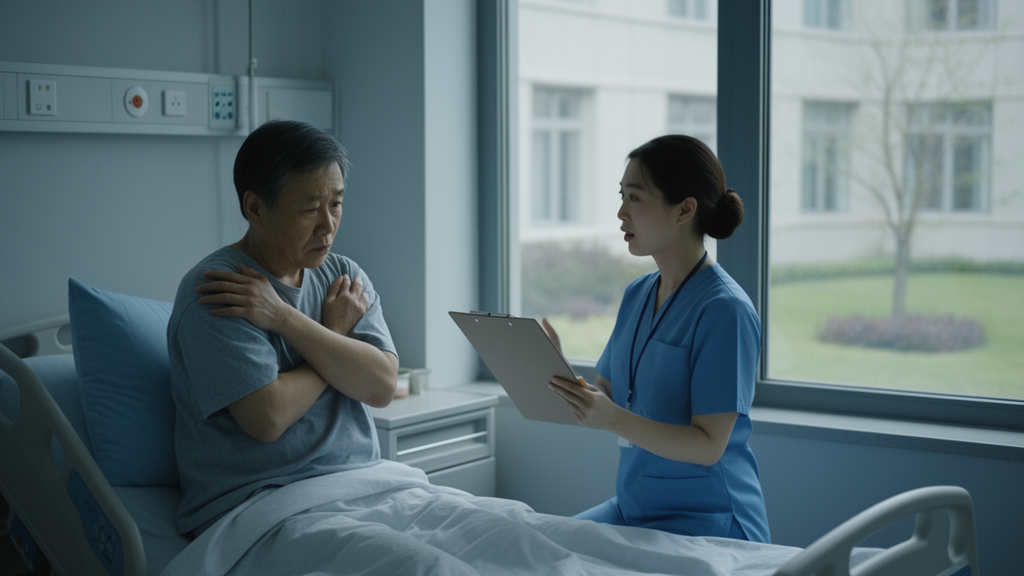
A cross-sectional study of 1,280 hospitalized cancer patients across 16 cities in Shandong Province, China, found substantial gaps between experiencing common symptoms and reporting them to clinicians. During the current hospitalization, 88% of patients experienced fatigue, 74% experienced pain and 94% experienced emotional distress. Among patients with each respective symptom, however, only 55% reported fatigue, 63% reported pain and 40% reported emotional distress.
Researchers combined medical-record reviews with patient questionnaires to assess 12 binary outcomes related to symptoms, reporting and perceived management. Separate multivariable multilevel logistic regression models examined associations with demographic and clinical characteristics or laboratory parameters, while accounting for clustering by city. Both sets of models included cancer type. The study was observational and cross-sectional, so its findings describe associations at one point in time rather than establishing causes or changes in symptoms over time.
Reporting patterns differed among demographic groups. In the demographic and clinical models, male, unmarried and divorced patients had lower odds of reporting all three symptoms than their respective reference groups. The analysis does not identify why these differences occurred. Among patients who had discussed the relevant symptom with a clinician, male patients also had higher odds than female patients of reporting definite receipt of the help they wanted for fatigue, pain and emotional distress.
Patients’ reports of help received varied sharply by symptom. Among those who had discussed the symptom with a clinician, 97% reported definitely receiving the help they wanted for pain, compared with 47% for fatigue and 40% for emotional distress. These percentages reflect patients’ reported experiences after discussing a symptom; they are not estimates of treatment effectiveness or randomized comparisons of care. The data show that discussion of a symptom did not necessarily coincide with a patient reporting that their desired help had been received.
Laboratory parameters were associated with pain reporting in a separate set of models. Low neutrophil counts and high hemoglobin levels were associated with higher odds of reporting pain, whereas low potassium levels were associated with lower odds. These were statistical associations and do not show that laboratory values caused pain or predict successful treatment. The findings are limited to hospitalized patients treated in secondary and tertiary hospitals in one Chinese province and to a single assessment of symptom prevalence, reporting and perceived management. The authors concluded that the incomplete reporting, especially for emotional distress, highlights the need for person-centered symptom assessment and communication.
Subject of Research: Symptom reporting and perceived management among hospitalized cancer patients in Shandong Province, China
Article Title: Cancer patients’ symptom reporting gaps in fatigue, pain, and emotional distress: a cross-sectional study of symptom management in China
Article References: Lv, J., Shang, M., Wang, Q., Wang, G., & Meng, Y. (2026). Cancer patients’ symptom reporting gaps in fatigue, pain, and emotional distress: a cross-sectional study of symptom management in China. Supportive Care in Cancer, 34(11), 1144. https://doi.org/10.1007/s00520-026-11328-z
Image Credits: AI Generated
DOI: 10.1007/s00520-026-11328-z
Keywords: cancer care, symptom reporting, fatigue, pain, emotional distress, patient communication, hospital medicine, multilevel regression, Shandong Province, China, Cancer, patients
News Source: Nathaniel Bowman. (October 22, 2026). Chinese cancer inpatients underreport pain, fatigue and emotional distress. Scienmag.