• HOME
  • NEWS
  • EXPLORE
    • CAREER
      • Companies
      • Jobs
    • EVENTS
    • iGEM
      • News
      • Team
    • PHOTOS
    • VIDEO
    • WIKI
  • BLOG
  • COMMUNITY
    • FACEBOOK
    • INSTAGRAM
    • TWITTER
Thursday, October 22, 2026
BIOENGINEER.ORG
No Result
View All Result
  • Login
  • HOME
  • NEWS
  • EXPLORE
    • CAREER
      • Companies
      • Jobs
        • Lecturer
        • PhD Studentship
        • Postdoc
        • Research Assistant
    • EVENTS
    • iGEM
      • News
      • Team
    • PHOTOS
    • VIDEO
    • WIKI
  • BLOG
  • COMMUNITY
    • FACEBOOK
    • INSTAGRAM
    • TWITTER
No Result
View All Result
Bioengineer.org
No Result
View All Result
Home NEWS Science News Technology

Potassium nanoparticles mitigate measured nanoplastic stress in tomato plants

by
October 22, 2026
in Technology
Reading Time: 2 mins read
0
Potassium nanoparticles mitigate measured nanoplastic stress in tomato plants

Potassium nanoparticles mitigate measured nanoplastic stress in tomato plants

Share on FacebookShare on TwitterShare on LinkedinShare on RedditShare on Telegram

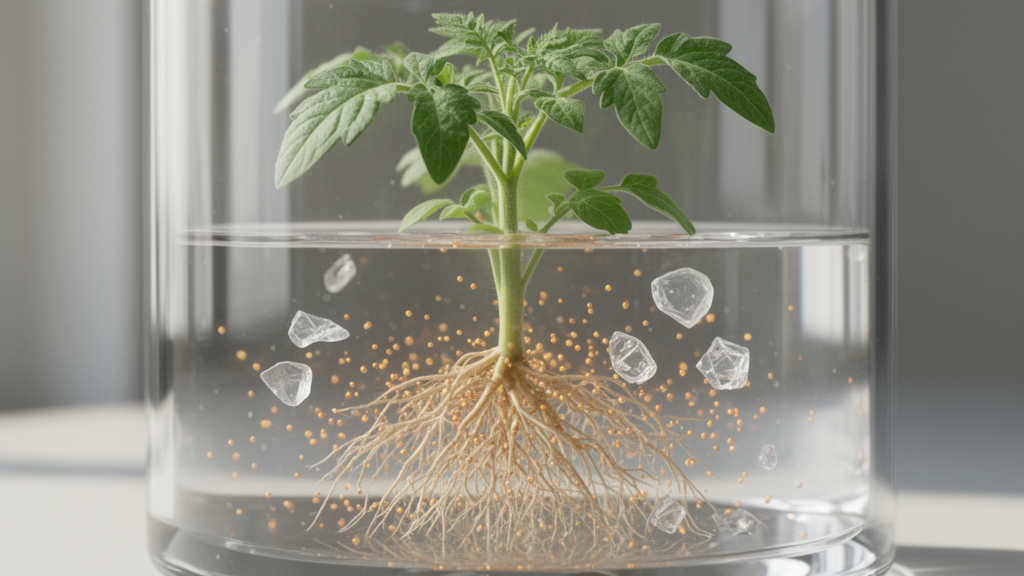
Foliar application of potassium nanoparticles reduced several measured effects of nanoplastic stress in a controlled experiment on tomato plants, according to the study. Under experimental soil contamination, the treatment improved shoot length, leaf area and glucose content, lowered elevated markers of oxidative stress, and increased the activity of antioxidant enzymes. The findings show a response under the tested laboratory conditions; they do not establish that potassium nanoparticles can protect tomato crops across other soils, exposure levels or agricultural environments.

The researchers investigated Solanum lycopersicum using a randomized complete block design with five biological replicates per treatment. They applied nanoplastics to the soil at 4 milligrams per kilogram and administered potassium nanoparticles as a foliar spray at 10 millimoles per liter, 30 days after sowing. Relative to untreated controls, nanoplastic exposure reduced root length by 68.81%, shoot dry weight by 20.53%, SPAD chlorophyll value by 70.85% and net photosynthetic rate by 46.67%.

Protein content fell by 13.82%, while calcium content declined by 41.01%. These reductions showed that the tested exposure impaired multiple dimensions of plant growth and physiology. When potassium nanoparticles were added to the nanoplastic-exposed treatment, shoot length increased by 17.25%, leaf area by 10.89% and glucose content by 18.62% compared with plants receiving nanoplastics alone.

The study also reports that the treatment restored mineral nutrient homeostasis and improved physiological and biochemical performance. The measured changes nevertheless support the reported influence of potassium nanoparticles on carbohydrate metabolism and plant performance under the experimental stress regime. Nanoplastic exposure also produced signs of oxidative injury.

Malondialdehyde, a marker associated with membrane lipid peroxidation, was 40.47% higher than in controls, while hydrogen peroxide and superoxide anion levels rose by 26.87% and 42.35%, respectively. Potassium nanoparticles substantially suppressed the accumulation of these three markers and enhanced the activities of superoxide dismutase, catalase and peroxidase. The study was limited to tomatoes, one potassium-nanoparticle concentration and one experimentally imposed nanoplastic contamination level.

Its results therefore provide a controlled proof of measured effects rather than evidence of field-scale efficacy, long-term persistence or suitability for commercial tomato production.

Subject of Research: Potassium nanoparticles, tomato physiology, carbohydrate metabolism and oxidative defense under nanoplastic stress

Article Title: Climate-resilient tomato production: potassium nanoparticles regulate carbohydrate metabolism and oxidative defense under nanoplastic stress

Article References: Bengisu, G., Atay, U., Durul, M. S., Khalofah, A., Faizan, M., & Habib, Y. (2026). Climate-resilient tomato production: potassium nanoparticles regulate carbohydrate metabolism and oxidative defense under nanoplastic stress. Scientific Reports. https://doi.org/10.1038/s41598-026-62316-6

Image Credits: AI Generated

DOI: 10.1038/s41598-026-62316-6

Keywords: tomatoes, potassium nanoparticles, nanoplastics, plant stress, carbohydrate metabolism, oxidative stress, antioxidant enzymes, photosynthesis, soil contamination, Climate-resilient, tomato, production

News Source: Denise Maddox. (October 22, 2026). Potassium nanoparticles mitigate measured nanoplastic stress in tomato plants. Scienmag.


Tags: antioxidant enzymescarbohydrate metabolismClimate-resilientnanoplasticsoxidative stressphotosynthesisplant stresspotassium nanoparticlesproductionsoil contaminationtomatotomatoes
Share12Tweet7Share2ShareShareShare1

Related Posts

Delft researchers build light-controlled soft actuator powered by algae

Delft researchers build light-controlled soft actuator powered by algae

October 22, 2026
WeanNet transfers learning through fading neural connections

WeanNet transfers learning through fading neural connections

October 22, 2026

Experiment finds CrMnFeCoNi hardens as nanograins grow under torsion

October 22, 2026

Multi-criteria Genetic Planning Extends Simulated Continuum Robot Lifetime

October 22, 2026

POPULAR NEWS

  • Research report: Self-stabilizing electrocatalyst for seawater oxidation: Repelling chloride and sustaining over 1000 hours of operation

    Research report: Self-stabilizing electrocatalyst for seawater oxidation: Repelling chloride and sustaining over 1000 hours of operation

    29 shares
    Share 12 Tweet 7
  • Potassium nanoparticles mitigate measured nanoplastic stress in tomato plants

    29 shares
    Share 12 Tweet 7
  • Review proposes network-level GPCR control against multiple aging processes

    29 shares
    Share 12 Tweet 7
  • Delft researchers build light-controlled soft actuator powered by algae

    29 shares
    Share 12 Tweet 7

About

We bring you the latest biotechnology news from best research centers and universities around the world. Check our website.

Follow us

Recent News

Research report: Self-stabilizing electrocatalyst for seawater oxidation: Repelling chloride and sustaining over 1000 hours of operation

Potassium nanoparticles mitigate measured nanoplastic stress in tomato plants

Review proposes network-level GPCR control against multiple aging processes

Subscribe to Blog via Email

Enter your email address to subscribe to this blog and receive notifications of new posts by email.

Join 85 other subscribers
  • Contact Us

Bioengineer.org © Copyright 2023 All Rights Reserved.

Welcome Back!

Login to your account below

Forgotten Password?

Retrieve your password

Please enter your username or email address to reset your password.

Log In
No Result
View All Result
  • Homepages
    • Home Page 1
    • Home Page 2
  • News
  • National
  • Business
  • Health
  • Lifestyle
  • Science

Bioengineer.org © Copyright 2023 All Rights Reserved.