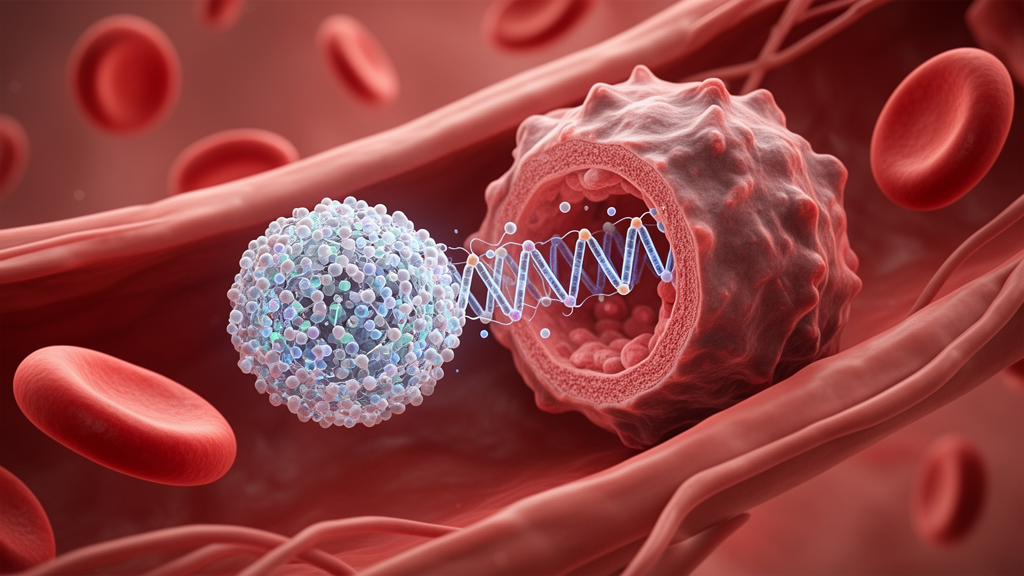
A 2026 review concludes that microRNA (miRNA) therapeutics could provide a route to addressing the limited progress made in treating osteosarcoma, an aggressive primary malignant bone tumor, especially in children and young adults with metastatic or recurrent disease. The authors describe dysregulated miRNAs as important potential drug targets because they are linked to osteosarcoma pathogenesis, metastasis, chemoresistance and immune-system regulation. The review does not establish that miRNA therapeutics are already effective in these settings, nor does it present a new clinical study showing improved outcomes.
Instead, it assesses an emerging therapeutic strategy and the obstacles that must be overcome before it can be translated into clinical practice. The review focuses on the use of nanocarriers to deliver miRNA therapeutics. Directly administered, or “naked,” miRNAs face several limitations: they are rapidly degraded by nucleases, are taken up poorly by cells, have limited specificity for tumors and may cause off-target effects.
Nanocarrier systems are designed to address these delivery problems by increasing miRNA stability, improving pharmacokinetics and cellular entry, and allowing controlled release. The analysis considers polymeric, lipid-based, inorganic, hybrid and exosome-based nanocarriers. Rather than describing each platform separately, it compares them according to loading capacity, biodistribution, tumor infiltration, biodegradability, safety profiles and their potential for real-world application.
A central difficulty is the mineralized bone microenvironment, which can limit delivery to skeletal tumors. The review discusses ligand-mediated and stimuli-responsive nanocarriers as possible approaches for improving targeting within this environment. It also identifies personalized nanomedicine and strategic nanocarrier design as emerging areas of research.
The review presents these developments as promising research strategies, not demonstrated treatments, and it does not provide evidence here that individualized delivery improves survival or produces clinical benefit in people with metastatic or recurrent osteosarcoma. Clinical development has revealed that the challenges are not limited to carrier design and biological targeting. The review highlights immune-related toxicity, manufacturing scalability, batch-to-batch variability, formulation instability, regulatory requirements and cost as major barriers to clinical application.
As a review, the article synthesizes developments reported across the field rather than testing a new intervention. Its assessment is therefore cautious: miRNA nanocarriers may overcome some limitations of unformulated miRNA, but their value would require further evidence of safe, reproducible and clinically effective use. Overall, the review identifies a targeted-drug-delivery approach in which a nanocarrier protects a therapeutic miRNA, supports its cellular entry and can help direct it toward osteosarcoma cells.
It also emphasizes that practical translation depends on more than demonstrating biological activity. Delivery must operate effectively in the mineralized bone microenvironment, while formulations must be manufactured consistently and remain stable. Safety, regulatory approval and cost also remain unresolved concerns.
The review’s conclusion is hopeful but qualified: miRNA nanotherapies are a developing field with potential for osteosarcoma treatment, yet significant biological, technological and regulatory hurdles remain before the approach can become a routine clinical treatment.
Subject of Research: Review of microRNA nanocarriers and targeted drug delivery for osteosarcoma
Article Title: Nanotherapeutics in osteosarcoma: Advances in miRNA nanocarriers and targeted drug delivery
Article References: Dey, A., Yakubu, U. I., & Singh, M. (2026). Nanotherapeutics in osteosarcoma: Advances in miRNA nanocarriers and targeted drug delivery. Molecular Biology Reports, 53(1), Article 1514. https://doi.org/10.1007/s11033-026-12672-3
Image Credits: AI Generated
DOI: 10.1007/s11033-026-12672-3
Keywords: osteosarcoma, microRNA therapeutics, nanocarriers, targeted drug delivery, bone tumors, nanomedicine, clinical translation, drug stability, tumor infiltration, biomedical manufacturing, Nanotherapeutics, Advances
News Source: Nathaniel Bowman. (October 22, 2026). Review assesses miRNA nanocarriers for osteosarcoma. Scienmag.