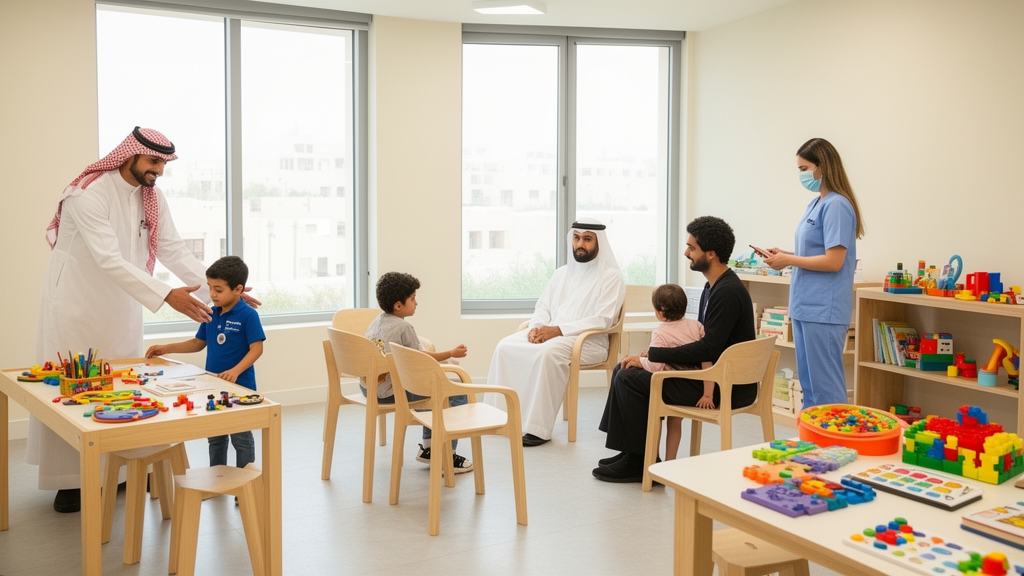
Healthcare providers at a specialist autism center in Jeddah, Saudi Arabia, identified substantial gaps in services intended to help autistic adults develop daily-living skills, participate in community life and form relationships. In a qualitative study, 20 providers described limited community awareness and stigma, insufficient specialized resources, and inadequate training in practical life skills. They also emphasized family engagement, multidisciplinary service coordination, continuing professional development, and culturally responsive programs. These findings reflect providers’ perceptions of service barriers and priorities rather than measured changes in autistic adults’ independence or well-being.
The researchers conducted individual, semi-structured interviews with 10 nurses, five psychologists and five social workers at the First Autism Centre in Jeddah. Interviews lasted 30–45 minutes and took place face to face or through Microsoft Teams, depending on participant availability. A designated researcher conducted all interviews within each professional group to enhance consistency. The interviews were conducted in Arabic, audio-recorded, transcribed, translated into English and analyzed thematically.
Thematic analysis produced seven themes, which the researchers organized into three overarching categories: limited community awareness and stigma; insufficient specialized resources supporting independent living and relationship development; and gaps in existing services, including inadequate life-skills training. Providers stressed the need for structured, culturally responsive programs focused on autonomy, community participation, interpersonal skills and relationship development. The study did not test such programs or establish their effectiveness.
Family involvement was another recurring priority in the interviews. Providers regarded it as an important element of stronger adult autism services, alongside coordination among healthcare professionals. They also called for continuing professional development so that staff could better address independent living and relationship support. These recommendations were based on the experiences and judgments of the interviewed professionals, not on direct comparisons of service models or outcomes.
The study used several procedures intended to strengthen the credibility of its qualitative findings. These included member checking, peer debriefing, triangulation and reflexive journaling. The research was descriptive and designed to explore providers’ views in depth rather than estimate the prevalence of service gaps across Saudi Arabia. No clinical trial was registered, and the study did not enroll autistic adults as research participants.
Autistic adults’ accounts and those of family caregivers were not included in the supplied findings. As a result, the analysis cannot establish how autistic adults themselves experience the proposed service gaps, what forms of support they prefer, or whether particular interventions would improve independence, community participation or relationships. The evidence instead documents how 20 healthcare providers at one institution understood barriers to adult autism care and what they considered priorities for service improvement.
The research has clear geographic and institutional limits. It was conducted at one specialized autism center in a single city, with participants drawn from three professional groups. The authors stated that the findings should therefore be interpreted as context-specific rather than nationally representative. The study also does not demonstrate that stigma or shortages of specialized resources caused particular outcomes among autistic adults.
Future multisite research should include autistic adults, family caregivers and healthcare providers from diverse geographical regions and service settings, the researchers said. Within the limits of the present study, the central finding was that providers perceived major shortcomings in adult autism services for independent living and relationship development. Their proposed response combined structured life-skills and relationship-support programs with family engagement, multidisciplinary practice and ongoing workforce training tailored to local cultural context.
Subject of Research: Healthcare providers’ perceptions of adult autism services for independent living and relationships in Saudi Arabia
Article Title: Fostering independence in autistic adults: healthcare providers’ perspectives on support for independent living and relationships in Saudi Arabia
Article References: Khalil, A. I., Hantira, N. Y., & Alnajjar, H. A. (2026). Fostering independence in autistic adults: healthcare providers’ perspectives on support for independent living and relationships in Saudi Arabia. BMC Health Services Research. https://doi.org/10.1186/s12913-026-15509-8
Image Credits: AI Generated
DOI: 10.1186/s12913-026-15509-8
Keywords: adult autism, Saudi Arabia, independent living, relationship support, life-skills training, healthcare providers, qualitative research, service gaps, community stigma, multidisciplinary care, Fostering, independence
News Source: Ophelia Keating. (October 22, 2026). Saudi autism providers report gaps in independent-living and relationship support. Scienmag.